2026
Home › Budgeting for Wealth Growth › Spending Control & Expense Management › Lifestyle Inflation: Why More Money Isn’t Fixing Your Finances
Lifestyle Inflation: Why More Money Isn’t Fixing Your Finances
TL;DR
— Lifestyle inflation is the automatic expansion of spending to match each income increase — it explains why people earning two or three times their starting salary still feel financially stuck at the same point.
— The mechanism is reference point shifting: what felt expensive at $50K income feels proportionate at $80K, so spending increases feel rational in the moment even as savings rates stay flat.
— The solution is intentional pre-allocation — deciding in advance what percentage of every income increase goes to wealth-building before the new income arrives and before the new spending baseline establishes itself.
— Small lifestyle upgrades are not the enemy — automatic, unexamined upgrades that happen by default are the problem.
— The 50/50 rule for income increases — at least half of every raise goes to savings or debt reduction — allows lifestyle improvement while maintaining forward financial momentum.
— Catching lifestyle inflation requires tracking your savings rate across income periods, not your spending level — the savings rate is the diagnostic that reveals whether income growth is producing wealth or just producing more spending.
You got a meaningful raise last year. The increase was real and you worked for it. And yet six months later, the additional income has completely disappeared into your monthly spending and your savings rate looks identical to what it was before. Nothing feels different. You are not living worse than before the raise — each individual upgrade felt justified and reasonable in context — but you are not building wealth any faster either. The raise evaporated into the budget without leaving any trace.
This is lifestyle inflation. It is the automatic expansion of spending that shadows every income increase, quietly absorbing raises and bonuses without any single decision feeling irresponsible. It operates below the level of conscious financial decision-making, which is precisely why it persists despite intelligence, awareness, and genuine financial goals. People who understand the concept of lifestyle inflation still fall into it, because it works through individual decisions that each feel reasonable rather than through a single obvious mistake.
Knowing how to control your spending as income rises requires understanding the specific psychological mechanism that makes lifestyle inflation nearly invisible from the inside — and building the structural response before the pattern has a chance to establish itself.
How Lifestyle Inflation Actually Works: The Reference Point Mechanism
Lifestyle inflation operates through reference point shifting. Every spending decision is evaluated not against an absolute standard but against the reference point established by your current income and lifestyle context. When your income was $50,000, a $1,400 monthly rent payment felt appropriate. When your income reaches $80,000, that same $1,400 rent feels underpriced relative to your new earnings — and the cognitive space for a nicer apartment opens without any dramatic decision. The upgrade to $1,900 rent feels rational within the new reference frame. And yet it consumes $6,000 per year in additional wealth-building capacity without producing $6,000 of additional satisfaction.
The same dynamic applies across every spending category simultaneously. A nicer car feels appropriate now that you can afford the payment. More expensive groceries feel proportionate at the higher income. More frequent travel feels earned at the new income level. Each decision makes sense individually. Collectively, they explain why someone earning $80,000 often has no better savings rate than they had at $50,000 — because spending expanded to fill the new income as naturally and automatically as it filled the previous one.
The mechanism is not recklessness. It is a natural human response to changed circumstances. The problem is that natural responses to income changes do not automatically produce wealth-building unless there is an intentional structure that captures part of each income increase before spending adjusts to the new baseline. Without that structure, 100 percent of every income increase flows into the new baseline spending level.
The Numbers Behind Lifestyle Inflation
The mathematical impact of lifestyle inflation is large enough that seeing it concretely changes how urgently it deserves attention. Consider two people who both receive a $20,000 annual raise, from $60,000 to $80,000 in take-home income.
| Full Lifestyle Inflation | 50/50 Rule Applied | |
|---|---|---|
| Previous income | $60,000 | $60,000 |
| New income | $80,000 | $80,000 |
| Previous savings | $8,000/yr | $8,000/yr |
| Spending increase from raise | $20,000 (all of it) | $10,000 (half) |
| New annual savings | $8,000 (unchanged) | $18,000 |
| 5-year wealth difference | $40,000 | $90,000+ |
The person who applied the 50/50 rule still enjoyed a meaningful lifestyle improvement from the raise — $10,000 more in annual spending, which translates to roughly $833 per month in additional discretionary capacity. They did not deprive themselves. They simply did not allow the entire raise to disappear into the spending baseline. The wealth difference over five years exceeds $50,000 from one income increase handled differently.
The Invisible Categories Where Lifestyle Inflation Hides
Lifestyle inflation rarely arrives as a single dramatic decision. It arrives as a series of individually plausible upgrades spread across multiple categories over several months. Each is easy to justify. Together they account for an entire income increase.
Housing creep. The most significant lifestyle inflation vector for most people. A raise triggers the sense that the current apartment is too small, the neighborhood is not quite right, or a home purchase is now feasible. A $500 increase in monthly housing cost is $6,000 per year — but it feels proportionate to the new income rather than dramatic in the moment of deciding.
Vehicle upgrades. A higher income makes a more expensive car payment feel comfortable. The payment-to-income ratio is the same as before. The absolute dollar cost is higher. The wealth lost to depreciation and interest on a more expensive vehicle versus a more modest one compounds across the years of ownership in ways that are invisible at the point of purchase.
Grocery and food spending elevation. Higher income correlates with shifts toward premium grocery options, more frequent dining out, and more regular food delivery. Each individual shift feels like a small lifestyle improvement. The aggregate shift in monthly food spending as income rises is often $200 to $400, and it happens without any single decision that feels significant.
Subscription and service accumulation. Higher income removes the friction that caused subscription scrutiny at lower income levels. Services that felt unaffordable become affordable. Each is a reasonable addition. The total subscription load across streaming, software, memberships, and professional services can grow by $100 to $200 per month over several years of income growth without any single decision that felt extravagant.
Travel frequency and quality. Travel patterns expand with income — more frequent trips, upgraded accommodation, business class consideration on longer flights. These represent genuine quality of life improvements at the time. They also represent significant per-trip cost increases that compound when frequency is also increasing. The silent spending habits that accumulate across these categories are rarely visible until they are totaled.
How to Diagnose Whether Lifestyle Inflation Is Affecting You
The most reliable diagnostic is not your spending level — it is your savings rate. Lifestyle inflation is invisible if you track only what you spend. It becomes visible when you track what percentage of your income you are saving.
Calculate your savings rate for each income period over the past five years: total annual savings divided by total annual income. If your savings rate has stayed flat or declined despite income increases, lifestyle inflation has absorbed the gains. If your savings rate has increased proportionally to income increases, you have been successfully capturing the upside of earnings growth.
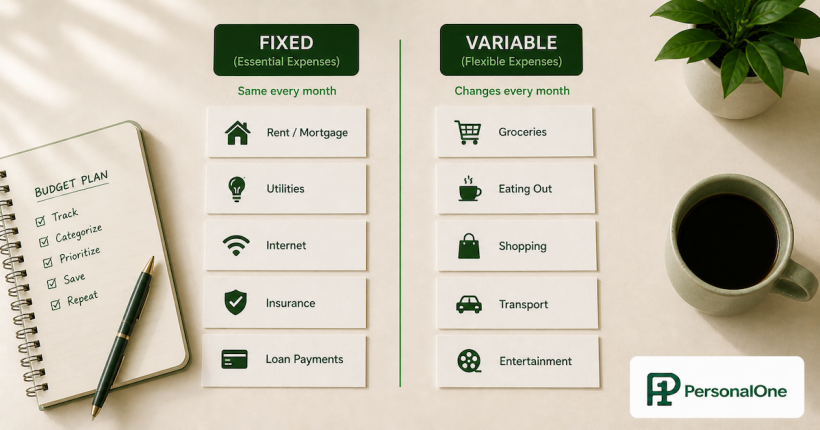
The second diagnostic is comparing your current fixed expense load against income. If your fixed expenses (rent, car, insurance, subscriptions, loan payments) have grown proportionally with income — or faster — lifestyle inflation has locked those increases into permanent monthly obligations rather than capturing them as savings. Fixed expenses are particularly dangerous carriers of lifestyle inflation because once established, they do not revert easily when income fluctuates or when you decide you want to save more.
The Pre-Allocation Solution
The only structural defense against lifestyle inflation is pre-allocation — deciding what happens to an income increase before the money arrives, before the new spending baseline establishes itself, and before the reference point shifts to reflect the new income level. Once money has been in the checking account and has been mentally categorized as available income, it is extremely difficult to redirect it to savings — because it already feels spent against the upgraded lifestyle expectations that formed in the weeks after the raise began.
Pre-allocation is the structural defense that breaks this cycle. It works on the same principle that makes any spending control measure durable: the constraint is built into the system before the decision moment arrives, rather than relying on willpower at the point where the money feels available and the upgrade feels proportionate. The same logic applies to controlling spending habits at the transaction level — structure intercepts behavior before it becomes default. The 50/50 rule for income increases: At minimum, 50 percent of every income increase goes to savings, debt reduction, or investment before lifestyle spending expands. The other 50 percent is available for lifestyle improvement. This is not a sacrifice — it is deliberate allocation. The lifestyle still improves. The wealth-building rate also improves. Neither is sacrificed for the other.
Implementation requires automation, not intention: Update your savings transfer amount on the day the new paycheck amount is effective. If your biweekly paycheck increased by $400, add $200 to your automated savings transfer immediately. Do this before you have spent the first paycheck at the higher level. Once the first paycheck circulates at the new amount and spending has adjusted to it, the window for automated capture closes.
Apply the same logic to bonuses and windfalls: Pre-decide your allocation rule for any bonus or windfall income before it arrives. A standing rule — 50 percent of any bonus goes to savings or debt, 50 percent is available for spending — removes the decision in the emotionally charged moment when money unexpectedly arrives. Without a pre-decided rule, the entire bonus typically gets absorbed into spending or deferred savings that never materialize.
The Pre-Allocation Checklist for Any Income Increase
Day of notification: Calculate the monthly increase in take-home pay. Decide the savings allocation percentage (50 percent minimum, higher if wealth-building is a priority). Write it down.
Day one of new paycheck: Increase the automated savings transfer by the pre-decided savings portion. Do not wait. Do not test the new income level first. The transfer increase happens on the same day the first higher paycheck lands.
Spending portion: The remaining increase in take-home is available for lifestyle spending. Because it is explicitly allocated, spending it does not create conflict with savings goals. This is what the pre-allocation was designed to permit.
Review after 90 days: Confirm the savings transfer is executing correctly and that the lifestyle spending from the remaining increase feels sustainable. Adjust only if the lifestyle allocation is genuinely insufficient, not simply because there is more available that feels unallocated.
The Difference Between Deliberate Lifestyle Improvement and Lifestyle Inflation
Not all lifestyle improvement is lifestyle inflation. The distinction that matters is whether the spending increase was a conscious choice made with awareness of the trade-offs, or whether it happened by default because money was available and the spending felt proportionate to the new income level.
Deliberate lifestyle improvement: You receive a raise. You consciously decide that upgrading your living situation is your highest priority use for half the increase. You research options, choose an apartment that provides genuine quality-of-life improvement, and accept that your savings rate will increase less dramatically this year than it would if you had stayed put. The decision is explicit, informed, and made with awareness of what it costs in terms of wealth-building capacity.
Lifestyle inflation: You receive a raise. Over the following three months, your grocery spending increases, you join a gym, you upgrade your phone, you start using meal delivery more frequently, and you move to a slightly nicer apartment. No single decision felt dramatic. Each felt proportionate to the new income. Three months later, the raise has disappeared entirely and nothing about your wealth-building position has changed. The spending happened by default rather than by choice.
The small decisions that shape your finances are where this distinction lives. Each individual upgrade decision that seemed reasonable in isolation, when aggregated across all categories over several months, accounts for the full income increase. Making these decisions deliberately — consciously choosing which upgrades to pursue with the lifestyle portion of a raise — produces the same quality of life as automatic upgrading while preserving the savings allocation from the raise.
When Lifestyle Inflation Is Acceptable
The goal is not to eliminate lifestyle improvement as income rises. Earning more should produce a better life — that is part of the point. The goal is to ensure that lifestyle improvements are chosen deliberately, that they provide genuine value proportionate to their cost, and that they do not consume 100 percent of income growth at the expense of any wealth accumulation.
A useful test for any proposed lifestyle upgrade: if you had to give this up, would you notice the absence or just the inconvenience of returning to the previous version? Spending that you would genuinely miss — that provided real satisfaction and quality of life improvement — was worth the cost. Spending that you would not notice missing after a week of adjustment was primarily status signaling or habit rather than genuine value. Cut the latter and protect the former.
Applied consistently across income increases, this test produces a pattern where lifestyle genuinely improves over time while savings rates also increase. The career progression that should produce both better financial security and a better life actually produces both — rather than producing better nominal spending that leaves the underlying financial position unchanged at every income level.
Frequently Asked Questions
Is lifestyle inflation always bad?
No. Intentional lifestyle improvement is the point of earning more. The problem is unexamined automatic inflation that happens by default — spending that increases because it feels proportionate to new income rather than because it was deliberately chosen for the value it provides. Deliberately upgrading your living situation after a significant income increase is a valid decision. Automatically upgrading across every spending category simultaneously is lifestyle inflation. The distinction is intention and awareness.
What if my expenses legitimately increase as I earn more? Taxes, for example?
Tax increases with income are real and should be accounted for in the pre-allocation calculation. The 50/50 rule applies to the after-tax increase in take-home pay, not the gross income increase. Similarly, if a higher income genuinely requires higher expenses in some categories (professional attire for a new role, professional development, commuting to a different location), those legitimate increases should be separated from lifestyle choices before applying the allocation rule.
My savings rate is already strong. Should I still apply the 50/50 rule to raises?
If your savings rate is meeting your wealth-building goals and you have a clear view of what those goals require, you can adjust the allocation rule for raises to reflect your specific situation. The 50/50 rule is a reasonable default for people who have not optimized their savings rate relative to their income. If you are already saving 25 percent of income and your wealth trajectory is on track for your goals, applying the full increase to lifestyle spending may be entirely appropriate. The key is that the decision is conscious and based on your actual financial picture.
Earning more is only half the equation. Keeping more requires a system.
The Budgeting for Wealth Growth hub covers how to build the allocation system and automated structure that captures income growth as wealth rather than as upgraded spending — so your earnings actually change your financial position, not just your lifestyle.
Explore the Budgeting Hub →Resources
CFPB — Spending Tracker and Budget Tools
FDIC — Money Smart Financial Education
CFPB — Setting and Tracking Financial Goals
This article is part of the Budgeting for Wealth Growth hub on PersonalOne — a complete framework for building spending awareness and structural control that makes financial progress automatic.
Disclaimer: This content is for educational purposes only and does not constitute financial advice. The allocation rules described here are general frameworks — the right savings rate and lifestyle allocation for any individual depends on income, expenses, goals, and financial circumstances. Adjust to your specific situation.