October 7, 2026
Home › Budgeting for Wealth Growth › Spending Control & Expense Management › How to Stop Impulse Spending (Without Feeling Restricted)
How to Stop Impulse Spending (Without Feeling Restricted)
TL;DR
— Impulse spending is a structural problem, not a character flaw — it happens when the gap between wanting something and buying it has been engineered to have zero friction.
— Modern retail — one-click purchasing, saved payment information, personalized algorithms — is specifically designed to remove the pause that separates impulse from purchase.
— Adding friction back into the purchase process intercepts impulses before they become transactions without requiring you to be more disciplined than you already are.
— Identifying your personal triggers — boredom, stress, social influence, sale psychology — lets you address the source rather than just repeatedly managing the symptom.
— The 24-hour rule works because most impulse purchases feel dramatically less urgent the next day — what felt necessary at 10pm is often clearly optional by the following morning.
— A dedicated discretionary account removes both the guilt from intentional spending and the structural exposure to unplanned spending that drains the wrong money.
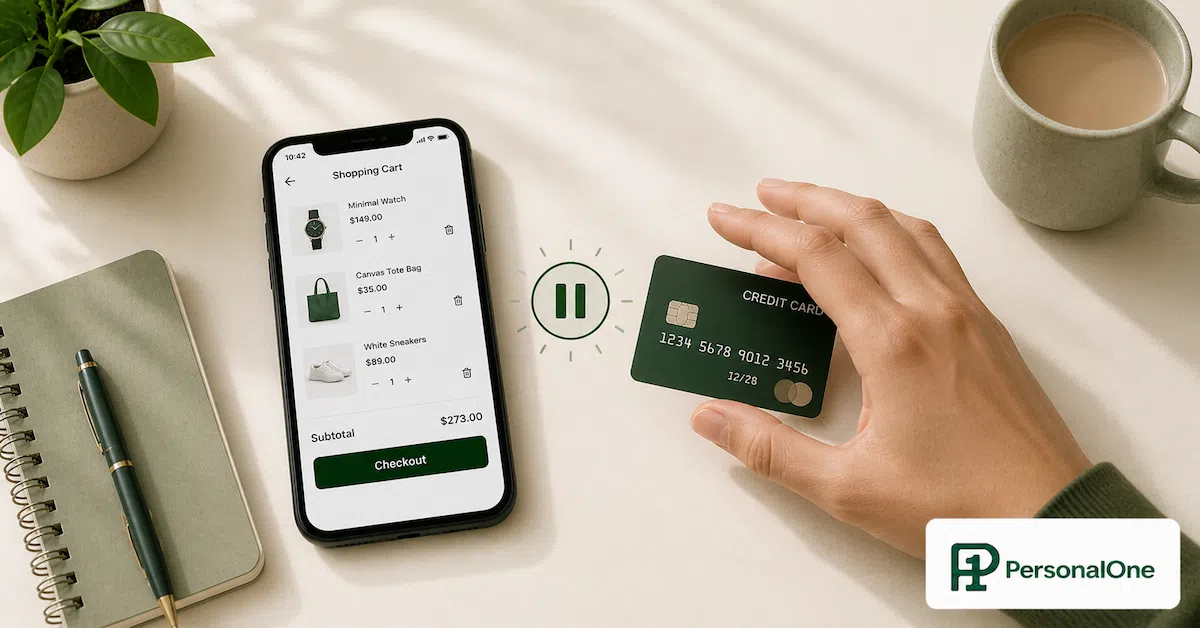
Impulse spending is not a willpower problem. If it were, smart, disciplined, financially motivated people with clear goals would not struggle with it — and many do, consistently. The problem runs deeper than self-control. Modern shopping environments — both digital and physical — are specifically designed by teams of behavioral psychologists and engineers to eliminate the friction between wanting something and buying it. One-click purchase. Saved payment information. Personalized recommendations served at exactly the moment a product looks appealing. Countdown timers on limited offers. Abandoned cart reminders. The purchase path is frictionless by design, and that design works on everyone.
The solution to a structural problem is a structural response. Not more willpower — that is fighting the design on its own terms, and the design has more resources than you do. The effective approach is to add friction back into the purchase process: time delays, physical distance, reduced visibility, and environmental changes that give your deliberate thinking enough room to evaluate whether the purchase is actually what you want. This is how to stop overspending and take control in a way that does not require permanent vigilance — because the structure does the work that willpower cannot reliably sustain.
Why Impulse Spending Happens: The Psychology Behind the Purchase
Impulse purchases share a common psychological structure, even when the specific trigger varies. Something creates an uncomfortable feeling. Buying something temporarily relieves it. The item is not the point — the relief is. Boredom produces restlessness; browsing provides stimulation. Stress produces anxiety; a purchase provides a momentary sense of control or reward. Social comparison creates inadequacy; acquiring something new creates brief equivalence. Excitement about a vacation or event makes related purchases feel necessary and time-sensitive rather than optional.
Understanding this structure matters because the fix depends on which trigger is operating for you specifically. Someone who impulse-shops primarily from boredom needs different interventions than someone whose trigger is stress, social media, or sale psychology. Applying generic advice about "spending less" without identifying your actual trigger is like treating a headache without knowing if it is from dehydration, tension, or a food allergy. The symptom is the same. The cause and the effective solution are different.
The Five Most Common Impulse Spending Triggers
Boredom and idle time: Scrolling shopping apps or social media to fill downtime. The purchase is entertainment — a form of stimulation — rather than genuine acquisition. The item is almost incidental. The scrolling and the buying are what the boredom needed.
Stress or emotional discomfort: Retail therapy in its most honest form. The purchase provides temporary distraction from something unpleasant. The relief is real but brief, and the spending that produced it creates its own financial stress, which can generate its own cycle.
Social influence and comparison: Seeing something a friend owns, an influencer demonstrates, or a social circle treats as standard creates instant desire. The want arises from comparison, not genuine need. It often disappears when the comparison context changes.
Sale psychology and artificial urgency: Discounts, limited-time offers, countdown timers, and "only 3 left" notices create urgency where none genuinely exists. The perceived savings feel like winning. The decision feels forced rather than chosen.
Decision fatigue at day's end: By evening, after a full day of decisions, the part of the brain that evaluates consequences is depleted. Small purchases feel consequence-free because the mental effort of evaluating them has been used up. Late-night online shopping exploits this reliably.
Diagnosing Your Specific Pattern
Before building interventions, spend a week paying attention to when and why you make unplanned purchases. Not what you bought — what was happening in the hour before you bought it. What were you feeling? What had you just been doing? What platform or environment were you in? Most people find their impulse spending clusters around two or three specific patterns rather than being randomly distributed across all situations.
Common pattern clusters: evening phone browsing that ends in purchases, stress responses on the day of or after a difficult work situation, social media rabbit holes that convert aspirational content into purchase intent, weekend boredom that turns into an Amazon session, and email promotions from favorite retailers that reliably produce click-throughs and purchases.
Once you know your pattern, the friction interventions you build can target that pattern specifically rather than attempting broad restriction across all spending — which tends to feel like deprivation and eventually produces a compensatory spending response. A targeted intervention on evening phone browsing is more sustainable and effective than a general vow to "spend less," which has no structural mechanism to enforce it.
Friction Interventions That Work
These interventions all operate on the same principle: adding a step between impulse and purchase that allows your deliberate, evaluative thinking enough time to engage. The impulse itself does not disappear — but it meets resistance, and many impulses do not survive even a small amount of that resistance.
The 24-hour rule for unplanned purchases above your threshold. Set a personal threshold — often $30 to $50 — above which any unplanned purchase waits 24 hours before you act on it. Add the item to a wish list, save the page, take a screenshot. Return to it the following day and decide. The majority of impulse items feel significantly less compelling 24 hours later. The ones that still feel necessary after a day have survived a meaningful test and are more likely to be genuine purchases rather than emotional reactions. Items that feel genuinely urgent rarely are — consumer products are almost never time-sensitive in any meaningful sense regardless of what the retailer's countdown timer suggests.
Remove saved payment information from browsers and shopping apps. One-click purchasing and saved cards eliminate the friction moment that gives your deliberate thinking time to engage. The physical act of finding your wallet, taking out your card, and entering a number is a natural pause long enough for second thoughts to surface. This is not an accident — retailers know this and work hard to remove it. Removing saved payment information restores the pause. You can still buy anything you decide you want. You simply have to decide a little more deliberately.
Unsubscribe from promotional emails and disable retail push notifications. If the trigger for a purchase arrives in your inbox or as a push notification, the shopping experience begins before you have chosen to shop. A promotional email from a brand you like is not neutral information — it is a specifically timed stimulus designed to produce a visit and a purchase. Removing it from your environment eliminates a significant share of impulse opportunities before they begin. An unsubscribe session takes about an hour and produces months of reduced exposure.
Delete shopping apps from your phone or move them off the home screen. The apps that are easiest to reach are the ones you use most. Moving a shopping app to a buried folder or deleting it entirely adds meaningful friction to the browsing-to-buying pipeline. If you have to actively seek out the app rather than finding it on your home screen, many idle browsing sessions simply do not happen. This is one of the most impactful single changes for people whose primary trigger is boredom-driven phone browsing.
Create distance between your money and your shopping environment. Shopping with a debit card connected directly to your spending account creates real-money awareness — the balance decreases as you spend and you can check it in real time. Shopping with a credit card that bills later creates abstraction — the money does not feel real at the point of purchase because the consequence is deferred. This abstraction is precisely why credit card use correlates with higher spending than debit card use in studies of consumer behavior. Using your spending account debit card for discretionary purchases keeps the cost tangible at the moment it is incurred.
The Trigger-Specific Interventions
Once you know your primary trigger, you can add targeted interventions on top of the general friction methods above. These are more effective than broad restriction because they address the actual source of the behavior rather than attempting to suppress all spending across all contexts.
For boredom-driven spending: The purchase is providing stimulation, not acquiring something you need. The intervention is a substitute stimulation that does not cost money. Identify three to five things that reliably break boredom without involving a purchase — a walk, a specific show, a book you already own, a call to someone. When you notice the browsing impulse arising, redirect to one of these alternatives before opening any shopping platform. The redirect needs to be specific and available — a vague intention to "do something else" does not compete effectively with a phone in your hand and a familiar app one tap away.
For stress-driven spending: The purchase is temporarily managing an emotional state. The intervention is a more effective regulation strategy for that state. Physical activity, talking to someone, a specific activity that requires focus and produces a sense of competence, or even a brief rest — any of these addresses the underlying stress more effectively than a purchase that produces temporary relief followed by financial stress and potential regret. Identify your most effective stress regulators in advance and make them accessible. In a stressed state, you will not be creative about alternatives.
For social comparison spending: The desire arose from comparison context. Removing or limiting the comparison context reduces the desire. Consider whether your heaviest social media consumption is generating aspirational content that reliably converts to purchase intent. Curating your follows, limiting time on comparison-heavy platforms, and creating distance between social media and shopping — using them on different devices, at different times of day, with no shopping apps accessible during social media sessions — reduces the trigger frequency without requiring willpower to resist specific purchases.
For sale psychology spending: The discount created artificial urgency. The intervention is reframing: a sale on something you do not need is not a saving — it is a spending. The full price is the cost of not buying it. The discounted price is the cost of buying it. Savings only exist if you would have bought it at full price, which is rarely true for true impulse purchases. Apply the 24-hour rule to all sale-driven purchases. The urgency almost never survives overnight.
The Discretionary Account System
The most structurally durable solution to impulse spending is not prohibition — it is intentional allocation. Give yourself a defined amount of discretionary money each month or each pay period, put it in a dedicated spending account, and spend it on whatever you want. When it is gone, it is gone until the account resets. No guilt about what you bought. No resentment from feeling deprived. No relapse spending from months of accumulated restriction.
The account system works because it removes the moral weight from spending decisions. Every purchase from the discretionary account is pre-approved. You already decided this money was for spending on whatever you wanted when you set the transfer amount. The question becomes not "should I buy this" but "do I want to use some of my discretionary money on this, knowing it reduces what is available for other things this period." That reframe is not discipline — it is clarity.
The finite balance also creates natural prioritization without requiring any tracking or category budgeting. When you have $340 left in your spending account and three things you want, you naturally rank them. When you have unlimited access to a credit card balance, no such ranking occurs because the constraint is not visible at the point of decision. The account balance does what a budget spreadsheet tries to do but cannot, because the balance is real and visible while a spreadsheet category is abstract and requires effort to check.
How to Set Up the Discretionary Account
Open a separate checking account specifically for discretionary spending. This is not your bills account and not your savings account — it is the account your debit card is connected to for all variable and discretionary purchases.
Calculate a realistic monthly or per-period amount based on your income after fixed expenses and savings contributions. What remains is your discretionary allocation. Be honest — set it based on what you actually spend on variable expenses, not what you wish you spent. The goal is a realistic budget you can live inside, not an aspirational one you cannot.
Automate the transfer on payday so the discretionary amount moves into the spending account before any manual decisions happen. Money that arrives in your primary account and waits to be allocated gets spent differently than money that is pre-allocated before you interact with it.
Set a low-balance alert at 30 to 40 percent of your allocation. When the alert fires, you know you are in the final third of your spending period. That signal changes behavior naturally — not through restriction but through visibility into how much of the period is left.
The Role of Daily Habits in Impulse Control
Impulse spending is not an event — it is the product of an environment and a set of daily habits that either expose you to triggers or protect you from them. The structural interventions described above change the environment. But the habits that govern how you move through the day also determine how frequently triggers arise and how much resistance you have available when they do.
The small decisions that shape your finances are rarely dramatic. They are the accumulated weight of how you use your phone during idle moments, which apps are installed, which emails you receive, which accounts your card is saved to, and how much cognitive energy you have available at the end of the day when decisions are most likely to go wrong. Each of these is a choice about your environment that you can make once with lasting impact, rather than a willpower battle you have to win repeatedly every day.
The most effective daily habit change for reducing impulse spending is usually not about spending directly at all. It is about reducing the frequency of exposure to triggers. If your primary trigger is boredom-driven phone browsing, the relevant habit change is how you use your phone during idle time. If your primary trigger is stress response, the relevant habit change is your stress management practices. Address the trigger environment and the spending behavior changes as a consequence.
What Spending Discipline Actually Looks Like
Genuine spending discipline does not look like white-knuckling your way through every shopping environment with constant vigilance and the permanent suppression of every spending desire. That approach is exhausting, unsustainable, and produces the restriction-relapse cycle that leaves people worse off than if they had never tried to restrict at all.
Real spending discipline looks like an environment that has been designed to reduce trigger frequency, friction that intercepts impulses before they become transactions, and a clear allocation that makes intentional spending guilt-free and unplanned spending structurally harder. It looks like someone who has made several environmental changes once and now navigates their day without constant effort. Not because they have achieved some level of mastery over desire, but because the environment they have created is not generating impulses at the same rate and intensity as the environment they started with.
The distinction matters because it points to where the effort should go. Invest effort in environmental setup and structural changes — these are one-time decisions that provide ongoing returns. Do not invest effort in constantly resisting impulses that your environment keeps generating — that effort is depleted with every resistance and has no lasting benefit because the triggers keep arriving.
When Impulse Spending Is a Symptom of Something Larger
Chronic impulse spending that persists despite structural interventions and genuine effort is sometimes a symptom of an underlying issue that spending is being used to manage — anxiety, depression, loneliness, or persistent life dissatisfaction. In these cases, reducing spending without addressing the underlying condition typically fails because the spending is performing a regulatory function — it is managing an emotional state — and removing it without a replacement leaves the underlying state unmanaged.
This is worth naming because the personal finance conversation rarely does. If you find yourself rebuilding spending habits repeatedly, if the pattern feels compulsive rather than habitual, or if spending is reliably tied to emotional states you cannot otherwise manage, those are signals worth taking seriously. Structural interventions help in these cases too, but they work better in combination with support — whether from a therapist, a financial counselor, or both — than on their own.
The goal is not to eliminate all unplanned spending. Some spontaneity in spending is part of a healthy relationship with money, not evidence of poor character. The goal is to ensure that unplanned spending is funded from your discretionary allocation rather than raiding your bills account, depleting your emergency fund, or landing on a credit card you cannot pay in full. When it comes from designated discretionary money, even genuinely impulsive purchases are structurally contained.
The Connection to Your Budget System
Impulse spending is one of the primary reasons budgets fail in practice. A budget specifies where money should go. Impulse spending sends it somewhere else instead, quietly and repeatedly, until the budget bears no resemblance to actual spending and feels like something that applies to other people rather than a system you actually live inside. The budget is not wrong about the math. The execution environment is undermining the intent.
This is exactly why you have to control spending first before any budget plan can hold. A budget that describes where money should go, without structural mechanisms to make that happen, relies entirely on willpower. Impulse spending is what willpower fails to prevent reliably. Structural interventions — friction, account separation, automated allocation — are what actually close the gap between a budget plan and spending reality.
The sequence matters: build the structural controls first, then the budget becomes a description of a system that is already mostly enforcing itself rather than an aspirational target you have to fight toward every day. Reduce impulse spending through environmental and structural changes, and budgeting becomes significantly easier because you are maintaining a system rather than overcoming an adversarial environment with self-control alone.
Frequently Asked Questions
Does the 24-hour rule work for online shopping the same way it does in a physical store?
Yes, and it may be even more effective online. Add items to your cart or a wish list and close the browser without completing the purchase. Return 24 hours later and decide. Many retailers will send a discount code if you abandon your cart, which turns the wait into a financial benefit on top of the behavioral benefit. If the item still feels necessary the next day, buy it. If the urgency has dissipated, you have confirmed it was primarily an impulse rather than a genuine need.
What if I genuinely need something but the purchase still feels impulsive?
Apply the 24-hour rule anyway. Genuine needs survive the wait — you will still need it tomorrow. The delay does not prevent necessary purchases; it filters out purchases that were primarily driven by emotional state rather than genuine need. If a genuine emergency requires same-day action, you will know the difference because the need will still be present and urgent the following morning, not merely interesting.
I feel guilty about any unplanned purchase, even small ones from my discretionary account. How do I address that?
The guilt is a signal that you have not fully internalized the permission that a discretionary account is designed to create. The money in your discretionary account exists for spending on whatever you want. An unplanned purchase from that account is not a failure — it is the account working as intended. The guilt is worth examining: is it proportionate to the actual financial impact, or is it a habitual response to spending that does not accurately reflect your current financial situation? If you are funding the account appropriately and your other financial commitments are being met, discretionary spending is not a moral issue.
How long does it take to see results from these interventions?
Environmental changes — removing saved payment information, unsubscribing from promotional emails, deleting shopping apps — produce results immediately because they reduce trigger exposure from the moment they are implemented. Behavioral changes — the 24-hour rule, trigger identification, substitution strategies — take two to four weeks to become habitual. The discretionary account system typically shows meaningful impact within the first full month of use as the balance visibility changes spending decisions in real time. The combination of environmental changes and account structure produces the most durable results because it operates at the level of design rather than discipline.
Impulse control starts with structure, not willpower.
The complete Budgeting for Wealth Growth framework covers how to build the account structure, automation, and spending systems that make the right financial behavior the default — so you are working with your design rather than fighting against it.
Explore the Budgeting Hub →Resources
CFPB — Spending Tracker and Budget Tools
FDIC — Money Smart Financial Education
CFPB — Setting and Tracking Financial Goals
This article is part of the Budgeting for Wealth Growth hub on PersonalOne — a complete framework for building the spending awareness and structural control that makes financial progress automatic.
Disclaimer: This content is for educational purposes only and does not constitute financial advice. Individual spending patterns and impulse triggers vary significantly. The strategies described here are general frameworks — adjust them to reflect your specific financial situation, goals, and behavioral patterns.