Updated: March, 2026
Home › FinTech & Modern Money Tools › Wealth Management Technology & Robo-Advisors › How Wealth Management Technology Is Redefining Money
How Wealth Management Technology Is Redefining Money: AI, Robo-Advisors, and the Democratization of Investing
What You Need to Know
— Wealth management is no longer exclusive — AI and mobile apps have democratized tools once reserved for investors with $100,000+ minimums and 1–2% annual advisory fees
— Robo-advisors like Betterment and Wealthfront use algorithms to build personalized portfolios, rebalance automatically, and harvest tax losses — at 0.25% annually or less
— The best approach combines AI-powered automation with human expertise for emotional support during market volatility — technology for the routine, humans for the complex
— Blind reliance on technology creates real risks: algorithm blind spots during black swan events, data privacy exposure, and behavioral traps from real-time portfolio access
— Technology removes barriers and reduces costs, but does not eliminate the need for discipline, consistent contributions, and long-term focus
How Wealth Management Technology Is Changing Who Can Build Wealth
The best robo advisors and wealth management apps have done something that would have been unimaginable a generation ago: they put professional-grade investing infrastructure in the hands of anyone with a smartphone and $1 to start. Wealth management technology is fundamentally changing who can build wealth and how they do it — removing minimum investment requirements, compressing advisory fees from 1–2% to 0.25% or less, and automating the portfolio management decisions that most investors either never made or made badly under emotional pressure. The complete guide to how robo-advisors and automated investing platforms fit into a modern financial system is in the Wealth Management Technology & Robo-Advisors guide.
This shift represents more than convenience — it is a complete reimagining of how everyday people interact with their money. Understanding how wealth management technology fits into the broader financial tool ecosystem helps you use these platforms strategically rather than randomly downloading apps that promise easy wealth. The full framework for how investing technology connects to banking, budgeting, and financial automation is in the FinTech & Modern Money Tools guide.
This article covers the mechanics of that democratization: what AI actually does in modern investing platforms, where robo-advisors add genuine value, what the human element still provides that algorithms cannot, and what the risks of over-relying on technology look like in practice.
The Wealth Management Revolution: From Exclusive to Accessible
Until relatively recently, wealth management meant minimum account balances starting at $100,000, annual advisory fees of 1–2%, and access gated behind referrals and established relationships. Financial advisors served clients with substantial portfolios and left everyone else to figure things out independently or rely on commission-driven salespeople whose incentives did not align with their clients’ interests.
Robo-advisors dismantled that model by automating the core functions of portfolio management and removing the human labor cost that made wealth management expensive. The changes this produced are concrete: minimum investment requirements dropped from $100,000+ to zero at platforms like Betterment and Fidelity Go; advisory fees compressed from 1–2% to 0.25% or flat monthly rates; portfolio diversification, rebalancing, and tax-loss harvesting are handled automatically by algorithms; and professional-grade tools are available 24/7 from a smartphone. The investor who would have been completely ignored by a traditional wealth manager can now access the same strategies — at a fraction of the cost.
Why AI Is the Core Engine of Modern Wealth Management
Artificial intelligence is not a marketing layer on top of robo-advisors — it is the technology that makes their core value proposition possible. AI transforms wealth management in three specific ways that were previously either unavailable to most investors or required expensive human labor to execute.
Instant portfolio optimization. Traditional financial advisors manually construct portfolios based on experience and periodic reviews. AI-powered platforms analyze your age, income, financial goals, risk tolerance, current market conditions, and correlation between asset classes to construct a portfolio calibrated to your specific situation — in seconds, and updated continuously. The sophistication rivals what elite wealth managers provide to high-net-worth clients, at 75–90% lower cost.
Automatic rebalancing without emotional bias. One of the most persistent challenges in investing is maintaining target allocation as markets move. When stocks surge, portfolios become stock-heavy and riskier than intended. Human investors — even professionals — struggle with rebalancing because it requires selling winners and buying losers, which feels psychologically wrong. Algorithms do not have that problem. When your portfolio drifts from target allocations, the platform automatically sells overweight assets and buys underweight ones, maintaining your intended risk level without hesitation or delay.
Tax-loss harvesting at scale. Tax-loss harvesting — selling investments at a loss to offset capital gains and reduce taxes, then immediately replacing them with similar positions — used to be a strategy only accessible to high-net-worth investors with dedicated advisors. The manual work required made it impractical for smaller accounts. AI-powered platforms now scan portfolios daily and execute this strategy automatically. The automated wealth management tools at platforms like Betterment and Wealthfront make this available from the first dollar in a taxable account, at no additional fee. For taxable accounts with significant activity, this feature alone can offset the platform’s entire annual fee.
Mobile Apps Putting Wealth Management in Your Pocket
If AI is the engine powering modern wealth management, mobile apps are the interface that makes it practical for daily life. The shift from advisor-office-based financial planning to mobile-first money management has changed the relationship between investors and their investments from quarterly to continuous.
Full-service robo-advisors like Betterment and Wealthfront provide comprehensive wealth management: goal-based investing, automatic rebalancing, tax-loss harvesting, and retirement planning in a single mobile interface. You answer questions about your goals and risk tolerance, then the algorithm builds and manages a globally diversified portfolio of low-cost ETFs. This is the category that delivers the most complete automated wealth management experience.
Micro-investing apps like Acorns pioneered a different model: linking your debit or credit cards and rounding up purchases to the nearest dollar, investing the difference automatically. A $3.75 coffee generates $0.25 into your investment portfolio. These micro-contributions add up without requiring conscious saving effort — a useful entry point for investors who have not yet built the habit of deliberate monthly contributions.
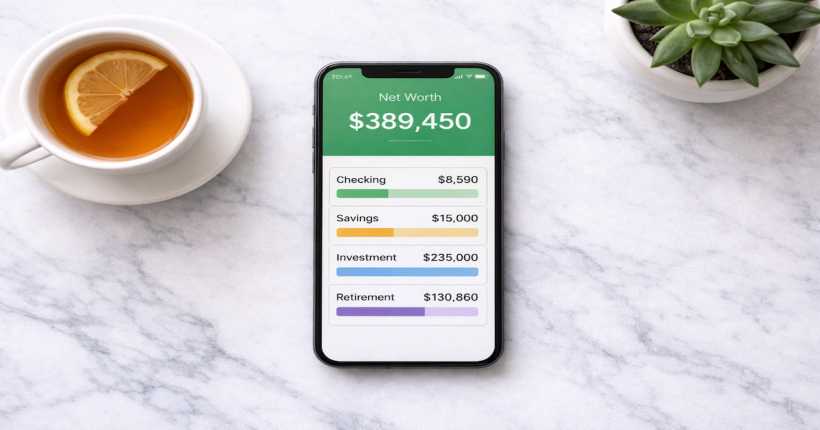
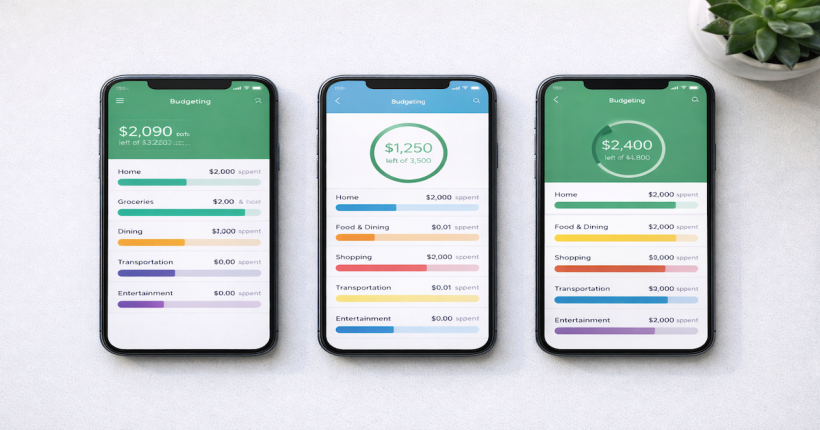
Integrated financial dashboards like Monarch Money (affiliate) represent the next evolution: combining budgeting, spending tracking, investment visibility, and net worth monitoring in one interface. Rather than managing money in silos, you see how daily spending decisions affect long-term investment progress in real time. This integration — where budgeting and wealth management occupy the same dashboard — is where the category is heading.
The Human Element: What Technology Cannot Replace
Despite the capabilities of modern wealth management platforms, a fundamental limitation remains: algorithms do not care about your feelings when markets drop 20%. And those feelings — fear, panic, greed, overconfidence — drive more investment failures than any technical decision. The most effective wealth management approach combines AI-powered automation with human expertise for the situations where emotional intelligence and judgment genuinely matter.
What humans provide that algorithms cannot: emotional reassurance during market volatility (when markets crash, you need someone to talk you out of panic-selling, not just an algorithm rebalancing); nuanced guidance through life events like marriage, divorce, inheritance, and major career transitions; comprehensive tax strategy for complex situations that go well beyond automated tax-loss harvesting; estate planning that requires legal coordination; and behavioral coaching that identifies and corrects destructive money patterns through empathy, not math.
Many robo-advisors now offer hybrid models: algorithm-driven portfolio management supplemented by access to human advisors for major questions or market turbulence. The combination — technology for the routine, humans for the complex and emotional — consistently delivers better outcomes than either approach alone. Costs stay low because expensive human expertise is deployed only where it adds genuine value.
The Risks of Over-Relying on Wealth Management Technology
Algorithm blind spots. AI learns from historical data, which means algorithms struggle with truly unprecedented events. The COVID-19 market crash, the 2008 financial crisis, and similar black swan events cannot be fully modeled because they are, by definition, outliers. During these periods, human judgment and historical perspective matter in ways that pattern recognition on historical data cannot replicate.
Data privacy and security exposure. Your complete financial picture — income, spending, assets, liabilities, goals — is now stored across multiple apps and platforms. Each connection point represents a potential security vulnerability. While reputable platforms use bank-level encryption and read-only access through aggregators like Plaid, the proliferation of connected financial apps increases overall exposure compared to a single-advisor relationship.
Behavioral traps from real-time access. The same smartphone that makes investing accessible also enables impulsive decisions. Watching portfolio value fluctuate in real time and having instant trading access can trigger emotional reactions that damage long-term returns. The friction that traditional investing created — calling an advisor, placing orders during business hours — provided a cooling-off period that prevented many reactive mistakes. That friction no longer exists.
Gamification overconfidence. Some investment apps use game-like interfaces with achievements, streaks, and social features to increase engagement. This can create overconfidence and encourage excessive trading. Investing should be disciplined and long-term, not exciting and frequent. The app experience should not drive the investment behavior.
Where Wealth Management Technology Is Heading
Next-generation AI will move beyond current risk questionnaires to continuously adapt strategies based on behavior, spending patterns, life events, and demonstrated responses to market movements. Rather than placing investors into preset risk categories, algorithms will create portfolios that evolve continuously with individual circumstances rather than updating quarterly based on manual input.
The deeper shift is toward integration rather than proliferation. Rather than separate apps for budgeting, investing, banking, and insurance, the direction is comprehensive platforms that manage entire financial lives holistically — automatically optimizing across all dimensions simultaneously. The category leader in this direction is the integrated financial dashboard model, where every financial account, liability, and goal appears in a single view that updates in real time. This architecture — one system, complete picture — is what the best wealth management tools are building toward.
Build your investing system on a stable foundation.
The complete guide to robo-advisors, automated investing, and how wealth management technology connects to your full financial system is in the Wealth Management Technology guide.
Resources
Official Sources
SEC Investor.gov — Robo-Advisors — SEC investor guidance on what robo-advisors are, how they are regulated, what fees to evaluate, and how to verify platform registration before investing.
FINRA — Automated Investment Tools — FINRA guidance on how to evaluate automated investment platforms, fee structures, and verify registration and disciplinary history through BrokerCheck.
SIPC.org — Verify Securities Investor Protection Corporation membership for any robo-advisor platform and understand what protections apply if a broker-dealer fails.
Continue Building Your System
How Robo-Advisors Work — The mechanics behind automated portfolio construction, rebalancing, dividend reinvestment, and tax-loss harvesting explained without jargon.
Robo-Advisors vs Real Advisors — The honest comparison of automated platforms versus human financial advisors and the specific situations where each genuinely outperforms the other.
The full framework lives in the FinTech & Modern Money Tools guide.
Frequently Asked Questions
Has wealth management technology actually made investing accessible to everyone?
Substantially yes — with important caveats. Zero minimum investment requirements, 0.25% annual fees, and automated portfolio management have removed the financial barriers that once made professional investing inaccessible. What technology cannot remove is the behavioral discipline required to contribute consistently, hold through volatility, and avoid reactive decisions during market downturns. The tools are accessible. The behavior is still the user’s responsibility.
Do robo-advisors outperform human financial advisors?
On the specific task of building and maintaining a diversified low-cost index portfolio, robo-advisors match or outperform most human advisors — primarily because they eliminate the behavioral errors that cause human investors to underperform the market they are investing in. Human advisors add value in situations requiring genuine complexity: estate planning, business owner financial planning, behavioral coaching through major market events, and tax strategy beyond automated harvesting.
What is the biggest risk of relying on wealth management apps?
Behavioral risk from real-time access is the most underappreciated. The ability to check your portfolio balance in real time and execute trades instantly eliminates the friction that prevented most reactive investment decisions under the traditional advisor model. Investors who check portfolio balances daily during market corrections are significantly more likely to make emotional decisions that damage long-term returns than investors who contribute automatically and check quarterly.
When should I add a human financial advisor to my setup?
When your financial situation develops genuine complexity: portfolio above $500K–$1M, business income or equity compensation requiring advanced tax strategy, estate planning involving significant assets or specific legacy goals, or major life transitions (inheritance, divorce, early retirement) where the decisions involve legal, tax, and emotional dimensions simultaneously. For most investors in the accumulation phase building toward those thresholds, a robo-advisor handles the core investing function effectively.
Affiliate Disclosure & Disclaimer: This article contains an affiliate link to Monarch Money. PersonalOne may earn a commission if you create an account through this link at no additional cost to you. This does not influence our editorial assessment. Robo-advisor fees, minimums, and features are subject to change — verify current terms directly with each platform before investing. This content is for informational and educational purposes only and does not constitute investment, tax, or financial advice. Investing involves risk including possible loss of principal.