Updated: April, 2026
Home › Financial Stability › Financial Shock Absorption › Why Everything Feels More Expensive Right Now
Why Everything Feels More Expensive Right Now
What You Need to Know
— You are not imagining it — the cost of everyday life has increased significantly and wages have not kept pace for most people
— Inflation, housing costs, interest rates, and shrinkflation are all happening at the same time, which is why the pressure feels compounded
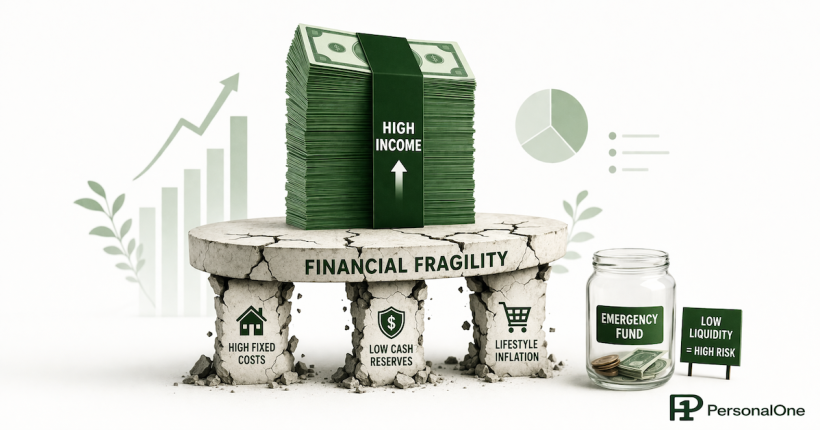
— Feeling financially stretched is not a personal failure — it is a structural reality that requires a structural response
— There are specific things you can do right now to reduce the pressure without waiting for the economy to fix itself
— The goal is not to out-discipline rising costs — it is to build a system that absorbs the pressure without breaking
It Is Not Just You
If your paycheck feels like it is doing less than it used to, you are not bad at math. You are not spending carelessly. You are not imagining things. The cost of everyday life has gone up in ways that are real, measurable, and hitting Millennials and Gen Z harder than most headlines acknowledge.
Groceries, rent, car insurance, utilities, dining out, subscriptions — almost every category that makes up daily life has gotten more expensive over the past several years. And unlike past economic cycles where one or two categories moved at a time, this one has hit nearly everything simultaneously. That is why it feels so relentless. It is not one problem. It is a dozen problems arriving at the same time.
This article explains exactly what is driving the pressure, why it is hitting certain people harder than others, and — most importantly — what you can actually do about it right now. The broader financial stability framework that connects all of this lives in the Financial Stability hub.
What Is Actually Driving the Cost Pressure
Understanding why things cost more is not just academic. It changes how you respond. If you think the problem is your spending habits, you try to cut harder. If you understand the problem is structural, you build a structure to absorb it.
Here are the forces doing the most damage right now:
- Cumulative inflation. Inflation is measured year over year, but the damage compounds. Even when the annual inflation rate drops, prices do not go back down. A 4% inflation rate on top of two previous years of 7-8% means everyday goods are significantly more expensive than they were three years ago — permanently.
- Housing costs. Rent has increased sharply in most major and mid-sized markets. For renters who did not lock in a long-term lease before 2021, the jump has been severe. Mortgage rates have also made homeownership less accessible than at any point in recent memory, keeping more people in the rental market and pushing rental demand — and prices — higher.
- Interest rate increases. The Federal Reserve raised interest rates aggressively to fight inflation. The result: credit card APRs climbed significantly, auto loan rates increased, and variable-rate debt became more expensive to carry. If you are carrying any balance on high-interest debt, you are paying more for it now than you were two years ago.
- Shrinkflation. Companies facing their own cost pressures have responded by keeping prices the same while reducing package sizes. The bag of chips, the roll of paper towels, the container of yogurt — you are getting less product for the same price. It is inflation that does not show up in the headline number but hits your budget just as hard.
- Insurance premium increases. Auto, renters, and homeowners insurance premiums have increased significantly in most markets. These are non-negotiable costs for most households and they increased without warning for millions of people at renewal time.
- Wage growth lag. For many people, wages have not kept pace with cumulative price increases. Even workers who received raises over the past two to three years often received raises that were smaller than the total price increases they experienced in the same period. In real terms — adjusted for purchasing power — many households are earning less than they were.
The Compounding Problem
None of these forces is new on its own. What makes this cycle unusually difficult is that all of them are happening at the same time. Housing, food, debt costs, insurance — they are all moving in the same direction simultaneously. That is what makes the pressure feel so inescapable even for people who are doing everything right.
Why It Hits Millennials and Gen Z Harder
Not everyone experiences rising costs the same way. Homeowners with fixed-rate mortgages locked in before 2022 are largely insulated from housing cost increases. People with significant savings or investments have assets that partially offset inflation. People with no debt are not affected by higher interest rates.
Millennials and Gen Z are disproportionately renters, disproportionately carrying student loan debt, and disproportionately earlier in careers where income is lower and savings are thinner. That means the specific combination of pressures driving this cycle lands hardest on exactly the demographic least positioned to absorb it.
There is also a psychological dimension that rarely gets acknowledged. For many younger adults, this is the first major economic pressure cycle they have navigated as independent adults managing their own finances. The gap between what they were told adulthood would look like financially and what it actually looks like is significant. That gap is demoralizing in a way that goes beyond the numbers — and it makes financial avoidance more likely at exactly the moment when engagement matters most.
This Is Not a Discipline Problem
If you are stretched right now, the answer is not to try harder, cut more aggressively, or shame yourself into a different outcome. The answer is to build a system that works under real conditions — including conditions where costs are high and the margin for error is thin.
What You Can Actually Do Right Now
The instinct when costs rise is to cut everything and white-knuckle through it. That approach works for about two weeks and then falls apart because it is built on discipline rather than design. Here is a more durable approach.
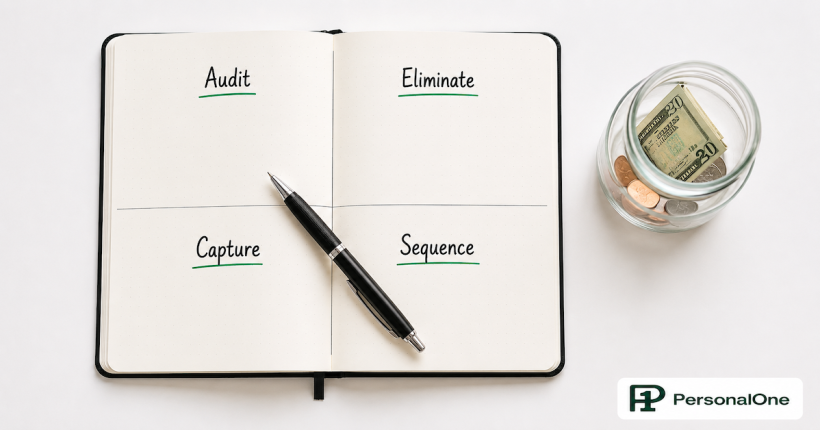
Step 1: Get a Real Number on Where the Money Is Actually Going
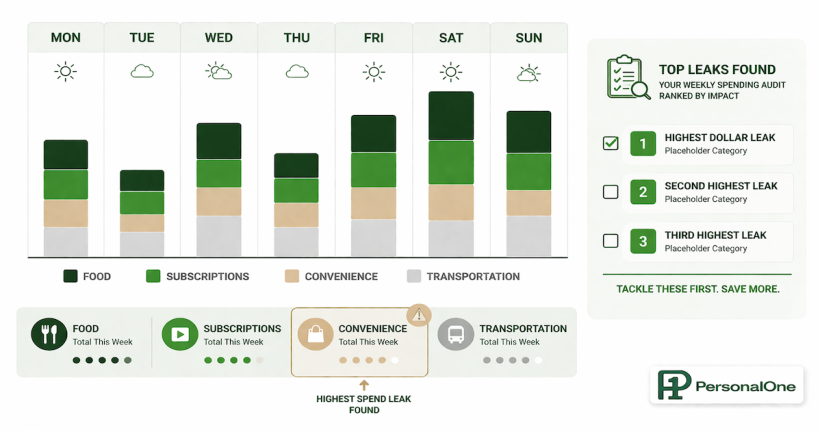
Before you can fix anything, you need an honest picture of your current spending. Not an estimate — an actual review of the last 60 to 90 days of bank and credit card statements. Most people who feel financially stretched are surprised by at least one or two categories when they look at real numbers versus what they assumed they were spending.
Look specifically for three things: recurring subscriptions you forgot about, categories where spending has increased gradually without a conscious decision, and any area where the cost has gone up since you last checked — insurance renewals, utility rate increases, service fees that crept up quietly.
Step 2: Separate Fixed Costs From Variable Spending
Fixed costs are the non-negotiables: rent, utilities, insurance, loan minimums, subscriptions you actively use. Variable spending is everything else. The reason this separation matters is that the two categories require completely different responses.
Fixed costs cannot be cut in the moment — they require structural changes like renegotiating, switching providers, or making longer-term decisions about housing or transportation. Variable spending can be adjusted week to week. Trying to manage both categories with the same approach creates confusion and leads to cuts that do not actually move the needle.
The Financial Shock Absorption cluster covers how to build a buffer system that protects your fixed costs even when variable spending fluctuates — which is the structural piece that most budget advice skips.
Step 3: Attack Your Highest-Cost Fixed Expenses First
If your budget is under serious pressure, the highest-leverage moves are almost always in your fixed costs rather than your variable spending. Cutting coffee and eating out makes people feel productive but rarely closes a meaningful gap. Reducing a car payment, switching to a cheaper insurance provider, or renegotiating a subscription service can save hundreds of dollars a month.
Specific fixed cost categories worth reviewing:
- Insurance premiums. Auto and renters insurance are competitive markets. Getting competing quotes takes 20 minutes and can produce meaningful savings. Most people have not shopped their insurance since they first set it up.
- Subscription services. The average household significantly underestimates how many subscriptions they are paying for. A full audit often reveals $50 to $150 per month in services that are either unused or duplicated.
- High-interest debt minimums. If you are carrying credit card balances at 20%+ APR, the interest alone is a significant monthly cost that grows over time. Even a small aggressive payment toward the highest-rate balance reduces the cost burden faster than almost any other action.
- Phone and internet plans. Carrier plans have become more competitive. Many people are paying for plans they set up years ago that have since been undercut by better options at the same or competing providers.
Step 4: Build Even a Small Buffer Before You Do Anything Else
This is counterintuitive when money is tight, but it is the most important step. A buffer — even $200 to $500 set aside in a separate account — changes how you respond to unexpected costs. Without one, every surprise expense (a car repair, a medical bill, an appliance issue) goes directly onto a credit card or disrupts bill payments. With one, those surprises get absorbed without cascading.
The goal is not a full emergency fund immediately. The goal is enough of a buffer that the next unexpected expense does not make things worse. That is a realistic short-term target even in a tight budget, and it breaks the cycle where small surprises compound into larger financial stress.
If You Are Already Behind
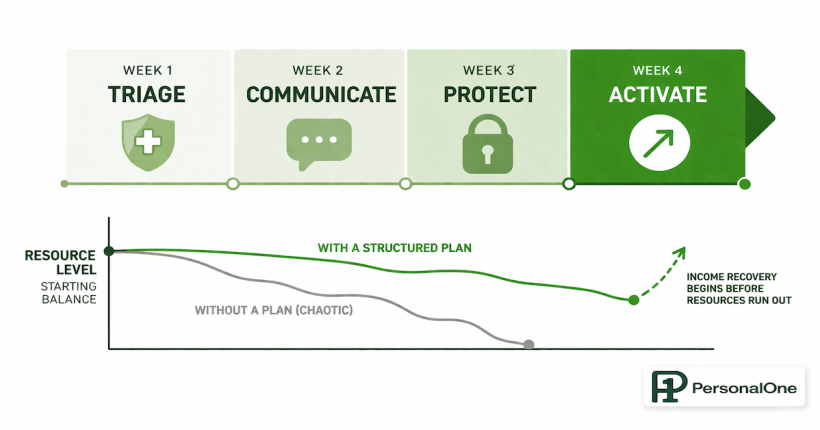
If the cost pressure has already put you behind on bills or in a position where you are choosing between expenses, the framework above still applies — but the starting point is different. The Behind on Bills and Overwhelmed guide covers the triage steps for getting stabilized before building forward.
Step 5: Look for Income Before You Cut Further
There is a ceiling on how much cutting can accomplish. Once your fixed costs are optimized and your variable spending is lean, further cuts produce diminishing returns and increasing lifestyle misery. At that point, the most effective lever is income.
That does not mean launching a business or finding a second job immediately. It can mean asking for a raise, picking up additional hours, selling things you no longer need, or doing occasional freelance work in a skill you already have. Even a few hundred dollars of additional monthly income changes the math significantly when the margin is thin.
The framing shift matters here: instead of asking "what else can I cut?" ask "what is the smallest income increase that would materially change my situation?" That question is often easier to answer than people expect.
The Bottom Line: The Economy Is Not Going to Wait for You to Feel Ready
Costs are not going back to where they were. The compounding pressure of the past several years has reset the baseline, and the financial system most people built their habits around no longer matches the reality they are living in. That is uncomfortable. It is also fixable — not by trying harder, but by rebuilding the system around the actual numbers.
The steps above are not a complete financial overhaul. They are the immediate triage that stops the bleeding and creates enough stability to build from. The complete framework for doing that lives in the Financial Stability hub.
You are not behind because you are bad with money.
You are behind because the system you are running has not been updated for the economy you are actually living in. The Financial Stability hub is where that changes.
Explore Financial Stability →Resources
Official Sources
BLS — Consumer Price Index — Official U.S. inflation data tracking price changes across food, housing, transportation, and other major spending categories.
CFPB — Budgeting and Saving Tools — Free budgeting resources and guidance from the Consumer Financial Protection Bureau on managing expenses during periods of financial pressure.
Federal Reserve — Economic Well-Being of U.S. Households — National data on how U.S. households are managing unexpected expenses, financial resilience, and cost pressure.
Continue Learning
This article is part of the Financial Shock Absorption cluster. For the complete framework connecting cost management, buffer building, and long-term financial stability, continue into the Financial Stability hub.
Frequently Asked Questions
Is inflation actually still a problem or is it mostly over?
Inflation as an annual rate has moderated from its peak, but that does not mean prices have come down. Cumulative inflation means the higher prices of the past several years are now the permanent baseline. Most everyday goods and services cost significantly more than they did in 2020 and those prices are not reversing.
Why does everything feel more expensive even when I am spending the same amount?
Because you are getting less for the same amount of money. Shrinkflation — smaller package sizes at the same price — is one factor. Cost increases across multiple categories simultaneously is another. When housing, food, insurance, and debt costs all move up at once, the combined effect on your budget is much larger than any single category change would suggest.
What is the fastest thing I can do to reduce financial pressure right now?
Audit your fixed costs first. Most people find meaningful savings in insurance premiums, unused subscriptions, and high-interest debt payments faster than they find it in variable spending cuts. A 20-minute insurance quote comparison or a full subscription audit often produces more relief than weeks of careful grocery budgeting.
How much of an emergency buffer do I actually need to start feeling more stable?
Even $200 to $500 in a separate account changes the experience of financial pressure significantly. It is not a full emergency fund — that is a longer-term goal. It is enough to absorb a small unexpected expense without putting it on a credit card or disrupting bill payments. That is a realistic short-term target even in a tight budget.
Should I focus on cutting expenses or increasing income first?
Start with expenses because it is faster and does not require anything external. Optimize your fixed costs, cut unused subscriptions, and review high-interest debt. Once you have done everything reasonable on the expense side, shift focus to income — because there is a hard floor on how much cutting can accomplish and no ceiling on what income growth can do.
What if I am already behind on bills and this advice feels too late?
The steps in this article are still relevant, but the starting point is different when you are already in a deficit. The Behind on Bills and Overwhelmed guide covers the triage steps specifically for getting stabilized when you are already behind — before moving into longer-term rebuilding.
Disclaimer: This article is for informational and educational purposes only and does not constitute financial advice. Financial situations vary significantly by household. The strategies described are general in nature and may not apply to every individual circumstance. Consult a qualified financial professional before making significant financial decisions. PersonalOne is not responsible for decisions made based on this content.