July, 2026
Home › FinTech & Modern Money Tools › Budgeting Apps & Financial Automation › Zero-Based Budgeting Apps
Zero-Based Budgeting Apps: Which Ones Actually Work
What You Need to Know
— Zero-based budgeting assigns every dollar of income to a specific job before the month starts — income minus all assigned categories equals zero
— YNAB is the dominant zero-based budgeting app and the one with the strongest evidence of behavior change for users who stick with it past 90 days
— EveryDollar and Goodbudget are strong alternatives with lower learning curves but fewer automation features
— Zero-based budgeting works best for people with variable expenses, irregular income, or who need to actively reduce spending in specific categories
— The method requires more active engagement than aggregation-first tools — it is the right choice only if you will actually use it consistently
What Zero-Based Budgeting Actually Is
Zero-based budgeting is a method where every dollar of income is assigned to a specific category before the month begins, until no unassigned dollars remain. Income minus total category allocations equals zero. This does not mean spending every dollar — savings, investments, and debt payments are categories that receive dollar assignments just like rent and groceries. The zero in zero-based refers to unassigned dollars remaining, not to account balances.
The method produces different outcomes than passive tracking precisely because it forces deliberate allocation decisions before spending happens. When you have assigned $300 to dining out and you have $40 remaining on the 20th of the month, the budget communicates a constraint in real time. That constraint either changes the decision or surfaces the need to move money from another category — which is itself a deliberate choice. Zero-based budgeting apps are the infrastructure that makes this level of real-time awareness practical without a spreadsheet. The broader comparison of zero-based budgeting apps against aggregation-first tools like Monarch Money is covered in the guide to the best budgeting apps and financial automation tools.
The Apps: Direct Comparison
| App | Price | Best For | Key Limitation |
|---|---|---|---|
| YNAB | $14.99/mo or $99/yr | Maximum control, debt payoff focus | Steep learning curve; requires daily engagement |
| EveryDollar | Free or $17.99/mo (Plus) | Simplicity, Ramsey Method followers | Free version requires manual entry; Plus needed for sync |
| Goodbudget | Free or $10/mo (Plus) | Couples, envelope visualization | No automatic bank sync on any plan; fully manual |
YNAB: The Most Powerful Zero-Based Budgeting App
YNAB (You Need A Budget) is the most feature-complete zero-based budgeting app available and the one with the strongest track record among committed users. Its core methodology — which the app calls the Four Rules — asks you to give every dollar a job, embrace your true expenses (including irregular large costs like car insurance and annual subscriptions), roll with the punches when spending deviates from plan, and age your money over time so you are spending income from previous months rather than the current paycheck.
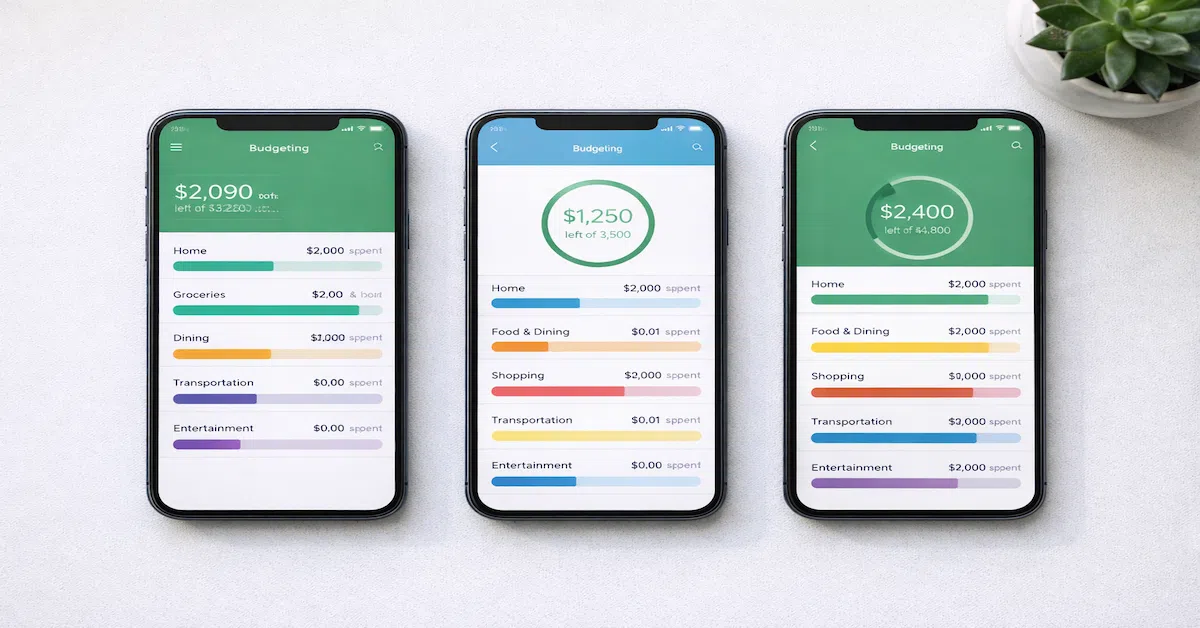
YNAB connects to U.S. bank accounts through direct import and displays spending in real time against category allocations. The interface is organized around a budget view where each category shows allocated funds, spent amount, and remaining balance for the month. When a category goes over budget, funds must be moved from another category — a deliberate reallocation process that is central to YNAB’s behavioral change mechanism.
The learning curve is the most significant barrier to YNAB adoption. New users frequently spend the first two to four weeks confused about how to handle credit card payments, how to budget income that arrives irregularly, and how to set up categories that reflect their actual life rather than generic templates. YNAB provides extensive educational resources — workshops, video tutorials, and a strong user community — specifically because this onboarding challenge is well-documented. Users who invest the time to learn the system correctly typically report significantly improved spending control within 60–90 days.
YNAB is right for you if: You have specific spending categories you need to actively reduce, you are working on debt payoff that requires precise cash flow management, you are comfortable with a 2–4 week learning investment, or you have tried tracking-based budgeting and found it does not change your behavior.
EveryDollar: The Simpler Alternative
EveryDollar is the budgeting app associated with Dave Ramsey’s Financial Peace methodology, though it functions independently of that curriculum. It follows the same zero-based principle — every dollar assigned before the month starts — with a significantly simpler interface than YNAB and a faster onboarding process.
The free version of EveryDollar requires manual transaction entry — you import or type each transaction rather than having them sync automatically from your bank. This is a significant functional limitation for most users: manual transaction entry is precisely the friction that causes most people to abandon budgeting systems within weeks. EveryDollar Plus ($17.99/month) adds bank sync and automated transaction import, which makes it a genuinely viable ongoing budgeting tool rather than an exercise in patience.
EveryDollar is right for you if: You prefer a simpler interface than YNAB, you are already following or interested in the Ramsey debt payoff methodology, or you want zero-based budgeting without YNAB’s learning investment and are willing to pay for the Plus plan to get bank sync.
Goodbudget: Digital Envelopes Without Bank Sync
Goodbudget uses a digital envelope metaphor — you create spending envelopes for each category and allocate income into them at the start of each period. Unlike YNAB and EveryDollar Plus, Goodbudget does not sync with bank accounts on any plan. All transaction entry is manual. This is a significant constraint for most people but a deliberate design choice for others: some users specifically prefer manual entry because the act of recording a transaction creates the intentional awareness that drives behavior change.
Goodbudget’s primary advantage is couples budgeting: the app allows multiple devices to share the same budget in real time, making it one of the more practical tools for partners who want to manage a joint budget without one person being the sole tracker. Both people see the same envelope balances and can record transactions from their own devices simultaneously.
Goodbudget is right for you if: You specifically want the psychological engagement of manually recording transactions, you are budgeting with a partner and need a shared real-time view, or you prefer the envelope visualization method over category-based budgets.
When Zero-Based Budgeting Is Not the Right Tool
Zero-based budgeting requires consistent active engagement to function. The method delivers results when used correctly and fails when used intermittently — which is most of the time for most people. If the pattern of budgeting tools you have tried shows consistent abandonment after two to four weeks, the issue may not be the specific app but the method itself.
Aggregation-first tools like Monarch Money deliver value with significantly less ongoing engagement because they automate the tracking layer. The tradeoff is less real-time spending control — you see patterns after they have developed rather than making allocation decisions before spending happens. For most people who are not in active debt payoff mode and who have stable spending patterns, aggregation-first tools produce better long-term outcomes simply because people actually use them consistently.
The best budgeting app is the one you actually use for more than 30 days.
The full comparison of zero-based budgeting apps, aggregation tools, and how to choose based on your financial situation is in the Budgeting Apps & Financial Automation guide.
Explore Budgeting Apps & Financial Automation →Resources
Official Sources
CFPB — Budgeting Tools and Resources — Free government budgeting worksheets and financial planning tools from the Consumer Financial Protection Bureau.
FDIC — Mobile Banking Safety — Consumer guidance on safely connecting financial accounts to third-party budgeting applications.
Continue Building Your System
The full framework for choosing, setting up, and connecting budgeting apps lives in the FinTech & Modern Money Tools guide.
Frequently Asked Questions
What does zero-based budgeting mean?
Zero-based budgeting means assigning every dollar of income to a specific category before spending it, until the total of all category allocations equals your total income — leaving zero dollars unassigned. It does not mean spending all your money. Savings and investments are categories that receive allocations just like rent or groceries.
Is YNAB worth the cost?
For users who learn and implement the system correctly, yes. YNAB users who engage consistently for 90 days typically report spending changes significant enough to cover the subscription cost multiple times over. The caveat is that the learning investment is real — YNAB requires more setup time and ongoing engagement than aggregation tools. If you will not invest that time, the cost is not justified.
Can I use zero-based budgeting with irregular income?
Yes — YNAB specifically is designed for irregular income through its approach of only budgeting money you actually have rather than projected future income. When a paycheck arrives, you assign those specific dollars to categories. When another arrives, you assign those. This approach handles variable income better than apps that require you to set a fixed monthly income amount upfront.
Which zero-based budgeting app has the lowest learning curve?
EveryDollar Plus has the lowest learning curve of the three main options. The interface is more intuitive than YNAB, the setup process is faster, and the core mechanics — create categories, allocate income, record spending — are straightforward from the first session. The tradeoff is fewer features and less sophisticated handling of edge cases like credit card payments and irregular income.
Disclaimer: This article is for informational and educational purposes only and does not constitute financial advice. App pricing and features are subject to change — verify current terms directly with each provider. PersonalOne is an affiliate partner with Monarch Money. This does not affect editorial independence regarding competing products.