Published: March 30, 2026
Home › Credit Building & Protection › Authorized User Strategy › How Being an Authorized User Actually Builds Credit
About the Author
Ally M. Scott is a personal finance writer and educator focused on helping Millennials and Gen Z build credit intelligently and escape debt cycles. She covers credit strategy, banking systems, and financial infrastructure at PersonalOne.org -- where the goal is always systems over willpower.
TL;DR -- What You Will Learn
Being added as an authorized user on someone else's credit card is one of the fastest legitimate ways to build credit history -- but it only works under specific conditions, and it can backfire if those conditions are not met.
This guide covers:
- Exactly how authorized user status gets reported to the credit bureaus
- Which FICO factors it affects and by how much
- The conditions that determine whether it helps or hurts
- How quickly you can expect to see a score change
- When authorized user status does nothing at all
If you are starting with no credit history or a damaged score, the authorized user strategy can compress years of credit building into a matter of weeks. A family member or close friend adds you to their credit card account, and their positive history -- sometimes years of it -- begins appearing on your credit report.
But the mechanics matter. The strategy only works when the right account is used, and it can actively damage your score when the wrong one is. Understanding how authorized user reporting actually works -- not just the shortcut version -- is what separates the people who see results from the people who wonder why nothing changed.
This guide walks through the full mechanics so you can evaluate whether the strategy applies to your situation and execute it correctly if it does.
Part of the Authorized User Strategy Cluster
This guide covers the foundational mechanics of how authorized user status builds credit. The full authorized user strategy cluster goes deeper -- including how to execute this strategy safely as a parent, when it can hurt your score, how to remove yourself from an account, and when you should never add someone to yours.
Authorized user status is one of the fastest legitimate tools in credit building -- but only when used with a clear understanding of how the reporting actually works.
How Authorized User Reporting Actually Works
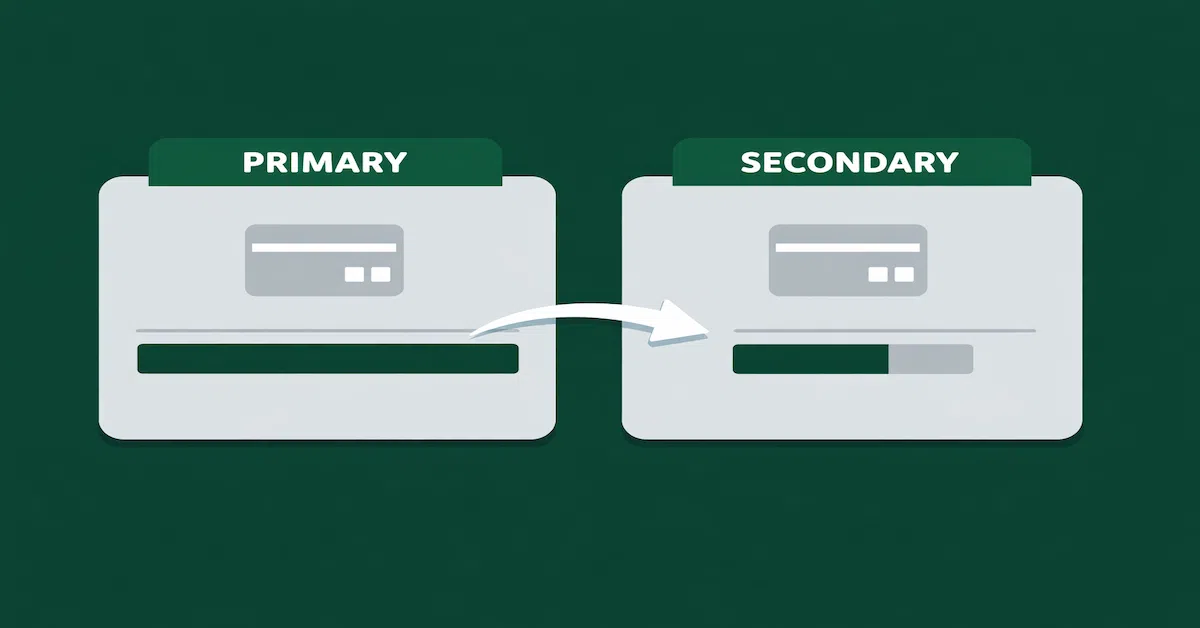
When a primary cardholder adds you as an authorized user, the card issuer notifies the credit bureaus that a new user has been added to the account. Most major issuers -- including the large banks -- report authorized users to all three bureaus: Equifax, Experian, and TransUnion. Once reported, the account's history appears on your credit file as if you were a joint account holder.
This is the key distinction from simply having the primary cardholder's help in other ways. The account does not just show up going forward from the date you were added -- depending on the issuer and bureau, the entire history of that account can appear on your report retroactively. If the primary holder has had the card for eight years with zero late payments, you may inherit eight years of positive payment history the moment the account posts to your report.
That retroactive history is what makes this strategy powerful. It is also what makes the quality of the account so critical -- because negative history transfers the same way positive history does.
Which FICO Factors Authorized User Status Affects
Your FICO score is built from five factors. Authorized user status can move three of them, leave one unchanged, and potentially trigger the fifth in a minor way.
Payment History -- 35% of Your Score
This is the biggest factor in your score and the primary reason authorized user status works. If the primary account holder has never missed a payment, every month of that on-time history posts to your file. For someone with a thin credit file or recent late payments, inheriting a years-long streak of on-time payments can move the payment history factor significantly.
The reverse is equally true. If the primary holder has late payments, those appear on your report too. A single 30-day late payment on a recently inherited account can drop a recovering score 40-80 points depending on where the score currently sits.
Credit Utilization -- 30% of Your Score
When the authorized user account appears on your report, its credit limit and current balance both get folded into your overall utilization calculation. If the primary holder has a $10,000 limit and carries a $500 balance, you gain $10,000 in available credit and only $500 in reported balance -- which lowers your overall utilization ratio.
Conversely, if the primary holder is carrying a high balance relative to their limit -- say $8,500 of a $10,000 limit -- that 85% utilization gets added to your calculation and could push your overall ratio into damaging territory even if your own cards are paid down.
Length of Credit History -- 15% of Your Score
This is where the retroactive history becomes most visible. Your average account age is calculated across all accounts on your report. If you have two accounts averaging 18 months of age, and an authorized user account with 7 years of history is added, your average age increases substantially. Longer average history signals stability to lenders and improves this factor directly.
Credit Mix -- 10% of Your Score
If the authorized user account is a credit card and you already have credit cards on your file, your credit mix does not change. If you have only installment loans and no revolving credit, gaining a credit card through authorized user status adds a new account type and can improve this factor marginally.
New Credit Inquiries -- 10% of Your Score
Being added as an authorized user does not trigger a hard inquiry on your report. No application is filed in your name. This is one of the key advantages over opening a new account yourself -- you gain the reporting benefit without the inquiry penalty.
The Four Conditions That Determine Whether It Works
Not every authorized user addition produces results. The account needs to meet four conditions for the strategy to work as intended.
Condition 1: The Issuer Must Report Authorized Users to the Bureaus
Most major card issuers report authorized users to all three bureaus, but not all do. Some smaller credit unions and store cards report to only one bureau or skip authorized user reporting entirely. Before being added, confirm with the primary cardholder that their issuer reports authorized users. A quick call to the card's customer service line can verify this in under two minutes.
Condition 2: The Account Must Have a Clean Payment History
Zero late payments is the baseline requirement. A single 30-day late payment on the account -- even years ago -- will appear on your report when the account is added. Check with the primary cardholder before agreeing to be added. Ask them directly: has this account ever had a late payment? If the answer is yes or uncertain, this is not the right account to use.
Condition 3: The Account Must Have Low Utilization
The balance-to-limit ratio on the authorized user account becomes part of your overall utilization calculation. An account with a $15,000 limit and a $1,000 balance helps you. An account with a $5,000 limit and a $4,500 balance hurts you. Confirm the current balance and limit before being added and ask whether the primary holder keeps the balance low consistently. If they carry high balances regularly, this account will drag your utilization up month after month.
Condition 4: The Account Must Have Meaningful Age
Being added to a card that is 8 months old has minimal impact on your average account age. Being added to a card that is 8 years old can substantially increase it. The older the account, the more it moves the length of credit history factor. As a general guideline, accounts with at least 3 years of history begin to provide meaningful benefit. Accounts with 5 or more years provide the most impact.
How Quickly You Can Expect to See a Score Change
Once the primary cardholder contacts the issuer and requests your addition, the account typically appears on your credit report within one to two billing cycles -- usually 30 to 60 days. The timing depends on when in the billing cycle you were added and how quickly the issuer reports to the bureaus after the cycle closes.
Score changes follow the reporting, not the addition. You will not see any movement until the account posts to your report. Once it does, score changes are typically reflected in your next score update -- which for most free monitoring tools is daily or weekly. If you pull your report and the account appears but your score has not moved, wait one more reporting cycle before drawing conclusions.
The magnitude of the change depends entirely on the conditions above. A clean, old, low-utilization account added to a thin credit file with no other history can produce a 40-100 point improvement within 60 days. The same account added to a file that already has substantial positive history may move the score only marginally -- because the marginal gain from adding one more positive account diminishes as your file strengthens.
When Authorized User Status Does Not Work
There are specific situations where being added as an authorized user produces no score improvement at all -- or produces a negative result.
The Issuer Does Not Report Authorized Users
If the card issuer does not report authorized users to the bureaus, the account never appears on your credit report. The addition has no effect -- positive or negative. You gain nothing and the primary cardholder takes on the relationship risk for no benefit to you.
The Account Has Negative History
Late payments, high utilization, or derogatory marks on the authorized user account transfer to your file just as positive history does. If the primary account holder has financial problems of their own, being added to their account imports those problems directly onto your credit report.
Your Scoring Model Excludes Authorized User Accounts
Some newer FICO scoring models and certain lender-specific models are designed to reduce or exclude the weight of authorized user accounts in score calculations. This was implemented specifically to prevent score manipulation. While the base FICO 8 model -- the most widely used -- still includes authorized user accounts, lenders using more recent models may see a different score than the one you are monitoring. This is one reason why authorized user addition is a foundation tool, not a complete credit building strategy on its own.
The Primary Holder's Behavior Changes After You Are Added
You have no control over what happens to the account after you are added. If the primary holder misses a payment, runs up the balance, or has the account closed, those events affect your credit report immediately. This is the ongoing risk of the strategy -- your score becomes partially dependent on another person's financial behavior for as long as the account remains on your report.
Build the Full Credit Authority System
Authorized user strategy is one of six clusters in the credit authority framework. The Credit Building and Protection hub maps the complete system -- from score fundamentals and monitoring to utilization strategy, card selection, and optimization for mortgage and loan approvals.
Explore the Credit Building and Protection Hub →Frequently Asked Questions
Do I need to actually use the card to get the credit benefit?
No. You do not need to receive a physical card, make any purchases, or have any access to the account at all. The credit benefit comes entirely from the account being reported to the bureaus under your name. Many authorized user arrangements involve no card being issued to the secondary user -- the primary holder simply calls the issuer and adds the name.
Will the primary cardholder's credit be affected by adding me?
No -- adding an authorized user does not affect the primary cardholder's credit score. Their account history, utilization, and payment record remain unchanged. The only risk to the primary cardholder is if the authorized user is given a card and uses it irresponsibly, adding charges the primary holder is ultimately responsible for paying.
How long should I stay as an authorized user?
Stay until you have built enough of your own credit history that the account is no longer doing significant work for you. Typically this is 12-24 months -- long enough to establish your own payment streak and potentially qualify for your own unsecured card. Once your own accounts have aged and you have consistent positive history, the authorized user account becomes less critical to your score.
What happens to my score when I am removed as an authorized user?
When you are removed -- whether you request removal or the primary holder removes you -- the account typically disappears from your credit report within one to two billing cycles. Any score benefit derived from that account will reverse. If you have built your own credit history in the meantime, the impact of losing the authorized user account will be smaller. If the authorized user account was the primary driver of your score, removal can cause a significant drop.
Can I be an authorized user on multiple accounts?
Yes. Being added to two or three accounts with strong histories can compound the benefit -- especially if each account adds different positive attributes such as one with a very long history and another with a very high credit limit. However, the marginal benefit of each additional account decreases as your own file strengthens, and the risk of negative events increases with each additional account you rely on.
Resources
- CFPB -- Credit Reports and Scores
- MyFICO -- Understanding What Goes Into a FICO Score
- AnnualCreditReport.com -- Free Official Credit Reports
- FTC -- Fair Credit Reporting Act
Disclaimer: This guide provides general educational information about authorized user credit building strategies. It is not personalized financial advice. Individual results will vary based on the specific accounts involved, issuer reporting practices, your existing credit profile, and the scoring model used by any given lender. Before making decisions based on this information, consider your complete financial situation. PersonalOne provides educational content and does not offer personalized financial planning services.