August, 2026
Home › Credit, Banking & Cash Flow › Cash Flow Optimization & Financial Control › How to Prevent Cash Flow Breakdowns in Your Financial System
What You Need to Know
— Cash flow breakdowns happen when normal life disruptions — unexpected expenses, income gaps, timing errors — cascade through a financial system that has no safeguards to absorb them.
— The cash flow optimization strategy that prevents breakdowns is not about eliminating disruptions — it is about building the buffers and redundancies that stop disruptions from becoming cascades.
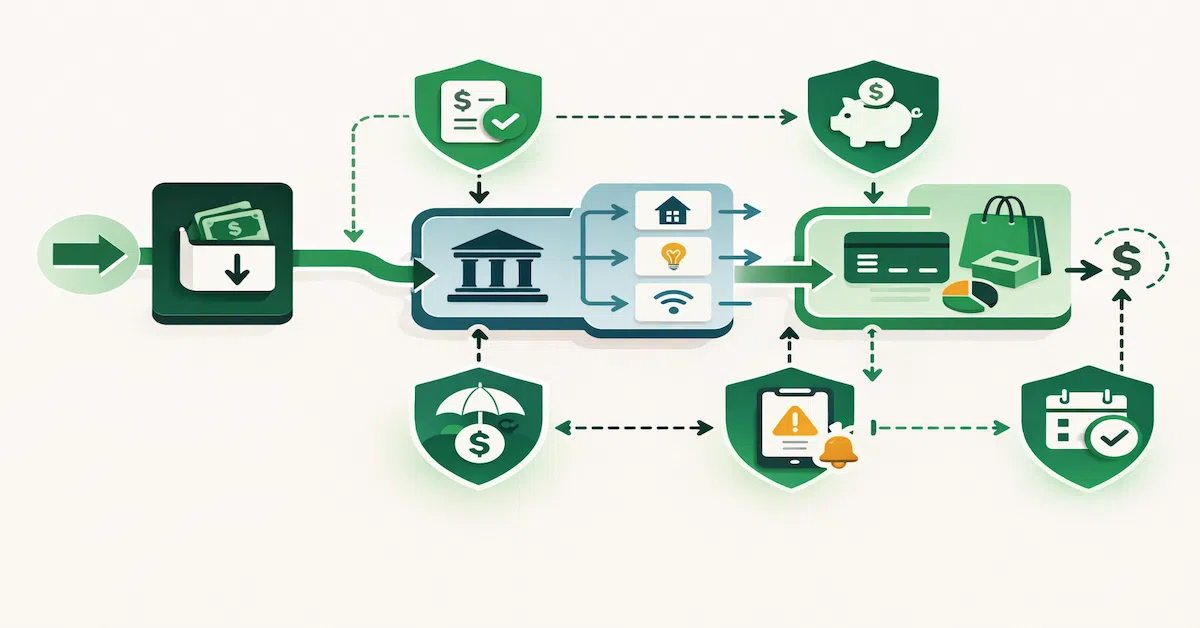
— Five specific safeguards prevent the most common breakdown patterns: a bills account buffer, an emergency fund, autopay redundancy, income gap coverage, and a monthly system check-in.
— Each safeguard addresses a specific failure mode — not all disruptions, but the specific ones that most commonly derail otherwise well-designed cash flow systems.
— A financial system with all five safeguards in place can sustain most normal life disruptions without producing missed payments, credit damage, or financial crisis.
The cash flow optimization strategy that produces lasting financial control must include safeguards against the disruptions that will eventually test it. No cash flow system runs in a frictionless environment indefinitely — income varies, unexpected expenses appear, payroll timing shifts, and life creates the kinds of irregular events that expose the difference between a financial system with resilience built in and one that works only when everything goes smoothly.
Preventing cash flow breakdowns is not about eliminating disruption. It is about building the specific buffers and redundancies that prevent normal disruptions from cascading through the financial system into missed payments, credit damage, and financial crisis. The five safeguards in this article address the five most common cascade failure modes in otherwise well-designed cash flow systems.
Safeguard 1: The Bills Account Buffer
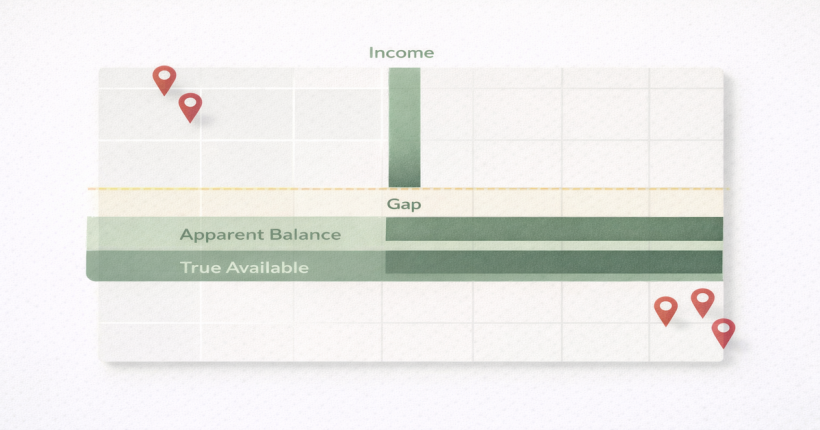
The failure mode it prevents: A paycheck that arrives two to three days later than expected — due to a weekend, a bank holiday, or a payroll processing delay — leaves the bills account underfunded when an obligation processes on its due date. The result is an overdraft or a missed payment from a timing gap that was not caused by any behavioral failure.
The safeguard: Maintain a standing buffer in the bills account equal to two weeks of total monthly obligations. This buffer is not savings — it is operational reserve. It sits in the bills account permanently, funding any obligation that falls before the next paycheck arrives regardless of whether the paycheck timing shifts slightly. The buffer is replenished automatically by each paycheck. Once established, it absorbs most paycheck timing variations without any account falling below zero.
How to build it: In the first month, transfer slightly less to the spending account and allow the difference to accumulate in the bills account as the buffer. After two to three months of reduced spending account allocation, the buffer reaches the target level and the spending account allocation returns to normal. The buffer does not require a special account — it stays in the bills account as a minimum balance below which the account should not fall.
Safeguard 2: The Emergency Fund
The failure mode it prevents: An unexpected expense — car repair, medical bill, appliance replacement — exceeds the spending account balance and forces a choice between using credit (spiking utilization and beginning a balance-carry cycle) or not paying the expense (creating a different kind of problem). Without an emergency fund, every normal unexpected expense creates this choice.
The safeguard: A savings account designated specifically for unexpected expenses, separate from long-term savings goals. The Federal Reserve’s SHED research documents that 63% of adults could cover a $400 emergency expense with cash in 2024 — meaning 37% could not, and their cash flow systems are exposed to the credit utilization spikes and financial stress that emergency credit use produces. A target of one month of expenses provides coverage for most unexpected costs without requiring credit use.
How to build it: An automated payday transfer to the emergency fund account, separate from long-term savings. Start with any amount — the automation is the mechanism, the dollar amount scales over time. A $50 per paycheck transfer builds a $1,300 fund in 13 months without requiring any conscious monthly decision. Establish the automation before increasing the extra debt payment, because the emergency fund protects the debt payoff plan from the unexpected expenses that most commonly cause it to stall.
Safeguard 3: Autopay Redundancy
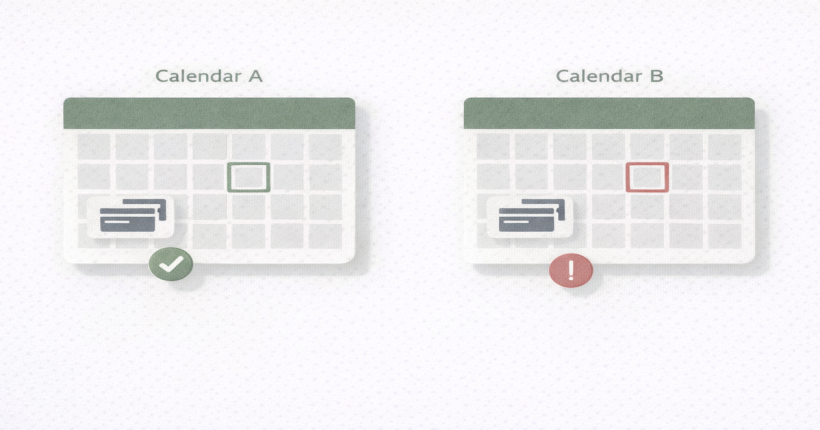
The failure mode it prevents: An autopay fails to process — due to an expired card, a bank account change, a temporary account hold, or a technical error — and the payment is recorded as late before the failure is noticed. This is among the most preventable sources of late payment marks and is the most common way that well-intentioned automated systems produce credit damage.
The safeguard: Set up text or email alerts for every autopay account that notify you when a payment processes or fails to process. Most issuers and billers offer these alerts through their account management settings. The alert is not the backup payment — it is the notification system that allows you to catch and correct a failed autopay before it becomes a 30-day late mark. Review alerts weekly as part of the monthly check-in (Safeguard 5) rather than relying on autopay to run invisibly without any monitoring.
Safeguard 4: Income Gap Coverage
The failure mode it prevents: A period without income — job transition, layoff, business slow period, injury — depletes the bills account before the next income source is established. The bills account buffer (Safeguard 1) handles short timing gaps. Income gap coverage handles longer interruptions that would exhaust the buffer.
The safeguard: A three-month emergency fund target covers the most common income disruption periods. The CFPB and financial education research consistently recommend three months as the baseline resilience threshold — long enough to navigate most job transitions without missing an obligation or destroying the credit profile built by consistent payment behavior. The three-month fund is the long-term target for the emergency savings account; the one-month fund is the first milestone that provides immediate protection while the three-month target builds.
Safeguards make the system resilient. The full framework makes them automatic.
The complete cash flow optimization and financial control framework covers how to build every safeguard into the automated sequence so protection runs by design rather than by ongoing vigilance.
Explore Cash Flow Optimization & Financial Control →Safeguard 5: The Monthly System Check-In
The failure mode it prevents: Gradual system drift — small changes in income, obligation amounts, or account balances that individually seem minor but cumulatively shift the system out of alignment until a problem surfaces. Automated systems do not self-correct for gradual drift. A monthly check-in is the mechanism that catches drift before it becomes a breakdown.
The safeguard: A scheduled 15-minute monthly review covering four things: confirm all autopays processed correctly by reviewing alerts and account histories. Verify the bills account buffer is at target level. Check that the emergency fund balance is growing or stable. Review the credit card statements to confirm pre-statement payments reduced balances as expected before each close date. This review is not a comprehensive budget audit — it is a system health check that confirms the automated sequence is running correctly.
What to do when the check-in reveals a problem: Categorize the problem by type. An autopay that failed needs immediate manual payment and an update to the payment method on file. A bills account buffer below target needs one month of reduced spending account allocation to rebuild it. An emergency fund that was drawn down needs the rebuild allocation resumed. A pre-statement payment that missed its target date needs the automation schedule confirmed for the following month. Each problem type has a specific correction that resolves it without requiring a full system rebuild.
The five safeguards together — bills buffer, emergency fund, autopay alerts, income gap coverage, and monthly check-in — create a financial system that handles normal life disruptions without producing the cascading failures that turn manageable problems into financial crises. As established throughout this cluster and the broader credit, banking, and cash flow hub, the goal of the complete integrated system is not to prevent disruption — it is to build the infrastructure that absorbs disruption without breaking the financial behaviors that produce compounding long-term results.
Resources
CFPB — How to Create a Budget and Stick With It
Federal Reserve — Economic Well-Being of U.S. Households 2024: Savings and Investments
FDIC — Money Smart Financial Education Program
CFPB — Credit Reports and Scores
This article is part of the Credit, Banking & Cash Flow integration system on PersonalOne — the complete framework for building a personal finance infrastructure that runs reliably by design.
Frequently Asked Questions
How much should the bills account buffer be?
Two weeks of total monthly obligations is the practical target for most households. Calculate all fixed monthly obligations, divide by two, and that is the target buffer. For a household with $2,400 in monthly fixed obligations, the buffer is $1,200. This amount covers paycheck timing variations of up to two weeks without any obligation missing its due date. Households with irregular income or multiple variable obligations may want to hold a full month of obligations as the buffer rather than two weeks.
What is the difference between the bills account buffer and the emergency fund?
Purpose and permanence. The bills account buffer is an operational reserve that lives permanently in the bills account to absorb paycheck timing variations. It is never meant to be drawn down to zero — it stays at target level continuously and is replenished with each paycheck. The emergency fund is held in the savings account and is intended to be used when genuinely needed, then rebuilt afterward. The buffer handles timing disruptions. The emergency fund handles expense disruptions. Both are necessary because they address different categories of the disruptions that cause cash flow breakdowns.
What should I do if I cannot afford to build both the buffer and the emergency fund at the same time?
Build the bills account buffer first. It is smaller and faster to establish, and it protects the financial system from the paycheck timing variations that are the most frequent cause of missed payments. Even a one-week buffer — half the target — provides meaningful protection while the emergency fund builds more slowly. Once the buffer reaches target, redirect the buffer-building allocation to the emergency fund. The two safeguards can be built sequentially without leaving the system fully unprotected during the building period, because the partial buffer provides partial protection from day one.
Disclaimer: This content is for educational purposes only and does not constitute financial advice. Individual financial situations vary — consult a qualified financial professional for personalized guidance.