August, 2026
Home › Credit, Banking & Cash Flow › Cash Flow Optimization & Financial Control
TL;DR
— Cash flow optimization strategy is the advanced layer of the integrated financial system — it builds on account structure and cash flow routing to maximize control over every dollar and minimize financial stress.
— Most financial stress is not caused by insufficient income. It is caused by misaligned schedules — paychecks, bill due dates, and credit card statement dates that were never deliberately coordinated.
— Alignment engineering produces immediate, compounding improvements: reliable bill coverage, lower reported credit utilization, consistent debt payoff, and a financial system that holds through disruption.
— Every component of the optimization layer can be built in one to two sessions and runs automatically from that point forward.
— This cluster covers the full optimization framework — from schedule alignment through debt payoff infrastructure to breakdown prevention — as the final layer of the complete credit-banking-cash flow system.
A cash flow optimization strategy is what converts a functional financial system into a high-performing one. The foundation layers — account structure, cash flow routing, and credit management — produce stability. The optimization layer produces control: the alignment of every financial schedule with every other, the elimination of the timing gaps that create financial stress, and the automation infrastructure that makes debt payoff, credit improvement, and savings accumulation happen simultaneously without requiring active monthly management of any of them.
This cluster is the fourth and final cluster in the credit-banking-cash flow integration hub. It assumes the banking structure and cash flow routing covered in Clusters 1 through 3 are in place, and it covers the optimization decisions that extract maximum financial performance from that infrastructure.
What Cash Flow Optimization Actually Means
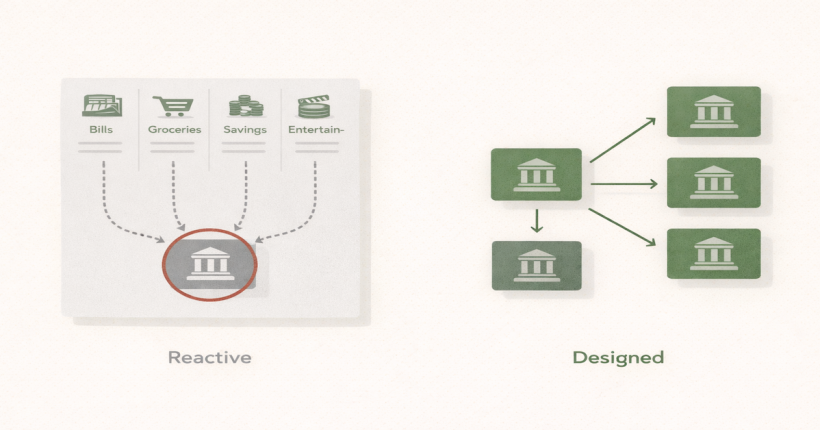
Cash flow optimization is not about spending less or earning more. It is about engineering the timing relationships between income, obligations, savings, and credit management so that every financial event occurs at the right point in the cycle relative to every other financial event. When those relationships are designed intentionally, the system produces the right outcomes automatically. When they are undesigned — as they are in most households — timing conflicts produce the stress, shortfall, and credit damage that most people attribute to insufficient income or insufficient discipline.
The money flow optimization system at the core of this cluster has five interconnected components: schedule alignment, a full alignment strategy, debt payoff infrastructure, credit score protection, and breakdown prevention safeguards. Each component addresses a specific failure mode in the cash flow system, and together they produce a financial infrastructure that runs reliably through normal life variability rather than only when everything goes smoothly.
The Schedule Alignment Problem Most People Never Address
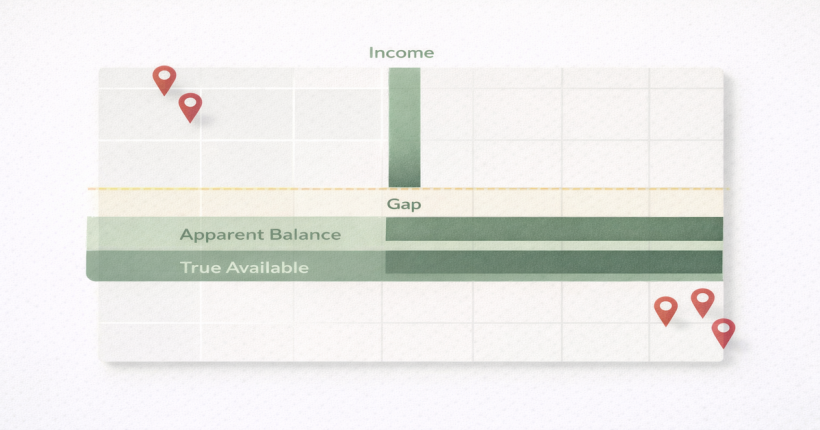
Paycheck arrival dates, bill due dates, and credit card statement close dates are three independent schedules that most households never deliberately coordinate. The paycheck arrives when the employer pays. The bills are due when the provider set them years ago. The credit card statement closes on whatever date the issuer assigned at account opening. None of these dates were designed to work together, and for most households they do not — producing recurring timing conflicts that feel like cash flow problems but are actually scheduling problems.
Aligning paychecks, bills, and credit cards is the entry point to optimization. Most bill due dates and credit card statement close dates can be adjusted by request — a phone call to the provider or issuer moves the date to a position that creates a reliable funding window after each paycheck arrives. That single category of adjustment eliminates most of the timing conflicts that produce month-to-month financial stress without requiring any change in spending behavior or income level.
The Full Alignment Framework
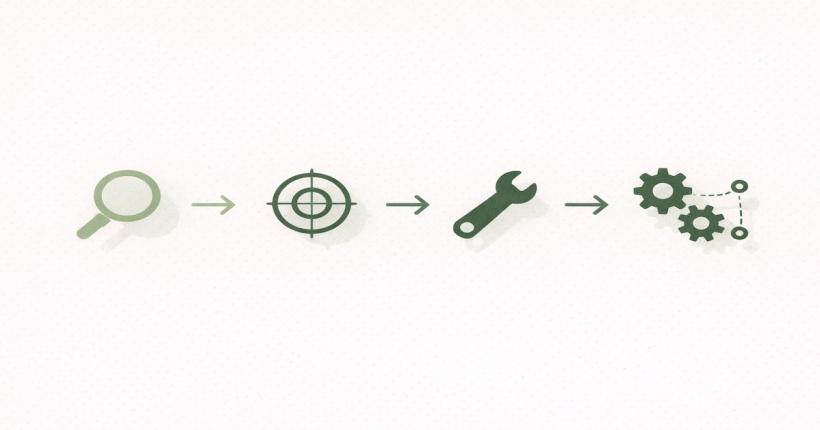
Schedule alignment is the first step. The complete cash flow alignment strategy is the four-phase framework that maps the current cash flow pattern, identifies all misalignment points, makes the scheduling adjustments, and automates the aligned sequence so it runs without monthly manual management. The four phases can be completed in two sessions for most households, and the result is a financial system where every obligation, payment, and allocation runs in the correct sequence relative to every other financial event each pay cycle.
The six compounding benefits of a fully aligned and automated cash flow system are: bill coverage by design, consistent low credit utilization, reliable savings accumulation, debt payoff acceleration, significantly reduced financial stress, and a credit profile that improves passively as the consistent behavioral inputs compound in the credit history over time. Each benefit reinforces the others — the system produces compounding improvements rather than isolated incremental gains.
Debt Payoff Needs a Cash Flow System, Not Just a Strategy
The debt payoff component of the optimization layer addresses one of the most common financial failures: plans that start correctly and stall repeatedly because the infrastructure to sustain them was never built. Most debt payoff plans fail without a cash flow system protecting the extra payment. The strategy — avalanche or snowball — is sound. What is missing is the automated bills account allocation that makes the extra payment as non-negotiable as the minimum payment. When the extra payment is automated from the bills account rather than sourced from monthly surplus, it runs through every disruption rather than stopping at the first one.
Cash Flow Mistakes That Quietly Suppress Credit Scores
Most credit score damage is produced by cash flow mistakes rather than deliberate credit mismanagement. The five cash flow mistakes that damage credit scores — late payments from timing gaps, high utilization from absent pre-statement payments, balance rollovers from minimum-only payments, emergency credit use that spikes utilization, and payment timing errors that report the wrong balance — each have a structural fix that eliminates them through system design rather than ongoing vigilance. The financial flow control strategy that protects a credit score is almost entirely a cash flow strategy, not a direct credit management strategy.
The optimization layer runs on top of the full system. Start with the foundation if you haven’t yet.
The complete credit-banking-cash flow hub covers all four clusters in sequence — from account structure through cash flow routing through financial infrastructure through the optimization layer covered here.
Return to the Full Credit, Banking & Cash Flow Hub →Building Resilience Into the System
The final component of the optimization layer is the safeguard architecture that makes the system resilient rather than just functional. A financial system that works when everything goes smoothly is not optimized — it is fragile. Preventing cash flow breakdowns requires five specific safeguards: a bills account buffer that absorbs paycheck timing variations, an emergency fund that prevents unexpected expenses from triggering credit utilization spikes, autopay redundancy alerts that catch payment failures before they become late marks, income gap coverage that sustains the system through employment transitions, and a monthly check-in that catches gradual system drift before it produces a breakdown.
Together these safeguards convert a well-designed cash flow system into a resilient one — one that produces the compounding improvements of consistent payment history, low utilization, and growing savings not just in normal months but through the irregular expenses, timing shifts, and disruptions that are a routine feature of adult financial life. That resilience is the difference between a financial system that improves over time and one that resets every time something goes wrong.
Resources
CFPB — How to Create a Budget and Stick With It
CFPB — Credit Reports and Scores
CFPB — What Is a Credit Utilization Rate?
Federal Reserve — Economic Well-Being of U.S. Households 2024
FDIC — Money Smart Financial Education Program
This cluster is part of the Credit, Banking & Cash Flow integration system on PersonalOne — the complete framework for building a personal finance infrastructure that runs reliably by design.
Continue Learning — Cash Flow Optimization & Financial Control
How to Align Your Paychecks, Bills, and Credit Cards — The scheduling adjustments that eliminate timing conflicts between income, obligations, and credit card statement dates
The Cash Flow Alignment Strategy — The complete four-phase framework for mapping, adjusting, and automating a fully coordinated cash flow system
Why Most Debt Payoff Plans Fail Without Cash Flow Systems — The structural gap that causes debt payoff plans to stall and the automation fix that makes extra payments consistent
The Cash Flow Mistakes That Damage Your Credit Score — Five specific cash flow patterns that quietly suppress credit scores and their structural fixes
How to Prevent Cash Flow Breakdowns in Your Financial System — The five safeguards that stop normal life disruptions from cascading into missed payments and financial crises
Frequently Asked Questions
Do I need to complete the other clusters before starting cash flow optimization?
The optimization layer builds most reliably on the account infrastructure from Cluster 1 — specifically the bills account, spending account, and savings account separation. Without that infrastructure, the automated payment sequences that make optimization work have no stable architecture to run through. If the account separation is in place, the optimization components in this cluster can be implemented regardless of whether Clusters 2 and 3 have been fully built. The alignment adjustments in particular — moving bill due dates and statement close dates — can be made at any point and produce immediate improvement.
How much time does it take to implement the full optimization layer?
The alignment adjustments — requesting due date and statement close date changes from providers and issuers — take one to two hours across two to three phone calls or online requests. The automation setup — configuring pre-statement payments and extra debt payments in the bills account automation — takes one additional session of 30 to 45 minutes. The safeguards — building the bills buffer, establishing the emergency fund automation, and setting up payment alerts — are configured in the same session as the automation setup. Total implementation time is three to four hours spread across two sessions. After that, the system runs automatically.
What is the most impactful single change in this cluster?
For most households, requesting credit card statement close date changes so they fall five to seven days after the paycheck most reliably available to fund a pre-statement payment. This single adjustment enables consistent pre-statement payments that reduce reported utilization, which is the second-largest factor in credit scoring. Households that implement this one change and automate a pre-statement payment typically see measurable credit score improvement within two billing cycles — without any change in spending behavior, income, or any other financial variable.
How does this cluster connect to the rest of the PersonalOne system?
This cluster is the optimization layer of the credit-banking-cash flow hub, which is itself the infrastructure layer of the full PersonalOne financial system. The other authority hubs — budgeting and savings, credit building, debt relief, financial automation — address specific financial goals. This hub and its four clusters address the plumbing that makes all of those goals achievable and sustainable. The optimization layer covered here is where the infrastructure transitions from functional to high-performing — producing the compounding improvements in credit, savings, and financial stability that the other hubs are designed to build on.
PersonalOne Money System
This content is researched, written, and owned by PersonalOne — a free financial education platform built to help Millennials and Gen Z build real financial systems.
Disclaimer: This content is for educational purposes only and does not constitute financial advice. Individual financial situations vary — consult a qualified financial professional for personalized guidance.