September 2026
Home › Credit Building & Protection › Authorized User Credit Strategy › Being an Authorized User When the Primary Cardholder Has Bad Credit
What You Need to Know
— Six specific negative account characteristics can transfer from a primary cardholder's account to your credit report. Three of them can damage your credit immediately on the first reporting cycle. Two of them follow different rules by bureau. One of them is often overlooked entirely.
— High utilization on the primary account transfers to your utilization calculation at every statement close — regardless of your own spending behavior. A card at 80% utilization suppresses your score whether you own it or are just an authorized user on it.
— Late payments transfer differently by bureau. Experian generally excludes negative payment history from AU accounts. Equifax and TransUnion include it. A single 30-day late mark on the primary account can appear on two of your three bureau files.
— Derogatory marks — collections, charge-offs, judgments — that existed on the account before you were added can appear on your credit report retroactively through Equifax and TransUnion once the AU tradeline is established.
— If you are already on a damaging primary account, removal is the correct action — and you can initiate it yourself without the primary cardholder's cooperation by contacting the credit bureaus directly.
Every guide on authorized user strategy tells you to "only get added to accounts in good standing." Almost none of them explain what happens if you are added to an account that is not — or what specifically constitutes a bad account, which negative characteristics transfer, how each one damages your credit, and whether the damage is reversible. That gap is what makes the authorized user primary cardholder bad credit scenario the most dangerous in the entire AU strategy framework.
The risk is not theoretical. People get added to accounts without verifying the account's condition. Parents add adult children to cards that carry chronic high balances. Partners add each other to cards with payment history they did not fully disclose. Family members ask for the help of AU addition without revealing that the account has old derogatory marks. And in every case, the authorized user's credit file absorbs the damage — often without the authorized user realizing it until they pull their credit report and find negative items they did not put there.
This article covers the six specific negative account characteristics that transfer from primary cardholder accounts to authorized user credit reports, which transfer completely, which transfer partially depending on the bureau, which the authorized user can dispute, and the five-part evaluation framework for assessing any account before agreeing to be added — plus the escape strategy if you are already on a damaging account.
The Six Negative Account Characteristics That Can Transfer
Not all negative account characteristics transfer the same way. Some appear immediately on the first reporting cycle. Some appear retroactively once the tradeline is established. Some follow bureau-specific rules. Understanding each one separately is what allows you to evaluate a specific account's risk rather than applying a blanket "avoid bad accounts" rule that provides no actionable guidance.
Characteristic 1 — High Credit Utilization
High utilization on the primary account is the most immediately damaging negative characteristic — and the most commonly overlooked because it does not require any payment failure to appear. A primary account carrying 75% utilization transfers a 75% per-card utilization penalty to your credit file at every statement close, regardless of whether you have ever used the card. Your overall utilization ratio is also affected because the balance-to-limit ratio on the AU account contributes to your total revolving balance alongside any balances you carry on your own accounts.
This transfer happens regardless of bureau — all three bureaus receive the same balance and limit information from the issuer's monthly reporting. It happens at every statement close until the balance is paid down or you are removed from the account. A primary cardholder whose spending habits create chronic high balances is a chronic utilization problem in your credit file for as long as you remain on the account. The full explanation of how utilization thresholds affect your score at each band — and why per-card utilization creates a penalty even when overall utilization looks acceptable — is covered in the article on what credit utilization is and why the 30% rule is a myth.
Characteristic 2 — Late Payments (30, 60, 90 Days)
Late payment notations on the primary account transfer differently depending on the bureau — and this asymmetry is the most important distinction to understand before evaluating any AU account with payment history concerns.
Experian: Generally excludes negative payment history from authorized user tradelines. A 30-day late payment on the primary account typically does not appear on the authorized user's Experian credit report. This is an explicit bureau policy, not an accident of timing.
Equifax and TransUnion: Include both positive and negative payment history from AU accounts. A 30-day late payment on the primary account can appear on the authorized user's Equifax and TransUnion files with the same notation weight as if the authorized user had personally missed the payment. A single 30-day late mark can reduce a credit score by 50 to 100 points depending on the starting score and credit profile.
The bureau asymmetry means your three-bureau credit picture is not uniform. Your Experian score may be unaffected while your Equifax and TransUnion scores carry the damage — which matters significantly when lenders pull all three bureaus and use the middle score, or when different lenders happen to pull from different bureaus.
Characteristic 3 — Pre-Existing Derogatory History
This is the most frequently overlooked transfer risk. When you are added to a primary account as an authorized user, the full account history transfers to your credit report retroactively — including payment history from before you were added. If the primary account has a late payment from two years ago, a 90-day delinquency from three years ago, or a period of high utilization that ran for eighteen months, that history appears in your credit file as if you had been an authorized user throughout the account's entire existence.
The retroactive transfer of pre-existing negative history is what makes "adding someone to your card to help them" go so badly wrong when the primary account has a troubled history. The authorized user inherits everything — the good years and the bad ones — from the account's origin to the current date. Asking whether an account is "in good standing now" is not sufficient. You need to know the account's complete payment history going back to its open date.
Characteristic 4 — Collections and Charge-Offs
If the primary account has ever been sent to collections or charged off — even if it was subsequently paid or settled — that notation may transfer to the authorized user's credit report at Equifax and TransUnion when the AU tradeline is established. A charge-off is one of the most damaging items on a credit report, reducing scores substantially and remaining on the credit report for seven years from the date of first delinquency. Being added to an account with a prior charge-off can introduce this item into your credit file retroactively without any action on your part. Experian's general policy of excluding negative AU history provides some protection at one bureau — but two of three bureaus are still exposed.
Characteristic 5 — Credit Limit at or Near Maximum
An account where the balance is chronically at or near the credit limit — even without any late payments — creates a per-card utilization problem that is effectively permanent until the balance is paid or you are removed. A card with a $5,000 limit and a $4,800 balance running for months transfers 96% per-card utilization to your credit file at every statement close. This account is in "good standing" in the sense that payments have been made on time — no late payment notations appear — but the utilization penalty is as damaging as some derogatory marks.
Characteristic 6 — Closed Accounts With Negative History
If the primary cardholder was previously added to your account as an authorized user on a card that is now closed — or if the primary account itself was closed in bad standing — the closed account tradeline with its negative history can still transfer when you are added to another account from the same cardholder. The more important scenario is a primary account that was closed after going delinquent and has since been reopened or replaced. Always verify the specific account you are being added to, not just the primary cardholder's general credit behavior. One account in their profile may be excellent while another has a troubled history that you cannot see without requesting they pull their own report and show you the specific account's payment record.
What I've Seen
The case that illustrates this most clearly is someone who was added to a sibling's credit card by a well-meaning family member. The sibling's current balance was low and payments were current. What neither of them checked was the payment history going back four years — which included a six-month period of chronic late payments during a difficult stretch the sibling had navigated through. The moment the AU tradeline appeared on my client's Equifax and TransUnion reports, six late payment notations from four years earlier appeared simultaneously. Her score dropped 78 points in one billing cycle. She had not been a credit card holder four years ago. She had never made a late payment in her life. And her credit report showed six of them. The fix took eight months — removal from the account, dispute filings at two bureaus, and waiting for the scoring model to recalculate without the negative tradeline. All of it was preventable with a five-minute review of the primary account's full payment history before agreeing to be added.
The Five-Part Account Evaluation Framework
Running through this evaluation framework before agreeing to be added to any account takes less than fifteen minutes and identifies every material risk. None of the five checks require access to the primary cardholder's full credit file — just the specific account information they can provide directly.
Check 1 — Current Utilization
Ask the primary cardholder for the current balance and credit limit on the specific account. Calculate the per-card utilization: balance divided by credit limit. Any account above 30% per-card utilization delivers reduced benefit or active harm to your utilization calculation. Above 50% is a clear utilization problem that appears in your credit file immediately. Above 80% is severe and will suppress your score from the first reporting cycle. The target before agreeing to be added: under 10% per-card utilization at statement close consistently.
Check 2 — Full Payment History Going Back to Account Open Date
Ask the primary cardholder to pull their credit report and show you the payment history section for the specific account — not their overall credit summary but the month-by-month payment record for that card going back to its open date. Look specifically for: any month marked 30 days late, 60 days late, or 90+ days late; any period of chronically high balances; and whether the account was ever closed, placed in collections, or charged off. "The account is fine now" is not an acceptable substitute for reviewing the actual payment record. A delinquency from three years ago that has since been resolved is still in the payment history and still transfers to your file retroactively when the AU tradeline is established.
Check 3 — Account Age and Standing
An account that is only one or two years old delivers minimal account age benefit to your credit profile. The most valuable AU accounts are those open for five or more years with clean payment history throughout. Also confirm the account is currently in good standing — not past due, not over limit, not in a hardship payment program with the issuer. An account in a hardship or modified payment plan may have a notation that transfers to your credit file even if payments are technically being made.
Check 4 — Issuer Reporting Policy
Confirm that the issuer reports authorized user accounts to all three bureaus and includes the full payment history going back to the account's open date. The primary cardholder should call the number on the back of the card and ask directly: "Do you report authorized user accounts to all three credit bureaus — Experian, Equifax, and TransUnion?" If the issuer does not report, no benefit or harm transfers — but it also means the strategy produces no score improvement. Verifying this takes two minutes and eliminates weeks of waiting for a result that will never appear.
Check 5 — Primary Cardholder's Future Financial Stability
The evaluation is not just about the account's historical condition. It is also about the primary cardholder's trajectory. Is the primary cardholder's financial situation stable? Are they currently managing their spending within the account's limit? Do they have a history of late payments that suggests future late payments are likely? An account in perfect condition today can become a damaged account next quarter if the primary cardholder's financial circumstances deteriorate. This check is behavioral rather than historical — and it requires an honest assessment of the primary cardholder's financial management patterns, not just their current account status. The complete framework for when the risk of adding someone to your account — or being added — outweighs the benefit is covered in the article on when you should never add someone to your credit card.
What to Do If You Are Already on a Damaging Account
If you discover you are currently on an AU account that is damaging your credit — through high utilization, payment history transfers, or derogatory marks — the sequence of actions is straightforward. Acting quickly reduces ongoing damage.
Step 1 — Pull Your Three-Bureau Reports Immediately
Pull your credit reports from all three bureaus at AnnualCreditReport.com and locate the AU tradeline. Identify specifically which negative items are appearing — late payment notations, high utilization, derogatory marks — and at which bureaus they appear. Experian may show a clean tradeline while Equifax and TransUnion show negative history. Document the specific items and dates before taking any action.
Step 2 — Remove Yourself From the Account
Contact the card issuer directly — you can initiate removal as the authorized user without the primary cardholder's cooperation. Call the number on the back of the card you were issued, identify yourself as an authorized user, and request removal. Most major issuers process this immediately. If the issuer requires primary cardholder authorization and the primary cardholder is unresponsive or uncooperative, you can contact each credit bureau directly and request that the account be removed from your credit file — a process that takes 30 to 45 days but does not require primary cardholder involvement. The complete removal process — including the bureau dispute route for uncooperative primary cardholders — is covered in the article on how to remove yourself as an authorized user.
Step 3 — Wait for the Tradeline to Disappear
After removal is processed, the AU tradeline typically disappears from your credit report within one to two billing cycles — 30 to 60 days. During this window, do not apply for new credit. Wait until you have confirmed the tradeline has been removed from all three bureaus before making any credit applications that will be affected by the negative items it carried.
Step 4 — Dispute Items That Should Not Have Transferred
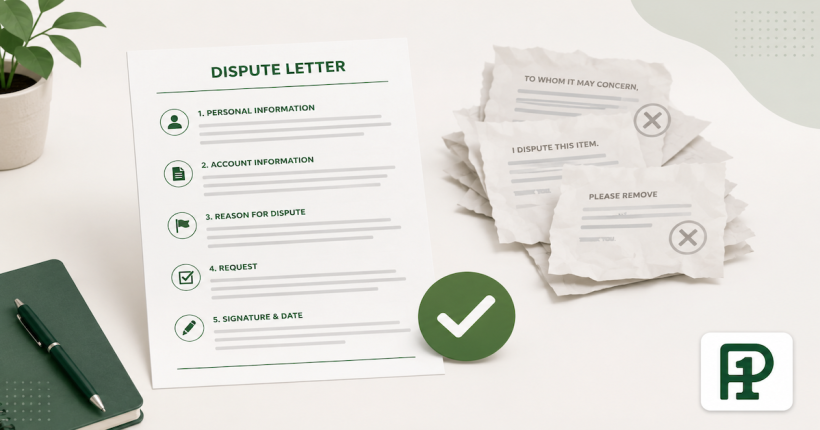
After the AU tradeline has been removed, check whether any negative items that appeared through the AU relationship remain on your Equifax or TransUnion reports. Late payment notations should disappear with the tradeline when the AU account is removed from your file. If negative items remain after the tradeline has been removed, file disputes with each bureau where the items appear. The dispute process at each bureau requires documentation that the account was an AU account and that you have been removed — the bureau then investigates and should remove items that were solely the product of the AU tradeline. Checking your credit report to identify and address errors is covered in the article on how to do a credit report checkup and fix errors.
When Being on a Bad Primary Account Actually Helps
There is one specific scenario where being added to an account with a troubled history produces a net positive outcome rather than damage — and understanding it prevents the unnecessary removal of an AU account that is actually working in your favor.
When High Utilization Is Being Paid Down
If the primary account had high utilization historically but the primary cardholder is actively paying it down, the monthly reporting will show improving utilization at each statement close. Each month that the balance drops, your per-card utilization calculation on the AU account improves. If the primary cardholder is committed to reducing the balance to below 10%, agreeing to be added now — while the paydown is in progress — captures the improving utilization trajectory and the account's full payment history from origin. The key verification: confirm the primary cardholder's current and projected utilization trajectory, not just the current snapshot.
When Experian Is the Only Relevant Bureau
For certain credit applications where the lender pulls exclusively from Experian — and where the negative history on the account is limited to payment history rather than utilization — the Experian bureau policy that excludes AU negative history means the account may deliver full benefit in the Experian-based score while producing no harm. This scenario is narrow and requires confirming both which bureau the specific lender pulls and that the negative history is limited to payment marks rather than utilization (which transfers through all three bureaus regardless). It is a valid consideration for specific situations but should not be used as a general justification for accepting AU status on a damaged account.
The Alternative When the Primary Account Is Damaged
If the primary cardholder's account history disqualifies it for AU strategy, the right answer is not forcing a damaged AU account — it is using a different credit-building tool that does not carry the primary cardholder's history into your credit file.
Secured Card as the Independent Alternative
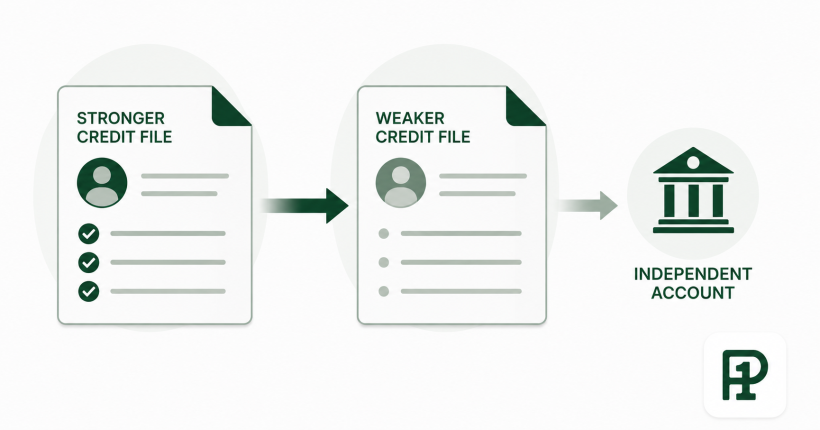
A secured card in your own name — where you deposit funds as collateral and receive a credit limit equal to the deposit — builds credit through your own payment behavior with zero exposure to anyone else's account history. No utilization from another cardholder transfers. No late payment history from the primary cardholder appears. The account is entirely your own, builds independently, and is not subject to any of the six transfer risks covered in this article. The full comparison between AU strategy and secured cards for building credit from scratch — including when each tool is the better choice — is covered in the article on authorized user vs secured card for building credit faster.
Finding a Better AU Candidate
If the goal is still to use AU strategy rather than a secured card, the right answer is identifying a different primary cardholder whose account meets the evaluation criteria — low utilization, clean payment history, long account age. The comparison between different approaches to building credit from nothing — including thin file strategy using AU status with the right account — is covered in the article on building credit from scratch using authorized user strategy for thin files.
Understand the Complete Authorized User Risk Picture
The primary cardholder's credit is one risk dimension. The Authorized User Credit Strategy cluster covers every risk scenario — high utilization, payment history transfer, the bureau asymmetry, what happens when AU status ends, and how to remove yourself from any account that is working against you.
Explore the Full StrategyGovernment Resources
CFPB — Credit Reports and Scores — Your rights as an authorized user, how to dispute items that should not be on your credit report, and how the Fair Credit Reporting Act governs what appears on your file.
AnnualCreditReport.com — Free weekly reports from all three bureaus — the essential tool for verifying what has transferred from an AU account and monitoring whether a removal has processed cleanly.
FTC — Disputing Errors on Your Credit Reports — The federal process for disputing items that should not appear on your credit report, including items that transferred through an AU relationship.
Return to the full credit building and protection guide for the complete framework covering every credit strategy on PersonalOne.
Frequently Asked Questions
Can a primary cardholder's bad credit hurt my credit score?
Yes — in specific ways. High utilization on the primary account transfers to your utilization calculation immediately and at every statement close. Late payment history transfers to your Equifax and TransUnion files (though Experian generally excludes it). Pre-existing derogatory marks — collections, charge-offs — can transfer retroactively when the AU tradeline is established at Equifax and TransUnion. Being added to a damaged account is one of the most common ways authorized user strategy backfires.
What information from the primary account actually appears on my credit report?
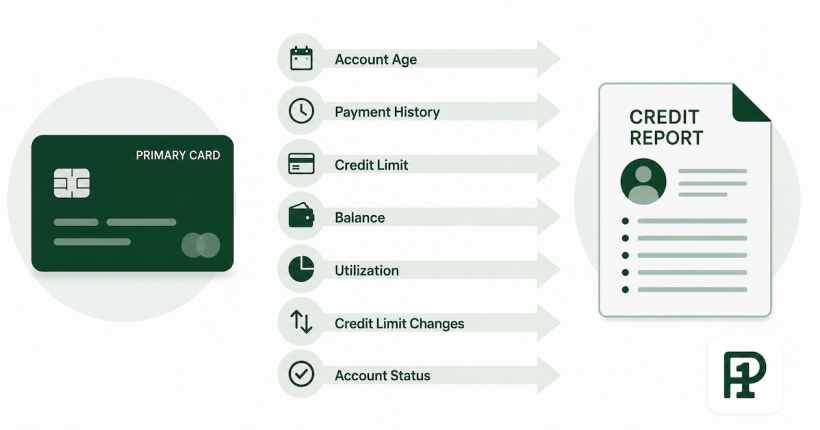
The full account tradeline transfers — the account open date, credit limit, current balance, payment history going back to the account's origin, account status, and issuer information. Critically, the payment history is retroactive: if the account was opened eight years ago and had a troubled first two years, those two troubled years appear in your payment history as if you had been an authorized user throughout. This retroactive transfer is the most important risk to verify before agreeing to be added.
Does a primary cardholder's late payment affect my credit at all three bureaus?
No — the impact differs by bureau. Experian generally excludes negative payment history from authorized user accounts, so a late payment on the primary account typically does not appear on your Experian report. Equifax and TransUnion include both positive and negative payment history from AU accounts, so the same late payment can appear at two of the three bureaus. This bureau asymmetry means your three-bureau credit picture is not uniform — and lenders who pull all three and use the middle score will see the Equifax and TransUnion impact.
Can I remove myself from an account without the primary cardholder's help?
Yes. Most major issuers allow authorized users to request their own removal by calling the card issuer directly. If the issuer requires primary cardholder authorization and the primary is unresponsive or uncooperative, you can contact each credit bureau directly and request that the AU account be removed from your credit file. This bureau dispute route takes 30 to 45 days but works without primary cardholder involvement.
If I remove myself from a bad AU account, will the damage to my credit report disappear?
Yes — for the most part. When the AU tradeline is removed from your credit report, the negative items it carried disappear with it within one to two billing cycles. Your score recalculates without the damaged account's contribution. If any items remain after the tradeline is removed, file disputes with the bureaus where they appear. The recovery timeline depends on how much of your credit score was dependent on the negative AU account versus your independent credit accounts.
How do I verify a primary account's payment history before agreeing to be added?
Ask the primary cardholder to pull their credit report and show you the specific account's month-by-month payment history going back to the account's open date — not their overall credit summary but the detailed tradeline for that specific card. Look for any month marked 30, 60, or 90 days late; any period of chronic high utilization; and whether the account was ever closed, placed in collections, or charged off. Current account status is necessary but not sufficient — the historical record is what transfers when you are added.
This article is for educational purposes only and does not constitute financial or credit advice. Credit bureau policies on authorized user accounts and negative history reporting may change. Verify current policies directly with each bureau and your card issuer. Dispute processes and timelines vary by bureau. PersonalOne is a free financial education platform.