September 2026
Home › Credit Building & Protection › Authorized User Credit Strategy › When You Should Never Add Someone to Your Credit Card
What You Need to Know
— As the primary cardholder, you are legally responsible for every charge an authorized user makes — regardless of any agreement between you and them. There is no legal mechanism that shifts that liability to the authorized user.
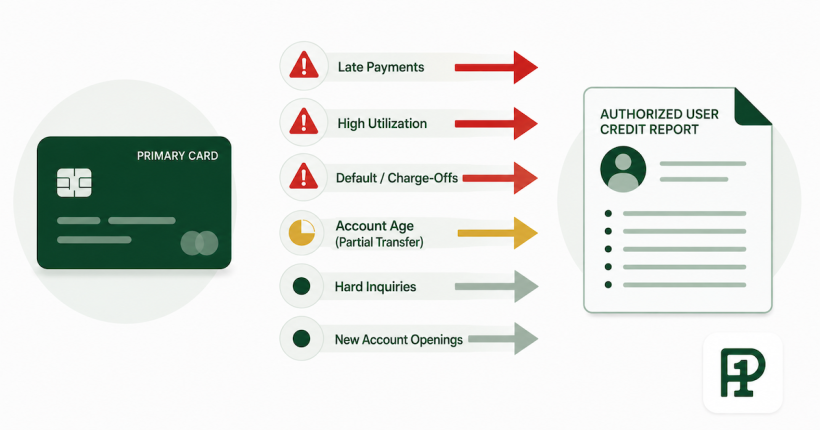
— Adding an authorized user does not directly affect your credit score — but their spending behavior does. If they run up balances that push your card above 30% utilization, your score drops even if you've done nothing wrong.
— Removing an authorized user stops future charges but does not eliminate charges already made. You are still responsible for any outstanding balance regardless of who spent it.
— Six specific scenarios where adding someone is the wrong decision — regardless of how much you trust the person. Trust is one variable. Structural risk is another.
— The pre-addition checklist at the end of this article takes five minutes and covers every risk factor before you add anyone. Run it every time without exception.
The question of when not to add authorized user to your credit card isn't purely about trust. Most guides stop at "only add someone you trust completely" — which is correct but incomplete. There are six specific scenarios where adding someone as an authorized user is the wrong decision even when you trust the person entirely. Structural risks — their financial behavior, your current credit position, the nature of the relationship, and the legal mechanics of authorized user arrangements — determine whether adding someone helps both parties or creates a financial liability that damages your credit, your finances, or both.
This guide covers the six scenarios where the answer is no, the legal mechanics that make the primary cardholder's exposure real regardless of personal agreements, and the five-minute pre-addition checklist that makes the decision clear before you add anyone to your account.
The Legal Reality: What You're Actually Agreeing To
Before covering the six scenarios, the legal mechanics need to be clear — because they change the risk calculus in a way that verbal agreements and good intentions cannot.
You Are Solely Responsible for All Charges
As the primary cardholder, you are the only party with a legal obligation to the credit card issuer. The authorized user has no legal responsibility for any balance on the account — not for charges they made, not for charges you made, not for any portion of the outstanding balance. If an authorized user runs up $3,000 in charges and refuses to pay you back, your only recourse is a civil dispute with that person. The issuer looks exclusively to you. A written agreement between you and the authorized user about who pays for what is enforceable only in civil court — it is not recognized by the issuer in any way.
Removal Stops Future Charges — Not Past Ones
When you remove an authorized user, their card is deactivated and they can no longer make new charges. Any balance already on the card — including charges they made before removal — remains your legal responsibility. Removing someone after they've overspent does not reduce the balance you owe. It only prevents additional charges from that point forward. This is the most important legal mechanic to understand before adding anyone to your account. The full removal process — including what happens to your credit and theirs after removal — is covered in the article on how to remove an authorized user from your credit card.
Their Spending Directly Affects Your Credit Score
Your credit score is calculated from your credit report — which includes the balance on your card whether you spent it or the authorized user did. If an authorized user's spending pushes your card to 70% utilization, your score reflects 70% utilization. The bureaus don't distinguish between the primary cardholder's spending and the authorized user's spending — the balance is the balance. A 70% utilization spike on your primary spending card can drop your score 30 to 50 points regardless of the cause. Understanding exactly how utilization affects your score at each threshold — and why high per-card utilization damages your score even when overall utilization is low — is covered in the article on what credit utilization is and why the 30% rule is a myth.
What I've Seen
The situation I encounter most often in this area is someone who added a sibling or close friend to help them build credit — with a clear verbal agreement that the authorized user would only use the card for small purchases and pay their share immediately. Everything worked fine for three months. Then the authorized user had a financial emergency, put $2,800 on the card "temporarily," and stopped answering calls. The primary cardholder's utilization went from 8% to 62% in one billing cycle. Their score dropped 45 points. They couldn't remove the authorized user fast enough to prevent the balance from reporting — the statement had already closed. The relationship was damaged, the credit was damaged, and the financial loss was real. The verbal agreement meant nothing to the issuer and meant nothing to the score. The trust was genuine. The structural risk was ignored. Those are two separate things.
Six Scenarios Where the Answer Is No
These six scenarios represent the specific conditions where the structural risk of adding an authorized user outweighs any benefit — to you, to them, or to both. They apply regardless of the strength of your relationship with the person you're considering adding.
Scenario 1 — The Person Has a Documented Spending Problem
If the person you're considering adding has a history of overspending, impulse purchases, or financial instability — regardless of how much you care about them — adding them to your credit card creates an uncapped liability on a card that reports to your credit file. Their good intentions are not a financial safeguard. Their current financial stress, emotional spending patterns, or lack of budgeting discipline will express itself through your card. A secured card in their own name with a $300 limit is a better credit-building tool for someone with spending behavior issues — it limits the damage to their own account and doesn't put your credit at risk. The comparison between authorized user status and secured cards for building credit is covered in the article on authorized user vs secured card for building credit faster.
Scenario 2 — The Relationship Is Unstable or New
A credit card authorized user arrangement is a financial relationship with real credit consequences. Adding someone to your account in the early stages of a relationship — romantic, friendship, or family — before you have evidence of their financial behavior under stress creates exposure that can outlast the relationship. The most common version of this is adding a new romantic partner early in the relationship as a gesture of commitment. If the relationship ends badly, you now have a former partner with access to a card linked to your credit file and the potential for retaliatory spending before you can process the removal. New relationships deserve time before financial entanglement. The specific considerations for couples navigating authorized user arrangements — including when the arrangement makes sense and when it doesn't — is covered in the article on authorized user strategy for couples.
Scenario 3 — Your Card Is Already Near Its Credit Limit
If your card is currently at 40%, 50%, or higher utilization — whether from your own spending or a previous balance you're paying down — adding an authorized user who will make additional charges pushes utilization higher and directly damages your score further. There is no credit-building benefit to the authorized user that justifies taking a card that's already in a high-utilization range and adding spending to it. The correct sequence is to pay your own card down to below 10% utilization, then evaluate whether adding an authorized user makes sense from that clean position. Adding an AU to a card already under utilization pressure creates scoring damage for you with no offsetting benefit to justify it.
Scenario 4 — You're Within 12 Months of a Major Credit Application
If you're planning to apply for a mortgage, auto loan, or any significant credit product within the next 12 months, this is not the time to add an authorized user whose spending behavior you cannot fully control. A mortgage application involves a credit review at application and again at closing — any utilization spike from authorized user spending during that window can move you out of a favorable rate tier or delay the closing. The financial consequence of a 0.25% rate increase on a $350,000 mortgage is approximately $18,000 in additional interest over the loan term. No credit-building favor to a friend or family member justifies that exposure when a major application is in progress or imminent.
Scenario 5 — The Person's Credit Problem Is Not Fixable Through AU Status
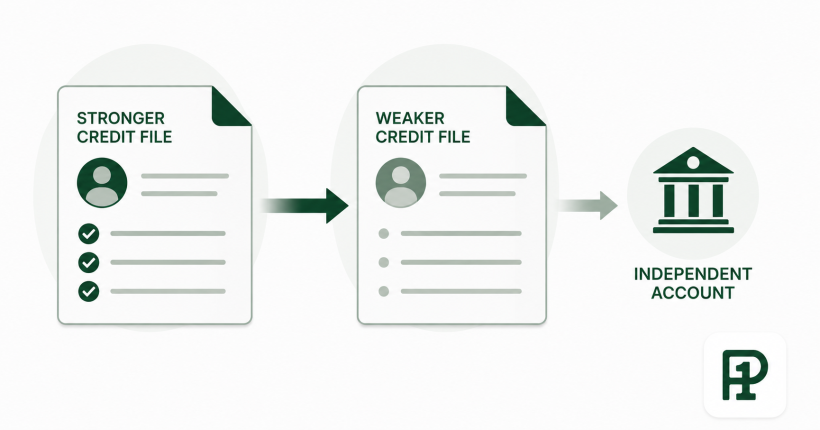
Authorized user status helps people with thin credit files — no credit history, limited accounts, short account age. It does not fix derogatory marks, collections, charge-offs, or bankruptcies on the authorized user's own credit report. If someone has serious negative history on their own accounts, being added to your card adds positive history alongside the negative — but it doesn't remove the negative. Their score may improve modestly, but the underlying credit problems remain. More importantly, the specific financial behaviors that produced those problems — missed payments, maxed-out cards, default — are the same behaviors that create risk for you as the primary cardholder. Someone with a pattern of missed payments on their own accounts is statistically more likely to create a spending or repayment problem on yours.
Scenario 6 — There Is No Clear Agreement on Spending and Repayment
Adding someone as an authorized user without a clear, explicit agreement about how the card will be used — what they can charge, what amount they'll reimburse you and when, and what happens if they can't — creates a financial arrangement with undefined terms. Good intentions on both sides are not a substitute for a clear framework. Before adding anyone, establish in writing: the maximum monthly charge amount they're authorized to make, the repayment timeline, the consequences if repayment doesn't happen, and the conditions under which you'll remove them. This isn't about distrust — it's about creating a structure that protects both parties and removes ambiguity before it becomes conflict. An agreement that both parties understand before the arrangement begins is the difference between a helpful credit-building tool and a financial entanglement waiting to unravel. The full framework for managing utilization on your card when an authorized user is spending on it — and how to prevent their spending from spiking your utilization — is covered in the article on how to manage credit utilization across multiple cards.
When Adding Someone Is the Right Decision
The six scenarios above define when not to add someone. The positive case exists too — and understanding both sides makes the decision framework complete rather than purely restrictive.
The Conditions That Make AU Addition Appropriate
Adding someone as an authorized user makes sense when all of the following are true: you have a high-limit card with low utilization that will absorb their spending without pushing you above 30%, your credit applications are not imminent, the person has demonstrated responsible financial behavior over time, you have a clear written agreement on spending and repayment, and the goal — building a thin credit file — is achievable through AU status rather than better served by a secured card or credit-builder loan in their own name. When all five conditions are met, the arrangement serves both parties cleanly. When any one of them is absent, the risk profile changes meaningfully.
The Right Card for the Arrangement
If you decide to add someone, use your lowest-utilization, highest-limit card — not your primary spending card. The card you use for most of your monthly spending carries the most utilization risk from additional charges. A card you use minimally with a high limit and consistently low balance absorbs the authorized user's spending without creating a utilization problem. If the authorized user charges $200 on a card with a $10,000 limit that you keep at $300, the combined $500 balance is 5% utilization — no risk. The same $200 charge on your primary spending card at 40% existing utilization pushes it higher and creates a scoring problem. Choose the card strategically.
The Pre-Addition Checklist: Five Minutes Before You Add Anyone
Run through this checklist before adding any authorized user to any card. Every item is verifiable before the addition is made. Every item represents a specific risk that is identifiable in advance.
Check 1 — Current Card Utilization
What is the current balance-to-limit ratio on the card you're considering? If it's above 20%, the addition of any new spending creates a utilization risk. Target under 10% as your starting point before adding anyone. If the card is above 20% utilization before the authorized user makes a single charge, the arrangement starts in a compromised position.
Check 2 — Major Applications in the Next 12 Months
Are you planning any major credit applications — mortgage, auto loan, business credit — within the next 12 months? If yes, defer the addition until after the application closes. No exception to this check regardless of how low-risk the authorized user seems.
Check 3 — The Person's Financial Behavior Pattern
Do you have direct evidence — not beliefs or hopes — of how this person manages credit? Have you seen their payment behavior over time? Do they carry high balances on their own accounts? Have they borrowed money from you or others and been slow to repay? Financial behavior is observable and consistent. Look at the evidence you have rather than the relationship you want to believe in.
Check 4 — Written Agreement in Place
Is there a clear written agreement — even an email thread works — establishing the maximum monthly charge amount, repayment timeline, and removal conditions? If the agreement is only verbal, it doesn't exist in any meaningful sense when a dispute arises. Write it down before adding them. The act of writing it down also forces both parties to be explicit about terms they may have only vaguely assumed.
Check 5 — Is AU Status Actually the Right Tool
Would a secured card or credit-builder loan in their own name serve their credit-building goal as well or better? AU status is most powerful for thin-file borrowers — no credit history, no accounts — who need a starting score. For someone with existing accounts and specific negative history, independent credit-building tools may produce more durable results without creating liability for you. The full comparison between AU strategy and secured card strategy for building credit is covered in the article on building credit from scratch using authorized user strategy for thin files.
Build a Complete Authorized User Strategy
Knowing when not to add someone is one piece. The Authorized User Credit Strategy cluster covers the complete decision framework — when it works, when it backfires, how to evaluate accounts, and how to remove someone cleanly when the arrangement ends.
Explore the Full StrategyGovernment Resources
CFPB — Credit Reports and Scores — Official guidance on authorized user accounts, primary cardholder liability, and how account activity affects credit reports.
CFPB — What Is a Credit Utilization Rate? — How authorized user spending affects the primary cardholder's reported utilization and credit score.
FTC — Understanding Your Credit — Federal overview of credit reporting, authorized user arrangements, and primary cardholder rights and responsibilities.
Return to the full credit building and protection guide for a complete overview of every credit strategy covered on PersonalOne.
Frequently Asked Questions
Can an authorized user's spending hurt my credit score?
Yes — directly. Your credit score is calculated from your credit report, which includes the total balance on your card regardless of who spent it. If an authorized user runs up charges that push your card above 30% utilization, your score reflects that high utilization. The bureaus don't distinguish between your spending and the authorized user's spending — the balance is the balance. A significant spending spike from an authorized user before your statement closes can drop your score 20 to 50 points depending on your starting utilization and overall credit profile.
Am I legally responsible for what an authorized user charges?
Yes — entirely. As the primary cardholder, you are the only party with a legal obligation to the credit card issuer. The authorized user has no legal responsibility for any balance on the account. If an authorized user charges $5,000 and refuses to repay you, your only recourse is a civil dispute with that person. The issuer looks exclusively to you for the balance regardless of who spent it. Any agreement between you and the authorized user about who pays for what is unenforceable against the issuer.
What happens if I add someone and they overspend?
Remove them immediately to stop future charges — but understand that removing them does not eliminate the balance already on the card. Any charges made before removal remain your legal responsibility. Pay down the balance as quickly as possible to restore your utilization ratio and minimize the credit score impact. If the overspending was significant enough to cause a utilization spike that has already been reported, the score damage reverses when the lower balance reports at the next statement close — typically within 30 to 45 days of paying down the balance.
Is there a safer way to help someone build credit without adding them to my card?
Yes. A secured credit card in their own name — where they make a deposit that becomes their credit limit — builds credit independently without creating liability for you. A credit-builder loan through a credit union is another option: the loan amount is held in a savings account while they make monthly payments that report to the bureaus, building payment history without any spending access. Both tools build credit through the person's own account and behavior, which is ultimately more durable than borrowed credit history from an authorized user arrangement.
How do I protect myself if I do add an authorized user?
Use your highest-limit, lowest-utilization card — not your primary spending card. Set a spending notification alert through your card's app so you're immediately aware of any charge above a threshold you define. Have a written agreement — even an email — establishing the maximum monthly charge amount, repayment timeline, and conditions for removal. Monitor your card balance weekly in the two weeks before your statement closes and make a pre-close payment if the balance has risen above your utilization target. Treat the arrangement as an active financial relationship that requires monitoring, not a one-time setup that runs on autopilot.
This article is for educational purposes only and does not constitute financial, legal, or credit advice. Credit card liability terms vary by issuer — review your cardholder agreement for the specific terms governing authorized user arrangements on your account. PersonalOne is a free financial education platform.