January 5, 2026
February 20, 2026
Home > Banking Systems > How to Choose the Right Bank in 2026: A Simple Decision Framework
About the Author: Don Briscoe is a financial systems coach with 12+ years helping Millennials and Gen Z escape paycheck-to-paycheck cycles. He's worked with hundreds of people to build emergency funds, eliminate debt, and start investing using framework-first strategies that require less willpower and more infrastructure. He founded PersonalOne to provide the financial education he wished existed—structured, honest, and free.
TL;DR — Quick Summary
- Your banking personality determines which features matter most — cash users need branches, digital natives want apps, hybrid users want both
- Three main banking types serve different needs — traditional banks offer full services, online banks provide better rates, credit unions prioritize members
- Core decision factors are fees, rates, access, and digital tools — prioritize what aligns with how you actually use money daily
- Income type influences bank choice significantly — freelancers need different features than salaried employees or business owners
- Hybrid strategies combine the best of multiple bank types — many people use checking at one bank and high-yield savings at another
Choosing a bank in 2026 isn't as simple as picking the closest branch or going with whatever your parents use. The banking landscape has fractured into dozens of options, each optimized for different financial lifestyles.
Traditional banks still exist, but now they compete with digital-first neobanks offering 4%+ savings rates, credit unions prioritizing member service over profit, and fintech companies that barely resemble banks at all.
Getting this choice right can save you hundreds of dollars annually in fees, earn you significantly more on deposits, and give you tools that make managing money less stressful. Getting it wrong means paying for features you don't use while missing the ones you actually need.
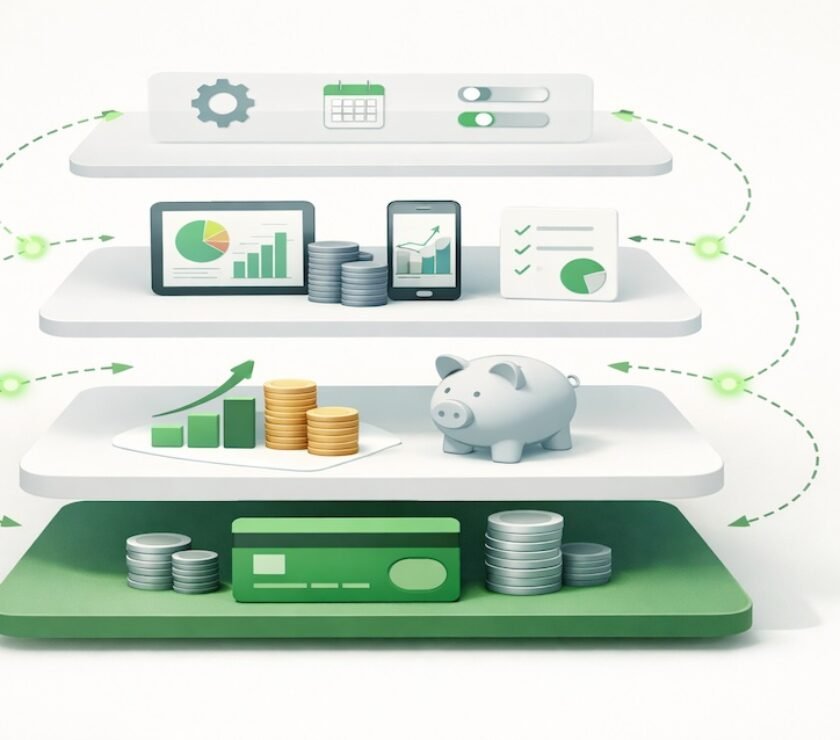
But choosing the right bank is only half the equation. The other half is understanding what structure to put those accounts in once you have them. This guide helps you pick the right bank — and points you to the system that makes it all work together.
Why 2026 Banking Decisions Are Different
Banking has changed more in the past five years than in the previous fifty. The traditional model — physical branches, paper statements, 0.01% savings rates — is being disrupted by technology that offers better experiences at lower costs.
According to the FDIC, more Americans are splitting their banking across multiple institutions: checking at one bank, savings at another offering higher yields, and specialized accounts for specific goals. This fragmentation is made possible by instant transfers, mobile apps that aggregate accounts, and the elimination of most fees that once made multi-bank relationships impractical.
The result? More options than ever, but also more complexity. That's where a clear decision framework matters.
Step 1: Define Your Banking Personality
Before comparing interest rates or app reviews, understand how you actually use banking. Your banking personality determines which features matter most.
The Cash-Heavy User
Do you frequently deposit cash, use ATMs regularly, or prefer handling physical money? You need extensive ATM networks or physical branch access. Online-only banks will frustrate you despite their higher rates and better apps.
Best fit: Traditional banks or credit unions with local branches
The Digital Native
If you rarely touch cash, prefer mobile check deposits, and manage everything from your phone, digital banks are built for you. You'll benefit from minimal fees and better rates since these banks don't maintain expensive branch networks.
Best fit: Online banks, neobanks, digital-first credit unions
The Hybrid User
You want digital convenience for daily transactions but occasional branch access for complex services — notarization, cashier's checks, or in-person loan applications. This describes most people transitioning from traditional to modern banking.
Best fit: Traditional banks with strong digital platforms, or a multi-bank strategy
The Values-Driven Customer
Do you care where your deposits go? Some customers prioritize credit unions for their community focus, or seek banks with strong environmental and social governance practices.
Best fit: Credit unions, B-corps, community development financial institutions
Step 2: Core Features That Actually Matter
Banks compete on dozens of features, but only a handful significantly impact your daily financial life. Rank these based on your priorities before you compare specific banks:
| Feature | Why It Matters | What to Look For |
|---|---|---|
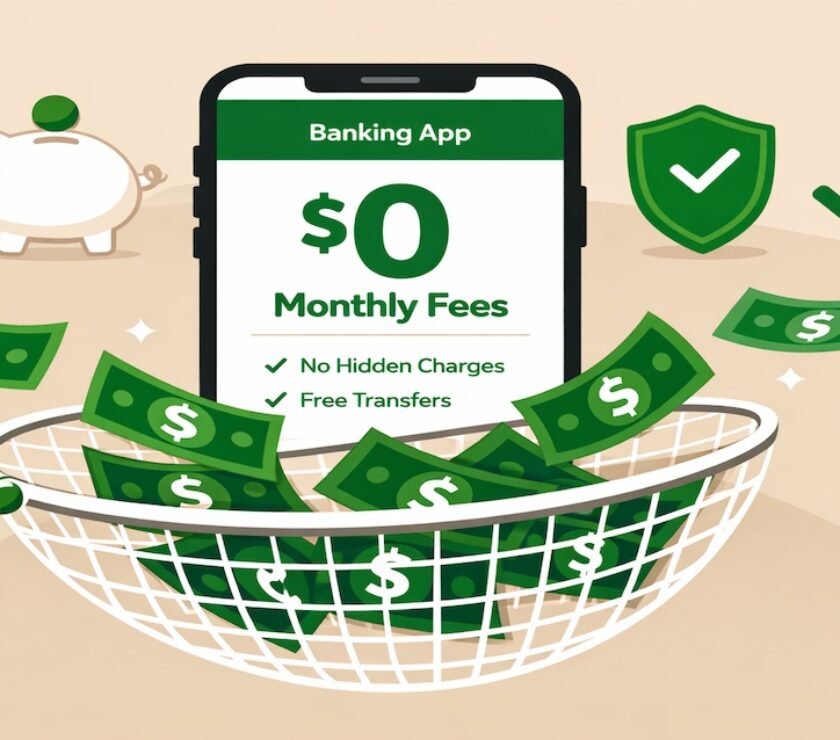
| Monthly Fees | $12–15/month = $144–180/year wasted | $0 monthly fee or easily waived requirements |
| ATM Access | Out-of-network fees add up quickly | Large network or unlimited fee reimbursement |
| Savings Rate | 0.01% vs 4.5% on $10K = $449/year difference | 4%+ APY for high-yield savings in 2026 |
| Digital Tools | Bad apps make banking frustrating | Mobile check deposit, instant transfers, spending insights |
| Overdraft Policy | Some banks structure fees to maximize profit | No overdraft fees or easy opt-out |
| Customer Service | You'll need help eventually | 24/7 phone or chat support with reasonable wait times |
Step 3: Your Three Main Banking Options
Traditional Banks (Chase, Bank of America, Wells Fargo)
Advantages: Physical branches nationwide, full service offerings (mortgages, business accounts, wealth management), extensive ATM networks
Disadvantages: Higher fees, lower savings rates (often 0.01–0.50%), profit-focused model
Best for: People who value in-person service, need complex banking products, or frequently deposit cash
Online Banks and Neobanks (Ally, Marcus, Discover, Chime)
Advantages: High savings rates (4–5%+ in 2026), minimal fees, superior mobile apps, innovative features
Disadvantages: No physical branches, cash deposits difficult or impossible, may lack full service offerings
Best for: Digital natives, people maximizing savings growth, those who rarely use cash
If you're weighing the trade-offs between these two models, the full comparison is in traditional banks vs online banks 2026.
Credit Unions
Advantages: Member-owned (profits returned as better rates and lower fees), community focus, often superior customer service, NCUA insurance equivalent to FDIC
Disadvantages: Membership requirements, smaller ATM networks, sometimes outdated technology
Best for: People who qualify for membership and want better rates than traditional banks with some branch access
Step 4: Income Type Matters More Than You Think
How you earn money significantly influences which banking features you need.
Salaried employees benefit from simple checking and high-yield savings. Predictable income means standard direct deposit and automatic bill pay work perfectly. Focus on minimizing fees and maximizing savings rates.
Freelancers and self-employed workers need different infrastructure. Irregular income requires better cash flow management, separate business and personal accounts, easy transfers between accounts, and tools for tracking estimated taxes. The banking for irregular income guide covers this in detail.
Business owners need merchant services, business credit cards, accounting software integration, and potentially business lines of credit. Some banks excel at business services while others barely support them.
Step 5: Let Your Savings Goal Drive the Decision
If you're actively building an emergency fund, saving for a down payment, or accumulating cash for specific goals, the difference between a 0.01% savings rate at a traditional bank and 4.5% at an online bank compounds significantly.
The Savings Rate Math on $10,000
- Traditional bank at 0.01%: $1 annually
- Online bank at 4.5%: $450 annually
That's $449 per year in free money just for choosing where your savings sit. Over five years with consistent additions, the gap becomes thousands of dollars.
For a current comparison of rates, minimums, and withdrawal limits, see the best savings accounts 2026 guide.
The Simple Decision Framework
Answer These Five Questions
- How often do I deposit cash?
Weekly/Monthly → Traditional bank or credit union
Rarely/Never → Online bank is viable - What frustrates me most about my current bank?
Fees → Prioritize no-fee options
Poor app → Focus on digital-first banks
Low rates → Online banks win
Bad service → Credit unions often excel here - How do I earn income?
Salaried → Standard checking/savings works
Freelance/Variable → Need specialized features
Business owner → Require business banking services - What's my primary savings goal?
Emergency fund → High-yield savings essential
Down payment → Maximize growth with online banks
General savings → Balance access and rates - Do I value in-person service?
Yes, regularly → Traditional bank or credit union
Occasionally → Hybrid approach works
No, never → Online banks offer better value
Your answers reveal your optimal bank type. Most people discover they're either fully digital-native or hybrid users who benefit from multiple banks.
Not Sure Which Bank Fits?
Take our interactive quiz to get personalized bank recommendations based on your financial habits and goals.
Find Your Perfect Bank Match →The Hybrid Strategy: Best of Both Worlds
You don't have to choose just one bank. A hybrid approach is how most financially organized people structure their banking:
A Common Hybrid Setup
- Primary checking at a no-fee traditional bank or credit union — for ATM access and branch services when needed
- High-yield savings at an online bank earning 4–5% instead of 0.01%
- Bills account at the same institution as checking — dedicated to fixed expenses only, no debit card spending
This strategy combines convenience with optimization. Modern instant transfer capabilities make moving money between banks effortless. The key is giving each account a defined purpose so your money doesn't sit undifferentiated in a single account waiting to be spent.
Red Flags to Watch For
As you evaluate options, watch for these warning signs:
- Excessive fees: Monthly maintenance fees, transfer fees, paper statement fees, and minimum balance fees that stack unnecessarily
- Poor digital reviews: Consistently low app store ratings, especially recent ones citing crashes or security issues
- Predatory overdraft practices: Banks that reorder transactions to maximize overdraft fees or make it difficult to opt out
- Lack of transparency: Difficulty finding fee schedules, unclear terms, hidden requirements
- Limited customer support: No phone support, long wait times, restricted service hours
- Pressure tactics: Hard sells on products you don't need, aggressive cross-selling during account opening
Making the Switch
Once you've chosen your new bank, the switching process is straightforward:
- Open your new account online — most applications take 10–15 minutes
- Fund the account — transfer a small amount to activate it
- Update your direct deposit — log into your employer's payroll portal and update account details
- Move automatic payments — update recurring bills and subscriptions to the new account
- Keep old account open for 1–2 months — to catch any missed transitions
- Close the old account — once everything has successfully transferred
Now Build the System Around Your New Bank
Picking the right bank is step one. Step two is structuring your accounts so your money routes automatically — bills contained, spending controlled, savings funded before anything else. The 3-Account System explains exactly how to set that up.
See the 3-Account System →Frequently Asked Questions
Can I trust online banks with my money?
Yes, as long as they're FDIC-insured (or NCUA-insured for credit unions). Your deposits are protected up to $250,000 per depositor per institution, just like traditional banks. Always verify FDIC membership at FDIC.gov before opening an account.
How do online banks offer higher interest rates?
Lower overhead. Without physical branches, extensive staff, or ATM networks to maintain, online banks save significant money and pass those savings to customers through higher savings rates and lower fees. Their business model is structurally different from traditional banking.
What if I need to deposit cash with an online bank?
Most online banks don't accept cash deposits directly. Options include: depositing cash at a traditional bank ATM and then transferring electronically; using a money order; or maintaining a no-fee checking account at a traditional bank specifically for cash deposits while keeping your savings at an online bank.
Should I close my old bank account immediately after switching?
No. Keep it open for 1–2 months after switching to catch any automatic payments or deposits you missed. Once you're confident everything has transferred, close the old account formally to avoid any future monthly fees.
Can I have accounts at multiple banks?
Absolutely — and most financially organized people do. A hybrid strategy with checking at one bank and high-yield savings at another is common and practical. Modern instant transfers make it effortless. The key is giving each account a clear purpose so you know exactly where your money is and why.
How often should I reevaluate my bank choice?
Annually, or whenever your financial situation changes significantly — new job, starting a business, major life changes. Banks change their fee structures and rates. What was optimal last year might not be now. A quick annual review ensures you're still getting value from your current setup.
Resources
- FDIC — Verify Bank Insurance and Consumer Resources
- Consumer Financial Protection Bureau — Banking Guides and Complaints
- NCUA — Credit Union Consumer Resources
Disclaimer: This article provides educational information about choosing banking services and does not constitute financial advice. Banking products, rates, fees, and features change frequently. Always verify current offerings directly with financial institutions before making decisions. FDIC and NCUA insurance protects eligible deposits up to $250,000 per depositor, per institution, per ownership category.