Updated: May 15, 2026
Home › Credit Building & Protection › Credit Card Selection & Strategy › No-Hard-Pull Credit Cards: Build Credit Without the Score Hit
Part of the Credit Card Selection & Strategy cluster.
About the Author
Don Briscoe is a financial systems strategist with 12+ years of experience helping Millennials and Gen Z build income and financial stability. He founded PersonalOne to provide the financial education he wished existed — structured, honest, and free. Follow
What You Need to Know
— Hard inquiries can drop your score 5 to 10 points and stay on your report for two years.
— Soft pulls do not affect your score at all — they are invisible to lenders evaluating future applications.
— No-hard-pull cards use soft checks for pre-qualification before you formally apply, letting you shop without score damage.
— Five or more hard inquiries in six months signals elevated risk to lenders and can trigger denials.
— You can minimize inquiry impact by checking pre-approval first, spacing applications at least six months apart, and avoiding unnecessary credit checks.
No hard pull credit cards give people a way to explore their credit card options without the score damage that traditional applications create. If you are trying to build or rebuild credit, the last thing you need is a round of applications dropping your score five to ten points each — before you even know whether you will be approved. Understanding how the pre-qualification process works, and which issuers use soft pulls, is how you shop strategically without the consequences.
This guide covers how no-hard-pull cards work, what the difference between hard and soft inquiries actually means for your score, which major issuers offer soft-pull pre-qualification, and the specific strategies for minimizing inquiry impact when you do need to apply. For the broader context of choosing the right credit card for your situation, the cluster hub covers the full selection framework.
What Are No-Hard-Pull Credit Cards?
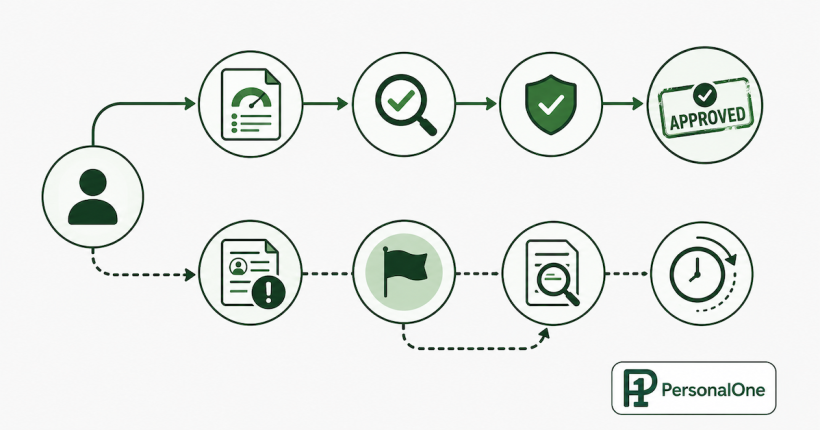
No-hard-pull credit cards are cards that offer pre-qualification or pre-approval through soft credit checks. This means you can assess your approval likelihood before submitting a formal application that triggers a hard inquiry. The card issuer performs a soft pull of your credit report to evaluate your profile. If you pre-qualify, you then choose whether to formally apply — and only at that point does a hard inquiry appear on your report.
The key benefit is the ability to shop around without repeatedly damaging your score. For anyone building credit from scratch or recovering from past damage, this matters significantly. Making informed applications — only applying where you have strong approval odds — is one of the core principles of a smarter credit-building strategy.
It is also worth understanding that the card you choose first has consequences that extend well beyond the application. Why your first credit card matters more than your credit score explains why the selection decision carries long-term weight that most people underestimate.
Hard Pull vs. Soft Pull: What's the Difference?
Hard Credit Inquiries
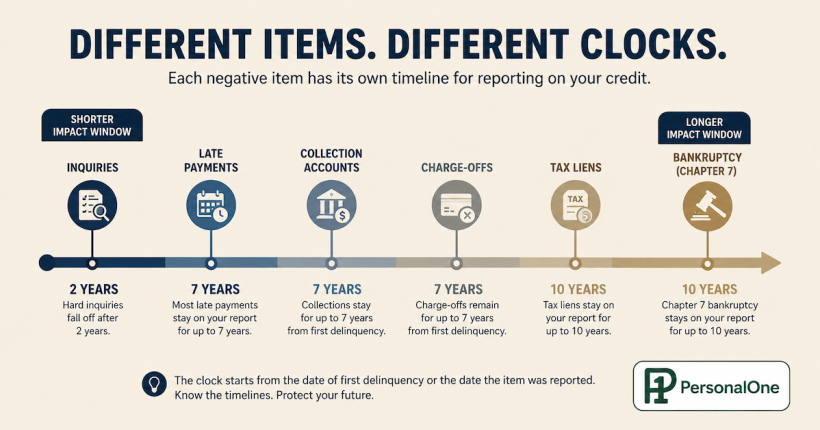
A hard inquiry occurs when a lender checks your credit as part of a formal lending decision. According to the SBA, hard inquiries can lower your credit score by 5 to 10 points and remain on your credit report for two years. Their impact on the score diminishes after twelve months, but the entry stays visible on your report for the full two-year period.
Hard pulls occur when you apply for a credit card, mortgage, auto loan, or personal loan. They can also occur when requesting a credit limit increase (issuer-dependent) or when applying for utilities or cell service in some cases.
Five or more hard inquiries within six months can signal to lenders that you are in financial distress or pursuing credit aggressively. This pattern raises risk flags and can result in application denials independent of your score. Even two or three inquiries in a short window can create concern if you are rebuilding credit and lenders are already scrutinizing your profile carefully.
Soft Credit Inquiries
A soft inquiry does not affect your credit score at all. These checks happen when credit is reviewed for informational or pre-screening purposes rather than formal lending decisions. Soft pulls occur when you check your own credit, when a card issuer pre-qualifies you for an offer, when an employer runs a background check, when insurance companies review your credit for pricing, or when existing creditors monitor your account.
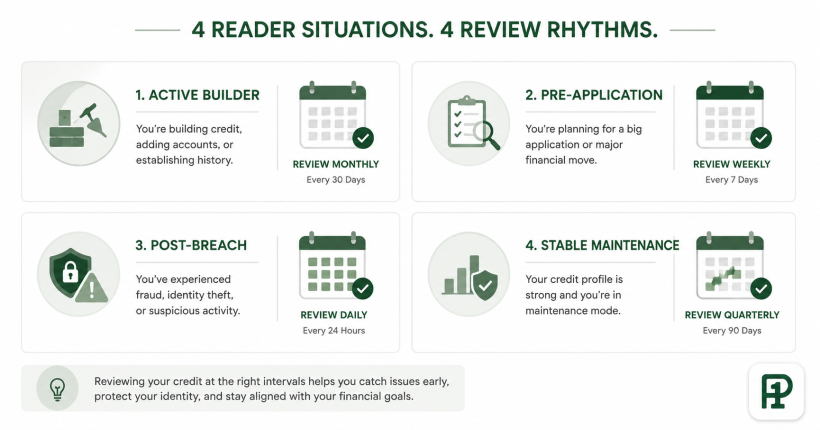
Soft inquiries are invisible to lenders — they do not appear when someone else reviews your credit report. Only you can see them when you check your own file. Checking your own credit regularly is one of the most consistently underrated credit habits, and it never costs a single point regardless of how often you do it.
Where This Usually Fails
One of the most common mistakes I've seen is people applying for credit cards out of frustration instead of using pre-qualification first. Usually, the person is trying to build credit quickly, gets denied once, then immediately applies for two or three more cards hoping one will approve them.
The problem is that every formal application can create a hard inquiry. In one case, a reader had four hard inquiries in less than two months from cards they were unlikely to qualify for in the first place. Their score dropped, but the bigger issue was what lenders saw next: repeated applications in a short window, which made the profile look riskier right before they needed financing for a car.
The better path would have been simple: check soft-pull pre-qualification first, apply only where approval odds were strong, and space out any formal applications. That would have protected the score and avoided sending the wrong signal to future lenders.
The takeaway: no-hard-pull credit cards are not just convenient. They are a risk-control tool. When a future loan approval matters, protecting your inquiry history can be just as important as choosing the right card.
Issuers That Offer Soft-Pull Pre-Qualification
Many major issuers now offer pre-qualification through soft pulls. The process varies by issuer but the principle is the same: enter basic information, receive an eligibility assessment, and decide whether to formally apply only if you like what you see.
Capital One offers a pre-qualification tool that shows approval odds across multiple cards before any hard inquiry. Discover uses soft-pull pre-approval for their card lineup. Chase provides pre-qualified offers through their website. American Express allows eligibility checks without affecting your score. Citi offers a pre-qualify tool for most of their card products.
When navigating any issuer's website, look specifically for language like "Check if you pre-qualify" or "Check your approval odds" — these phrases indicate a soft-pull tool. Avoid links or pages that say "Apply now" as the first step if you have not confirmed whether the issuer uses a soft check at that stage.
If you are building credit from a limited history or recovering from past damage, understanding whether a secured or unsecured card is the right starting point is covered in the guide on secured vs. unsecured credit cards. The full comparison of specific products designed for credit building — including which are most accessible at different score ranges — is covered in the guide on credit cards for building credit.
How to Minimize the Impact of Hard Inquiries
Even when a hard inquiry is unavoidable, the impact is manageable when applications are handled strategically. The following sequence reduces the score cost of credit applications to the minimum necessary.
Six Strategies for Minimizing Inquiry Impact
1. Always check pre-approval first. Use soft-pull pre-qualification tools before submitting any formal application. Major issuers including Capital One, Chase, and Discover offer these. There is no reason to take a hard inquiry when a soft-pull assessment is available.
2. Space out applications. Wait at least six months between credit card applications. This gives the score time to recover from any inquiry and signals to lenders that you are not aggressively seeking credit.
3. Rate shop quickly for loans. For mortgages, auto loans, or student loans, FICO treats multiple inquiries for the same loan type within a 14 to 45 day window as a single inquiry. Complete all rate shopping within that window and the score impact is equivalent to one application.
4. Only apply when confident. Research credit score requirements before applying. If your score is not in the target range for a particular card, focus on improving it before applying rather than taking the inquiry hit and a likely denial. The guide on increasing your credit score quickly covers the fastest-moving levers available.
5. Decline unnecessary retail credit checks. Store cards at checkout are not worth the inquiry cost unless you genuinely intend to use them and have confirmed the terms are reasonable. The 20% discount on a $200 purchase does not offset a 10-point score drop if a major credit application is planned within the next year.
6. Monitor your report for unauthorized inquiries. Review your credit reports regularly through AnnualCreditReport.com. Hard pulls you did not authorize can be disputed with the relevant bureau and removed. Any inquiry you did not initiate is worth investigating.
How Hard Inquiries Fit Into the Bigger Credit Picture
Hard inquiries account for approximately 10% of your FICO score under the "New Credit" factor. That makes them meaningful but not dominant. Payment history (35%) and credit utilization (30%) together control 65% of the score — which means consistent on-time payments and managed utilization produce significantly more score movement than avoiding any individual inquiry.
The reason inquiry management matters is cumulative and timing-based. A single inquiry from an application you needed is a minor, temporary setback. A pattern of five or six inquiries within a few months — from shopping multiple cards without pre-qualification — creates a risk signal that affects approval decisions beyond just the score points lost. Managing the pattern is the goal, not avoiding all inquiries entirely. For the factors that carry far more scoring weight than inquiries, the guide on what credit utilization actually means and why the 30% rule is a myth covers the second largest scoring factor and how to optimize it alongside payment history.
Build Credit Without the Score Damage
Pre-qualification is one piece of a complete credit-building approach. The PersonalOne build and protect your credit score guide covers all five FICO factors — how to build history, manage utilization, protect your score, and use credit as a deliberate tool. Free, no signup required.
Framework-first. Less willpower. More infrastructure.
Resources
SBA: Credit Inquiries — Hard vs. Soft Pulls — Federal guidance on what triggers hard and soft credit inquiries and their impact.
CFPB: What Is a Credit Inquiry? — Consumer Financial Protection Bureau explanation of how inquiries work and your rights.
AnnualCreditReport.com — Pull your free weekly credit reports from all three bureaus to monitor inquiries and verify your credit profile.
For the complete credit score management framework, visit the Credit Building & Protection authority hub.
Frequently Asked Questions
How many hard inquiries is too many?
Five or more hard inquiries within a six-month period can signal elevated risk to lenders. Even two or three in a short window can raise concerns if you are rebuilding credit and lenders are already reviewing your profile carefully. Spacing applications and using soft-pull pre-qualification tools before applying keeps the inquiry count manageable.
Do pre-approvals guarantee approval?
No. Pre-qualification means you passed an initial soft-pull screening, but a formal application still follows. At that stage the lender runs a hard pull and verifies your information more thoroughly. Changes in your credit, income, or financial situation between pre-qualification and application can result in denial even after a positive pre-qualification result.
How long do hard inquiries stay on my credit report?
Hard inquiries remain on your credit report for two years, but their impact on your score diminishes significantly after twelve months. Most scoring models only consider inquiries from the past twelve months when calculating your score. The entry stays visible on the report for the full two years but becomes scoring-neutral after the first year.
Can I remove hard inquiries from my credit report?
Only unauthorized ones. If you did not apply for credit and a hard inquiry appears on your report, you can dispute it with the relevant bureau. Legitimate inquiries from applications you submitted cannot be removed. Focus instead on building consistent positive payment history and keeping utilization low — both factors carry far more scoring weight than any individual inquiry.
Will checking my own credit hurt my score?
No. Checking your own credit is a soft inquiry with zero scoring impact. You can check as often as you want through AnnualCreditReport.com or your bank's credit monitoring tools without any consequence. Doing so regularly is one of the most underrated credit habits available.
This content is for educational purposes only and does not constitute financial advice. PersonalOne is not a licensed financial advisor, broker, or investment professional. Individual financial situations vary — consult a qualified financial professional for personalized guidance. Credit card products, terms, and availability are subject to change. Always read the terms and conditions of any financial product before applying.