July 2026
Home › Credit Building & Protection › Credit Score Building Strategies › What Is a Good Credit Score in 2026?
What You Need to Know
— FICO defines a "good" credit score as 670 to 739. But the threshold where lenders actually offer their best rates is 740 and above. The gap between what FICO calls good and what lenders call premium is real and worth understanding.
— The average FICO score in the United States was 717 as of mid-2026 — squarely in the good range. Being above average is not the same as being in the best rate tier.
— Score ranges mean different things for different products. A 670 that qualifies for a mortgage at one rate may not qualify for the best auto loan rate or the top-tier credit card rewards program. The target number depends on what you are trying to do with the score.
— FICO and VantageScore use different tier labels and boundary lines. The same score can be rated "good" under one model and "very good" under another. The model the specific lender uses is what determines your actual classification.
— 740 is the practical target for most people. At 740 or above, the vast majority of lenders offer their best available rates across mortgages, auto loans, and credit cards. Moving from 670 to 740 produces more tangible financial benefit than moving from 740 to 800.
The question "what is a good credit score" has a technically correct answer and a practically useful one, and they are not the same number. FICO — the scoring model used by roughly 90% of top lenders — defines the "good" range as 670 to 739. That definition is accurate. But it is also incomplete, because the threshold where lenders actually switch you into their best rate tier is not 670. It is 740.
A 670 score is above average. The average FICO score in the United States was 717 as of mid-2026. A 670 qualifies for most credit products and will not result in an outright denial from most lenders. What it will produce is interest rates that are meaningfully higher than those available to borrowers in the 740-plus range — a difference that compounds into real money over the life of a mortgage, auto loan, or credit card balance.
Understanding the score ranges, what each range actually unlocks, and where the real premium threshold sits is the foundation for setting a useful credit building target. The complete system for building toward that target is in the Credit Score Building Strategies cluster.
The FICO Score Ranges: What Each Tier Means
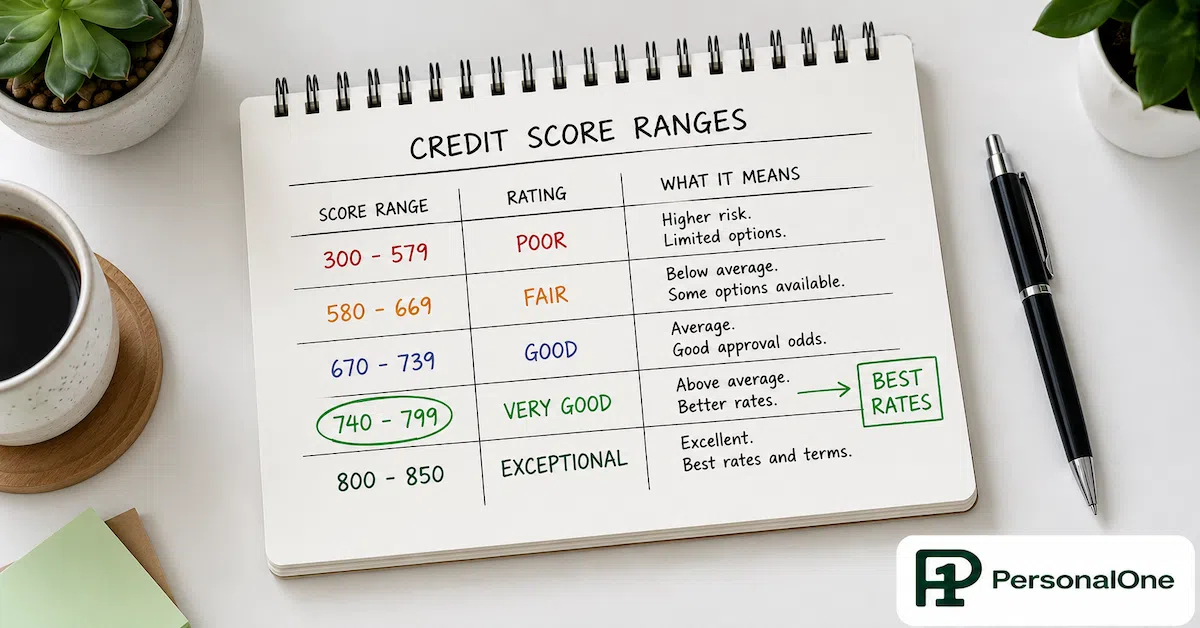
FICO scores range from 300 to 850. The scale is divided into five tiers, each associated with a different level of lender risk assessment and a different set of practical outcomes.
| Score Range | FICO Tier | % of Americans | What It Means |
|---|---|---|---|
| 800–850 | Exceptional | ~23% | Best available rates on all products. Automatic approvals. Lenders compete for this borrower. |
| 740–799 | Very Good | ~23% | Best rates on mortgages and auto loans. Top-tier credit card approvals. The practical premium threshold. |
| 670–739 | Good | ~21% | Approved for most products. Above-average rates. Average national FICO (717) sits here. |
| 580–669 | Fair | ~17% | Subprime rates. Larger deposits required. Some lenders decline. Higher insurance premiums. |
| 300–579 | Poor | ~16% | Most traditional lenders decline. Secured cards and credit-builder loans are the primary tools. |
Population percentages approximate, based on Experian and FICO data as of mid-2026. Average FICO score 717 per Experian 2025 State of Credit report.
The Real Target: Why 740 Matters More Than 670
FICO's tier boundary at 670 marks the entry point for "good" credit. But most lenders have their own internal scoring tiers that determine rate pricing, and those internal thresholds do not align perfectly with FICO's published categories. In practice, the rate breakpoint that most lenders use for their best available pricing sits at approximately 740 — not 670.
This gap has real dollar consequences. On a $400,000 30-year mortgage, the difference between the rate available at 680 versus 740 is typically 0.5 to 1.0 percentage points. At a 0.75 percentage point difference, that single number change saves approximately $190 per month — or roughly $68,000 over the life of the loan. The dollar math for auto loans is smaller but still significant: a 3 percentage point rate spread on a $35,000 vehicle financed over 60 months produces approximately $2,700 in additional interest.
The practical implication for anyone building credit: 670 is a meaningful milestone that unlocks access to most credit products. But 740 is the target that unlocks the best pricing on those products. A building strategy that stops at "good enough to get approved" leaves money on the table every year on every product that carries an interest rate.
What Each Score Range Actually Unlocks
Score ranges produce different outcomes depending on the product. The same score that qualifies for one product at excellent terms may produce only average terms on another. Here is what each major tier unlocks in practice across the products that matter most.
Mortgage (Most Score-Sensitive Product)
Below 620: Does not qualify for most conventional mortgages. FHA loans available at 580 with 3.5% down or 500 with 10% down. Significant rate premium applies.
620–669: Qualifies for conventional mortgages but at subprime rates. Expect rates 0.5 to 1.5 percentage points above the best available.
670–739: Qualifies for conventional mortgages at competitive but not optimal rates. Improvement to 740 typically saves $100–$250 per month on a $400,000 loan.
740 and above: Best available conventional mortgage rates. Automatic approval at most lenders. The rate at 780 is typically identical to the rate at 740 — additional improvement above 740 has minimal mortgage rate impact.
Auto Loans
Below 580: Deep subprime rates. Average rate for 501–600 range was 12.85% on new vehicles in early 2026 per Experian data. Approval from some lenders only.
580–669: Nonprime rates. Approved at most dealers but at rates significantly above prime. Expect 8–12% APR range.
670–739: Prime rates. Approved at competitive rates. Significant improvement over subprime but still above best available.
781 and above (super prime): Best available auto loan rates. Average was 5.08% on new vehicles in early 2026 per Experian. On a $35,000 vehicle over 60 months, super prime vs subprime represents over $8,000 in additional interest.
Credit Cards
Below 580: Secured cards only. No unsecured approvals from major issuers.
580–669: Entry-level unsecured cards with low limits and high APRs. No rewards cards at competitive rates.
670–739: Good credit cards with moderate rewards. Mid-tier travel and cash back cards accessible. Premium cards (Chase Sapphire, Amex Platinum) typically require 700+.
740 and above: Best available credit card products, highest sign-up bonuses, most competitive rewards rates, lowest APRs. Full product access across all major issuers.
Apartment Rentals and Insurance
Below 620: Many landlords decline or require a larger security deposit. Some property management companies have hard minimums. Insurance premiums significantly higher.
620–670: Approved at most properties with standard deposit. Insurance premiums above average.
670 and above: Standard approval at most properties, no extra deposits required in most markets. Insurance premiums at or near best available. The credit score requirements for specific lending products — including the exact thresholds lenders use — are covered in the credit score requirements guide.
What I've Seen
The most common misunderstanding I encounter is people treating 670 as a finish line when it is actually a starting point. Getting from 580 to 670 is a significant achievement that deserves recognition — it unlocks access to the mainstream credit system. But the financial difference between 670 and 740 is larger than the difference between 740 and 800. The 70-point move from good to very good saves more money in practice than the 60-point move from very good to exceptional. Setting the target at 740 rather than "good enough" is the single most impactful reframe I make with most credit-building clients.
FICO vs VantageScore: Why the Same Score Can Mean Different Things
FICO and VantageScore are the two major credit scoring systems. Both use a 300–850 scale, but their tier labels and boundary lines differ in ways that matter for understanding where you actually stand.
| Tier Label | FICO Score Range | VantageScore Range |
|---|---|---|
| Exceptional / Excellent | 800–850 | 781–850 |
| Very Good / Good | 740–799 | 661–780 |
| Good / Prime | 670–739 | 601–660 |
| Fair / Near Prime | 580–669 | 500–600 |
| Poor / Subprime | 300–579 | 300–499 |
The practical consequence: a 750 FICO score is "very good." A 750 VantageScore is also "good" under VantageScore's wider good tier (661–780). The same number means something different depending on the model. More importantly, the same person can have scores that differ by 20–40 points between FICO and VantageScore because the models weight credit factors differently.
In 2026, mortgage lenders are now permitted to use VantageScore 4.0 alongside FICO models for federally backed mortgages. VantageScore 4.0 incorporates trended data (how balances have changed over 24 months), rent payments, utility payments, and telecom payments in some cases. A person with a thin traditional credit file but a strong history of on-time rent and utility payments may score higher under VantageScore 4.0 than under FICO 8. The model the specific lender uses for the specific application is what determines which score matters for that decision.
How to Move From Your Current Score Toward 740
The path from wherever you are now to 740 depends on which factors are currently limiting the score. The highest-leverage actions differ by starting point.
Starting below 580: The priority is eliminating active negative items — collections in the collection process, accounts with recent missed payments, any charge-offs. Positive payment history accumulation matters but is offset by active negatives. The fastest path up from this range involves both stopping the bleeding and building new positive history simultaneously through a secured card or credit-builder loan.
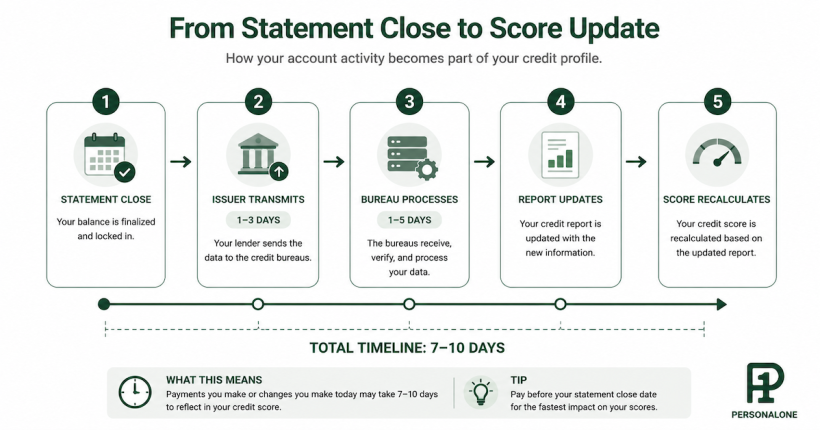
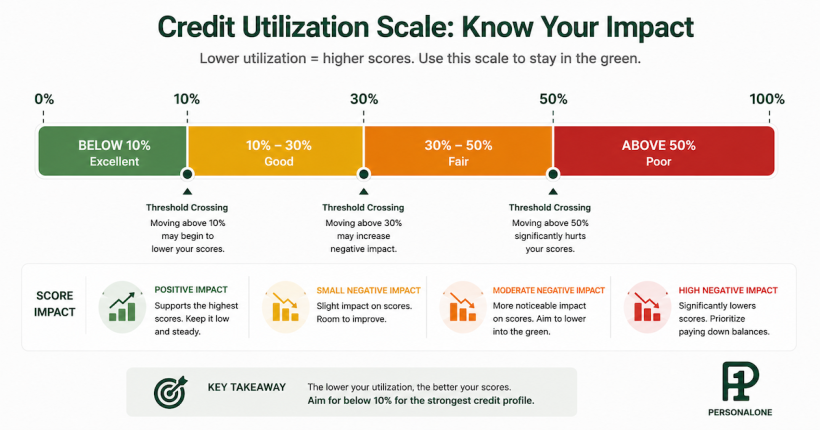
Starting at 580–670: The dominant factor is almost always utilization combined with limited positive payment history. Bringing card balances below 30% (and ideally below 10%) before statement close produces the fastest measurable improvement. Building out the positive payment history record month over month moves the score steadily upward.
Starting at 670–720: The gap between here and 740 is typically a combination of utilization management and account age. Making a pre-statement payment on the highest-utilization cards to lower the balance before it is reported is the highest-leverage single action. The guide to increasing your credit score quickly covers the specific tactical sequence for this range.
Starting at 720+: The remaining gap to 740 is usually account age and a small utilization issue. Time and consistent behavior are the primary drivers at this range. Forcing it with aggressive tactics rarely accelerates it meaningfully — the account age factor requires time, not action.
670 Gets You In. 740 Gets You the Best Terms.
The complete system for building from wherever you are now toward 740 and beyond is in the Credit Score Building Strategies cluster. For the fastest available improvement tactics, see how to increase your credit score quickly.
Frequently Asked Questions
What credit score do I need to buy a house in 2026?
The minimum for a conventional mortgage is typically 620. FHA loans are available at 580 with 3.5% down or 500 with 10% down. But the minimum to qualify and the score that gets the best rate are different numbers. For the best available conventional mortgage rates, lenders typically price at their lowest tier for scores of 740 and above. Moving from 680 to 740 before applying for a mortgage is one of the highest-ROI financial moves available, given the dollar impact over a 30-year loan.
Is 700 a good credit score?
Yes — 700 is in the FICO "good" range (670–739) and above the national average of 717. A 700 score qualifies for most credit products and produces competitive but not optimal rates. The 40-point improvement from 700 to 740 moves the score into the "very good" tier where most lenders offer their best available pricing. For context, 45.5% of Americans now have scores of 740 or above, meaning 700 is good but not in the premium tier.
How long does it take to go from 580 to 700?
With consistent positive behavior — on-time payments, utilization below 30%, no new negative items — a 120-point improvement from 580 to 700 typically takes 12 to 24 months. The timeline depends heavily on whether there are existing negative items on the report. A file with no derogatory items and thin positive history can move faster than a file with recent late payments or collections that are still actively damaging the score. The fastest path involves both adding new positive accounts and managing utilization aggressively while waiting for any negative items to age.
Does a higher score above 800 save me more money?
Generally no — not in a meaningful way. Most lenders have rate tiers that top out at 740 or 760. Moving from 780 to 820 typically produces no rate improvement on mortgages, auto loans, or credit cards. The primary value of scores above 800 is resilience: a higher baseline means the score can absorb a temporary negative event — a utilization spike, a hard inquiry — without dropping out of the premium tier. The practical target for most people is 740, not 800.
What credit score do landlords typically require?
Most landlords and property management companies look for a minimum of 620–650 for standard approval. Scores below 580 frequently result in either denial or a requirement for a larger security deposit or a co-signer. In competitive rental markets with low vacancy rates, some landlords set higher internal minimums of 680–700. Scores above 670 clear most rental requirements without additional conditions. The specific credit score requirements for rental applications and other products are covered in the credit score requirements guide.
Official Sources
myFICO — FICO Score Ranges and What They Mean
Experian — What Is a Good Credit Score?
CFPB — What Is a Credit Score?
AnnualCreditReport.com — Free Weekly Credit Reports
More From This Cluster
Return to Credit Score Building Strategies for the complete framework. Related articles: How to Increase Your Credit Score Quickly — the highest-leverage actions for each score range. Credit Score Requirements — the exact thresholds lenders use across mortgages, auto loans, and credit cards. For the complete Credit Building & Protection system, see Credit Building & Protection.
PersonalOne Money System
This content is researched, written, and owned by PersonalOne — a free financial education platform built to help Millennials and Gen Z build real financial systems.
Disclaimer: This content is for educational purposes only and does not constitute financial advice. Credit score ranges, tier labels, lender rate thresholds, and population percentages are sourced from FICO, Experian, and CFPB data as of mid-2026 and are subject to change. Individual lender requirements vary. Always verify current requirements directly with the specific lender or product provider. PersonalOne is not a licensed financial advisor.