August, 2026
Home › Credit, Banking & Cash Flow › Cash Flow Optimization & Financial Control › How to Align Your Paychecks, Bills, and Credit Cards
What You Need to Know
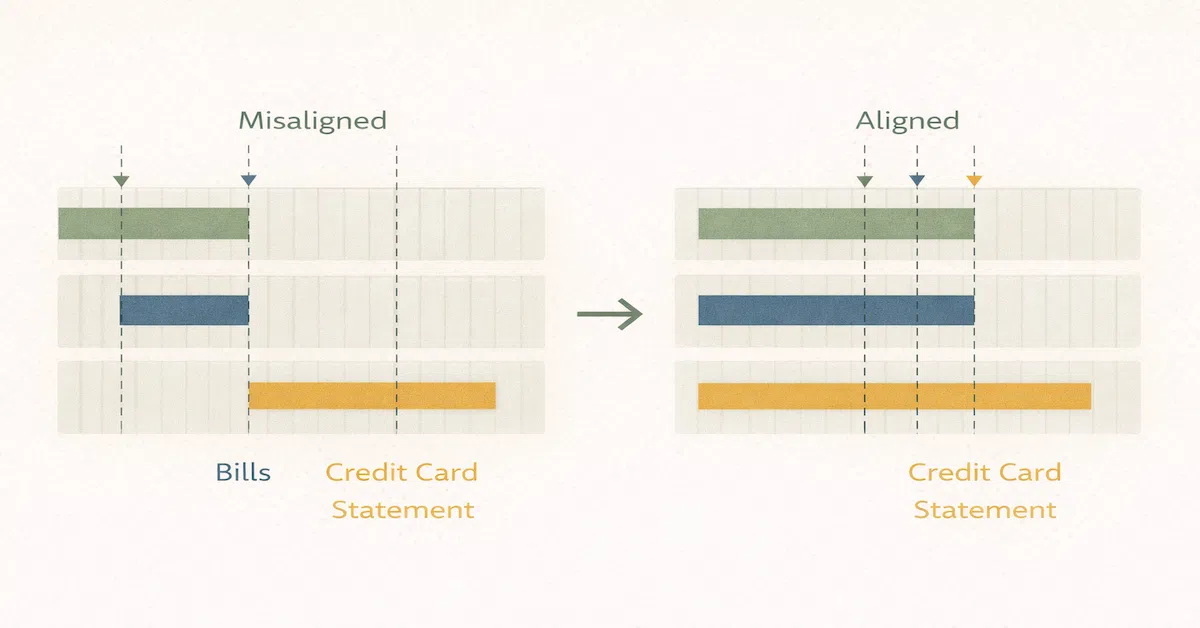
— Paycheck timing, bill due dates, and credit card statement close dates are three independent schedules that most households never deliberately align — and the misalignment produces most month-to-month financial stress.
— Alignment means engineering the timing of these three schedules so that income arrives before obligations are due and credit card balances are paid before statement dates capture them.
— The cash flow optimization strategy for most households involves two to three targeted scheduling changes that require no income increase and produce immediate stability improvement.
— Most issuers and utility providers allow due date adjustments on request — moving due dates by one to two weeks is often a single phone call.
— Once aligned, the three schedules run together without monthly management, producing reliable coverage, lower credit utilization, and less financial anxiety by design.
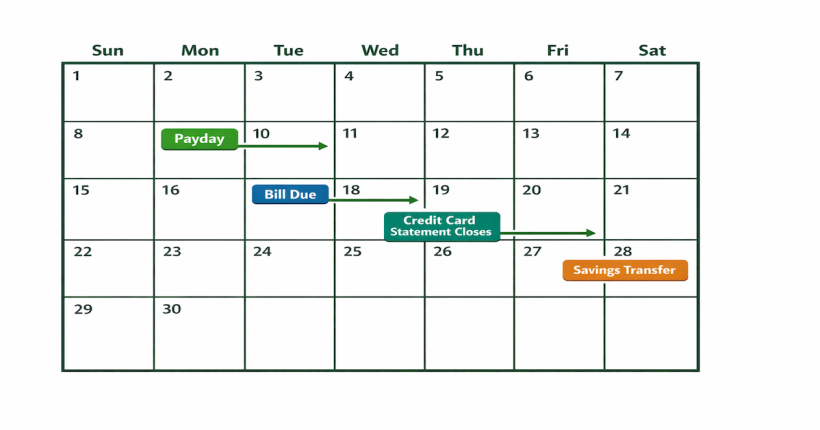
The cash flow optimization strategy that produces the most immediate financial stability improvement for most households is not about spending less or earning more — it is about schedule alignment. Paycheck arrival dates, bill due dates, and credit card statement close dates are three independent schedules that most people never deliberately coordinate. When they are misaligned, the result is predictable: income arrives at the wrong point in the obligation cycle, bills cluster at times when the account balance is low, and credit card balances are high at statement close because no pre-payment was timed correctly against the close date.
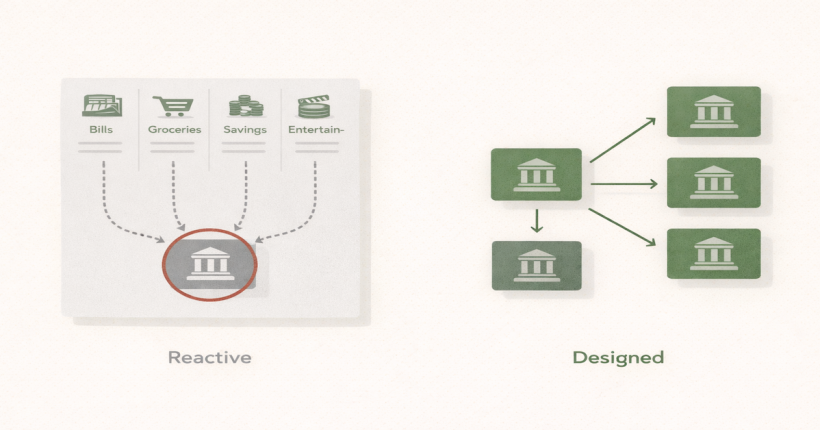
Alignment engineering — deliberately adjusting these three schedules so they work together rather than against each other — is one of the highest-leverage financial improvements most households can make. It requires no new income, no new savings discipline, and no behavioral change. It requires a few targeted scheduling adjustments and the automation that makes the aligned schedules run reliably.
The Three Schedules and Why They Conflict
Paycheck schedule. The timing of income arrival is largely fixed by employer payroll cycles — weekly, biweekly, semi-monthly, or monthly. For most households, this schedule is the least flexible of the three, though it can sometimes be adjusted through direct deposit split arrangements or early pay access features offered by some banks.
Bill due date schedule. Utility bills, rent or mortgage payments, insurance premiums, subscription services, and debt minimum payments all have due dates that are set by the provider or lender. Most of these can be adjusted by request — the majority of utility companies, insurance providers, and lenders will move a due date by one to four weeks with a single phone call or online request. This schedule is far more adjustable than most people realize.
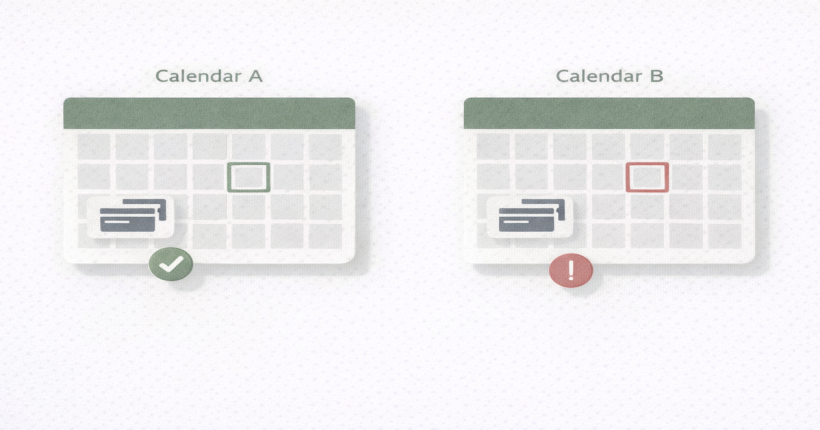
Credit card statement close schedule. Each credit card has a billing cycle end date on which the issuer captures the balance and reports it to the credit bureaus. This date can also be adjusted by contacting the issuer. Moving the statement close date relative to the paycheck arrival date determines how easy it is to fund a pre-statement payment that reduces reported utilization. As covered in the cash flow timing and credit utilization cluster, this adjustment alone can produce meaningful credit score improvement without any change in spending behavior.
The Ideal Aligned Schedule
A fully aligned schedule for a household paid semi-monthly on the 1st and 15th looks like this. The 1st paycheck funds the bills account. The largest fixed obligations — rent or mortgage, major utilities — are due between the 3rd and 8th, giving two to seven days for the paycheck to process and the bills account to be funded before the obligations draw. Credit card statement close dates are set to the 10th-12th, giving a window after the obligations have processed but before the next spending period begins where the balance can be lower. Credit card due dates fall between the 28th and 3rd — timed after the 1st paycheck of the following month arrives.
The 15th paycheck funds discretionary spending and any remaining obligations that fall in the second half of the month. Secondary bills are due between the 18th and 22nd. The cycle repeats with each paycheck funding the obligations that fall within its window.
This structure is not always achievable perfectly — some obligations have fixed dates that cannot be adjusted, and some issuers limit the available statement close dates. But even partial alignment — moving two or three key dates to better positions relative to the paycheck schedule — produces a meaningful reduction in the timing conflicts that produce most month-to-month financial stress.
How to Make the Alignment Adjustments
Moving bill due dates. Contact each provider individually and request a due date change. For utilities, this is typically handled through the account management portal or a customer service call. For insurance, a billing date change request routes through the billing department. For debt payments, contact the lender and request a due date adjustment — most will accommodate within a range of available dates. Move dates to fall three to seven days after your most reliable paycheck arrives, giving enough buffer for processing delays.
Moving credit card statement close dates. Call the number on the back of each card and ask specifically to change the billing cycle close date. Explain that you want to align it with your pay schedule to make payments more reliable. Most major issuers will accommodate. The change typically takes one to two billing cycles to take effect. Target a close date five to seven days before your next paycheck to ensure the balance has time to be paid down before the statement captures it.
Automating the aligned schedule. Once the dates are adjusted, set up automated payments from the bills account for each obligation on its adjusted due date. Set up automated pre-statement credit card payments three to five days before each card’s close date. The alignment only delivers its full benefit when it runs automatically — manual management against the aligned schedule is more reliable than manual management against a misaligned one, but automation makes the improvement permanent rather than dependent on ongoing attention.
Schedule alignment is a one-time fix that runs for years.
The complete cash flow optimization and financial control framework covers alignment across every common pay schedule, with specific adjustment sequences for biweekly, semi-monthly, and variable income households.
Explore Cash Flow Optimization & Financial Control →What Alignment Produces Over Time
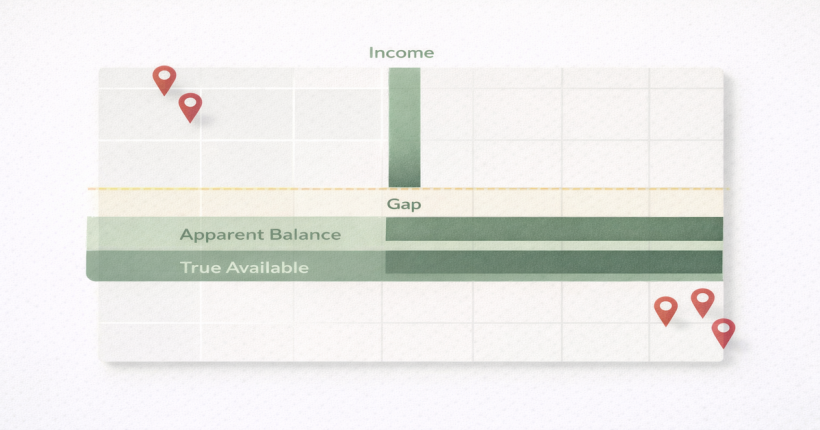
A fully aligned schedule produces several compounding improvements simultaneously. Cash flow stress drops immediately because the visible account balance after payday accurately represents the money available after obligations are covered — the obligations process in their correct window before the balance is interpreted as spending money. Credit utilization stabilizes at a lower level because the pre-statement payments are funded reliably from the aligned paycheck window rather than depending on timing that may or may not work in a given month.
Late payment risk decreases to near zero for aligned obligations because the payment automation runs against a due date schedule that was deliberately set relative to income arrival. The CFPB identifies late payments as the single most damaging recurring factor in credit profiles — alignment engineering removes the timing conditions that produce them structurally rather than relying on vigilance and memory to prevent them.
The cash flow alignment strategy in the next article covers the complete framework for sequencing these adjustments and building the automated structure that maintains the alignment without ongoing manual management.
Resources
CFPB — Credit Reports and Scores
CFPB — How to Create a Budget and Stick With It
FDIC — Money Smart Financial Education Program
This article is part of the Credit, Banking & Cash Flow integration system on PersonalOne — the complete framework for building a personal finance infrastructure that runs reliably by design.
Frequently Asked Questions
Can I actually change my bill due dates?
Yes, more often than most people realize. Utility companies, insurance providers, credit card issuers, and many lenders will adjust billing dates by request. The process varies — some allow it through an online account portal, others require a phone call. Not every provider will accommodate every requested date, but most will offer a range of available dates within the billing period. Calling and asking specifically for a due date change aligned with your pay schedule is the starting point. Expect the change to take one to two billing cycles to fully implement.
What if I cannot move most of my due dates?
Focus on the highest-impact adjustments first. The credit card statement close date is almost always adjustable and has the most direct credit score impact. Even if fixed bills cannot move, building a buffer in the bills account that covers the gap between paycheck arrival and obligation due date resolves most timing conflicts without requiring any due date changes. The buffer approach is covered in detail in the cash flow breakdown prevention article.
How long does it take to see improvement after aligning the schedules?
The cash flow stress reduction is immediate — the first pay cycle after alignment takes effect produces a noticeably more predictable balance progression through the month. The credit score improvement follows the next reporting cycle after a pre-statement payment reduces the balance captured at statement close. For most households, meaningful score improvement is visible within one to two billing cycles of implementing aligned pre-statement payments, and the improvement compounds each month as the consistent lower utilization pattern builds in the credit history.
Disclaimer: This content is for educational purposes only and does not constitute financial advice. Individual financial situations vary — consult a qualified financial professional for personalized guidance.