June 2026
Home › Credit, Banking & Cash Flow › Cash Flow Timing & Credit Utilization
What You Need to Know
— Credit bureaus capture your balance on the statement closing date — not the payment date, not the due date. Paying in full does not prevent high utilization from being reported if the balance was high when the statement closed.
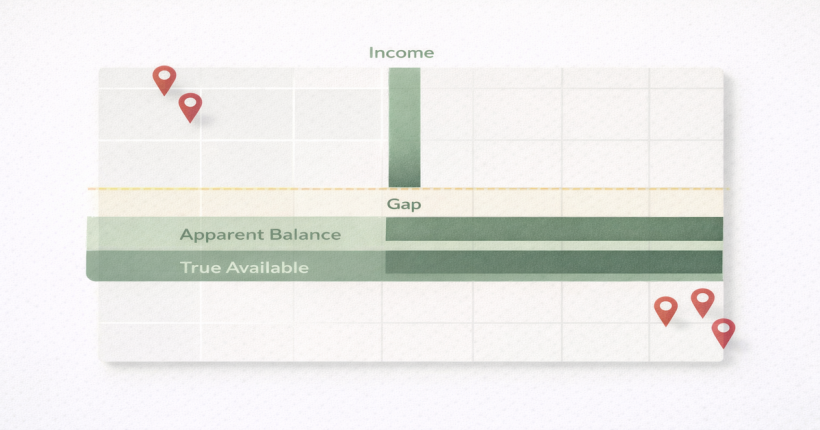
— Paycheck timing creates utilization spikes. If your check arrives after your statement date, your reported balance reflects pre-paycheck spending that the paycheck would have covered.
— Utilization is the second largest credit score factor after payment history. The fix is almost always structural — a timing alignment issue, not a spending problem.
— The four articles in this cluster address the specific aspects of the timing relationship between cash flow and credit utilization. Start with whichever one most closely describes your situation.
— This cluster sits within the Credit, Banking & Cash Flow integration system. Cash flow timing and utilization is one layer of a three-engine model that connects banking structure and credit optimization.
Paying your credit card in full every month and still watching your score drop is one of the most confusing financial experiences. The payment is on time. The balance is cleared. Nothing appears to be wrong. And yet the credit score moves in ways that seem disconnected from responsible behavior.
The reason is timing. Credit card issuers report your balance to the bureaus once per billing cycle, on the statement closing date — not on the payment due date. If your balance is $2,000 when the statement closes and your limit is $5,000, your reported utilization is 40%, regardless of whether you pay the full $2,000 five days later. The payment history benefit is captured. The utilization damage has already been done.
This cluster covers the mechanism behind utilization timing — how statement dates, payment dates, and paycheck arrival interact to produce credit score behavior that most people never see coming. The complete three-engine integration model is in the Credit, Banking & Cash Flow hub.
The Utilization Timing Problem Nobody Explains
Credit utilization — the ratio of your credit card balance to your credit limit — accounts for roughly 30% of your FICO score. Most people understand this in theory. What most people do not understand is when their utilization is actually measured.
Credit card issuers report your balance to the bureaus once per billing cycle, typically on the statement closing date. That snapshot is what appears in your credit report. The balance on that specific day is what drives the utilization calculation — not the balance the day after you paid, not the average balance across the month, not the balance on the due date.
This creates a timing problem that has nothing to do with how responsibly credit is used. It is a structural mismatch between when spending happens, when the statement closes, and when the paycheck arrives. Fix the timing and utilization drops — without spending less or paying more.
The Three Timing Factors That Control Utilization
The Utilization Timing Framework
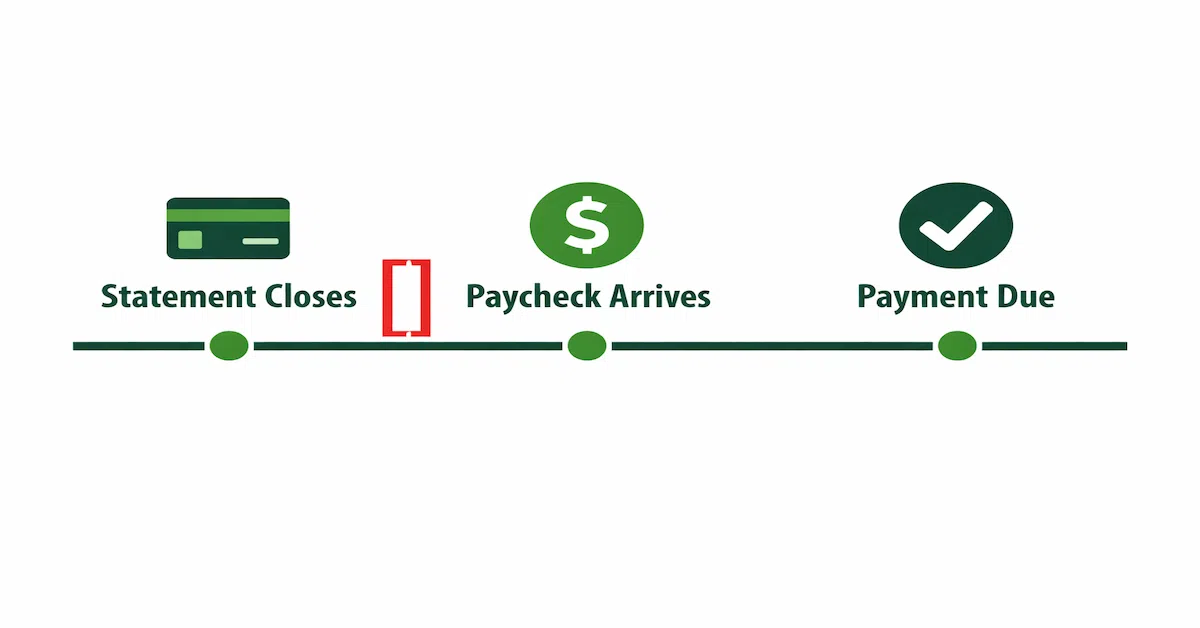
1. Statement Closing Date
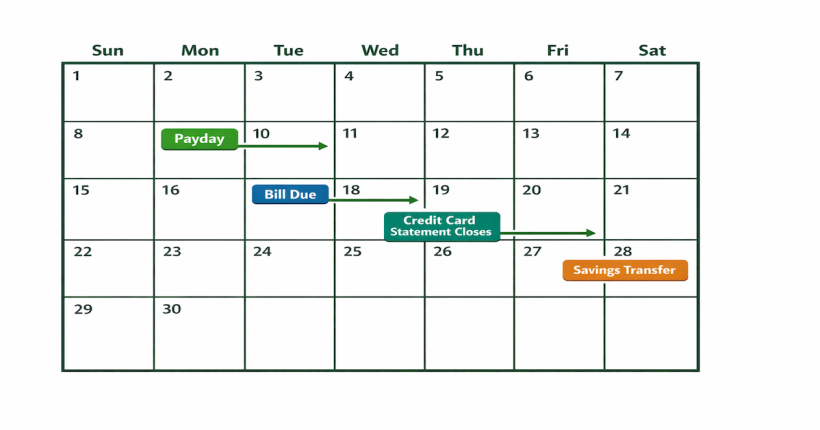
The date the card issuer closes the billing cycle and generates the statement. This is the date the balance gets reported to the bureaus. Most people do not know this date or pay attention to it — but it is the most important date in the credit score cycle. Everything else is downstream of this date.
2. Payment Due Date
Typically 21–25 days after the statement closing date. Paying by this date avoids interest and late fees and is essential for payment history. But it does not retroactively lower the utilization that was already captured at statement close. The balance has already been reported by the time the due date arrives.
3. Paycheck Arrival Date
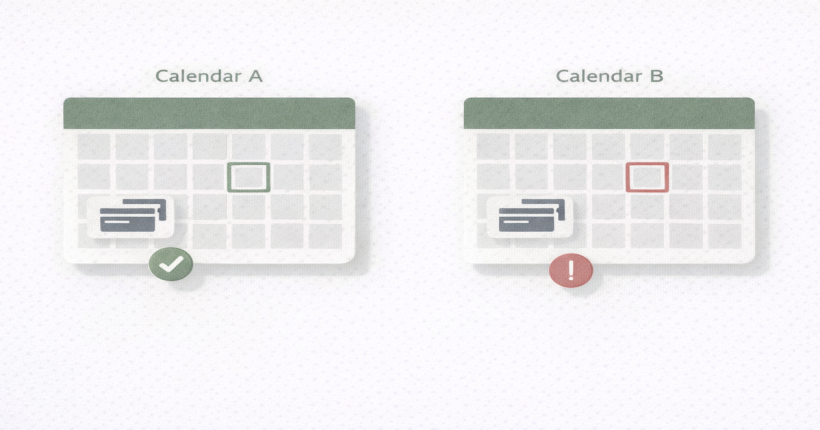
If the paycheck arrives on the 20th but the statement closes on the 15th, the balance from five days of pre-paycheck spending is what gets reported. The paycheck that would have covered most of that spending arrives too late to help. This mismatch is the hidden driver of persistent utilization problems for people who are otherwise managing their money responsibly.
Why This Is a Cash Flow Problem, Not a Credit Problem
Utilization issues are almost always misdiagnosed. The instinct is to spend less on credit cards, request higher credit limits, or pay off balances more aggressively. Those approaches can work — but they miss the root cause when the real issue is timing.
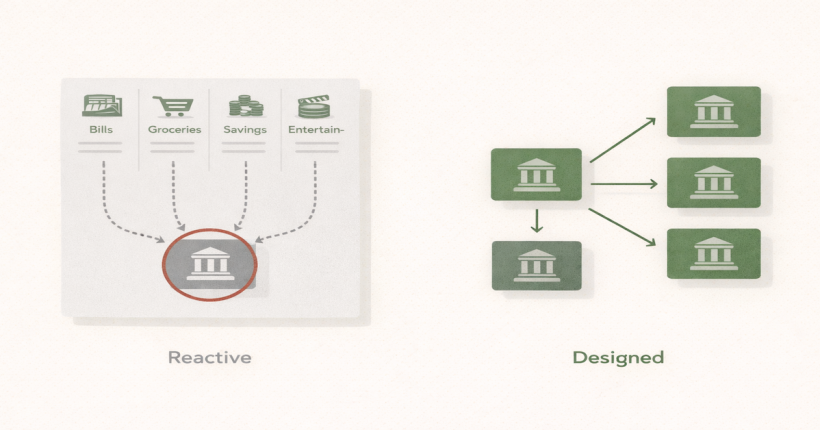
When cash flow is aligned with the billing cycle — when paychecks arrive before statement close, or when a mid-cycle payment brings the balance down before reporting — utilization drops to an accurate reflection of actual credit usage. The fix is structural and often requires no change in spending behavior at all. It requires understanding how the timing works and designing cash flow to work with it rather than against it.
The four articles in this cluster address each specific aspect of the timing relationship. Start with whichever one most closely describes the current situation.
Go Deeper: Cash Flow Timing & Credit Utilization Guides
Why Your Credit Score Drops Even When You Pay On Time
"I never miss a payment. Why does my score keep moving around?"
Demystifies the disconnect between on-time payment behavior and credit score fluctuation. Explains the statement date vs payment date distinction in plain terms, shows how reported utilization moves independently of payment behavior, and introduces the two levers — timing and balance management — that actually control what the bureaus see. The foundational article for understanding utilization as a timing problem rather than a spending problem.
Credit Card Statement Dates vs Payment Dates Explained
"What's the difference and why does it actually matter?"
A direct technical breakdown of the two most important dates in the credit card cycle — the statement closing date and the payment due date — and how each one affects the credit file differently. Covers how to find both dates on any card, what happens to a score when balances are high at statement close, and the simple strategy of making a pre-statement payment to control what gets reported.
How Paycheck Timing Affects Your Credit Utilization
"My paycheck and my credit card cycle are out of sync."
Addresses the specific problem of paycheck-to-statement-date misalignment and its effect on utilization reporting. Explains why semi-monthly and biweekly paycheck schedules create different risk profiles, how to identify whether timing is working against you, and the three approaches to realigning cash flow and credit cycles: changing payment timing, adjusting card usage patterns, or making mid-cycle payments before statement close.
The Credit Card Billing Cycle Most People Misunderstand
"I thought I understood how billing cycles worked. I was wrong."
A complete walkthrough of the credit card billing cycle from a credit score perspective rather than a billing perspective. Covers the full cycle — statement open, charges accumulate, statement closes (balance reported), grace period begins, payment due — and explains exactly how each phase affects the score, interest charges, and available credit. Includes the most common misconceptions that lead people to unknowingly carry high reported balances despite responsible payment behavior.
Cash Flow Timing Is One Layer of the Full System.
The complete three-engine integration model — how banking structure, cash flow timing, and credit optimization connect and reinforce each other — is in the Credit, Banking & Cash Flow hub.
Frequently Asked Questions
If I pay my credit card in full every month, why is my utilization still high?
Because the balance is reported on the statement closing date, not the payment date. By the time the payment is made, the utilization has already been captured and sent to the bureaus. Paying in full is essential for avoiding interest and building payment history — but it does not retroactively change the utilization number that was already reported. To lower reported utilization, the balance needs to be lower before the statement closes, not after.
How much does credit utilization affect my credit score?
Utilization is the second largest factor in a FICO score, accounting for approximately 30% of the total. Payment history accounts for roughly 35%. Together these two factors represent about 65% of the score. The other factors — length of credit history, credit mix, and new credit — account for the remaining 35%. Utilization is the factor most people have the most ability to change quickly, since it resets every billing cycle when the new balance is reported.
What is the ideal credit utilization ratio?
Below 30% is the commonly cited threshold. Below 10% is the target for optimal score impact. Both numbers apply per card and in aggregate across all cards. A single card at 90% utilization damages the score even if all other cards are at 0%. The per-card calculation matters as much as the total. The fastest way to lower utilization without changing spending is to make a payment before the statement closes — any payment that reduces the balance before the reporting date lowers the utilization that gets captured.
Is this the same problem as being paycheck to paycheck?
Related but distinct. People who are paycheck to paycheck often have utilization problems as a downstream symptom — high card balances from cash flow gaps produce high reported utilization. But the utilization timing problem also affects people who are not paycheck to paycheck and who pay their cards in full every month. The timing mismatch can produce high reported utilization even when the financial situation is fundamentally healthy. The articles in this cluster cover both situations — the cash flow gap version and the pure timing misalignment version.
Official Sources
CFPB — Credit Card Consumer Tools and Rights
myFICO — What's in Your Credit Score (official FICO factor breakdown)
CFPB — What Is a Credit Utilization Rate?
Connected Hubs
This cluster is part of the Credit, Banking & Cash Flow integration hub. Related authority hubs: Credit Building & Protection — the full score optimization strategy covering payment history, account age, and credit mix. Banking Structure & Cash Flow Control — how account architecture routes cash correctly so timing alignment is easier to maintain automatically.
PersonalOne Money System
This content is researched, written, and owned by PersonalOne — a free financial education platform built to help Millennials and Gen Z build real financial systems.
Disclaimer: This content is for educational purposes only and does not constitute financial, investment, or tax advice. Credit score factors and utilization calculations vary by scoring model and individual credit profile. Individual financial situations vary significantly. Before making financial decisions, consider consulting with qualified financial professionals. PersonalOne provides educational content and does not provide personalized financial planning services.