July, 2026
Home › Credit, Banking & Cash Flow › Cash Flow Timing & Credit Utilization › The Credit Card Billing Cycle Most People Misunderstand
TL;DR
— The credit card billing cycle contains three distinct phases — spending period, grace period, and next spending period — each with different implications for credit score management.
— Most people only manage the last day of the grace period (the due date). The entire credit utilization cash flow strategy lives in the days before the statement close.
— Understanding which phase you are in at any given moment tells you exactly what action — if any — will improve your credit score before the next reporting date.
— The billing cycle is not a passive monthly event. It is a strategic framework with identifiable windows for active credit management.
— This article provides a complete map of the cycle, the decision points inside it, and the automated structure that manages all of them without ongoing manual attention.
The credit card billing cycle is widely misunderstood as a simple monthly payment schedule — spend throughout the month, pay by the due date, repeat. This framing captures the minimum required behavior to avoid late fees but misses the strategic structure inside the cycle that determines what credit utilization the bureaus measure, what interest charges accrue or do not, and what windows exist for active credit score management between the opening and closing of each period.
The credit utilization cash flow strategy that produces meaningful score improvement lives not at the due date but in a specific window before the statement close — a phase most people are not actively managing because they have never had the cycle mapped clearly enough to know it exists. This article provides that map.
The Three Phases of a Billing Cycle
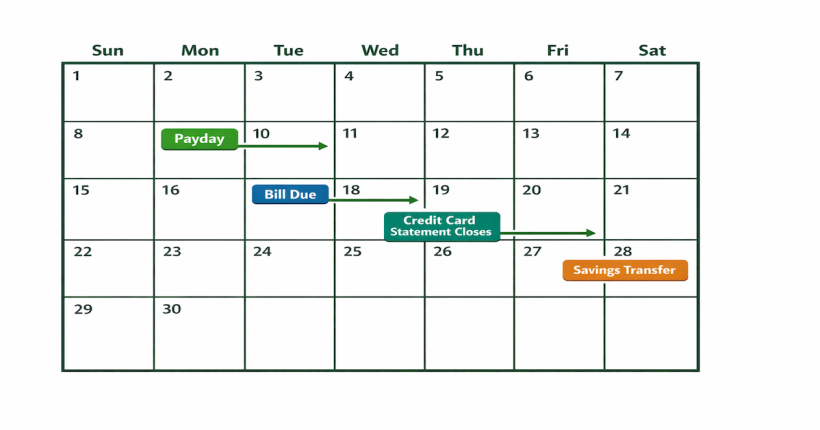
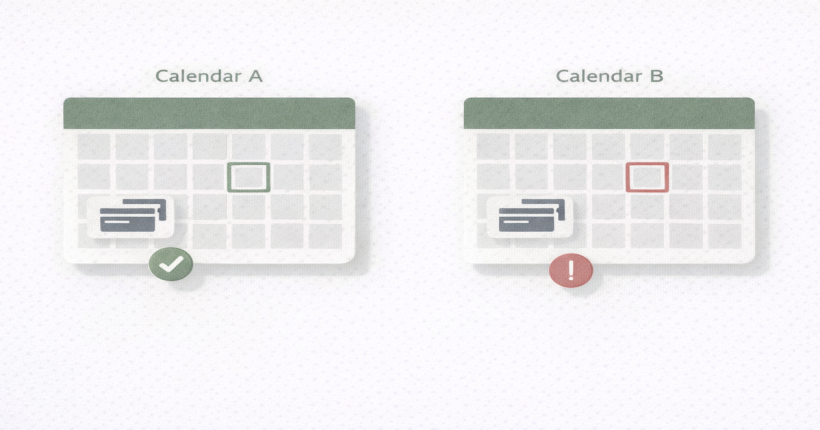
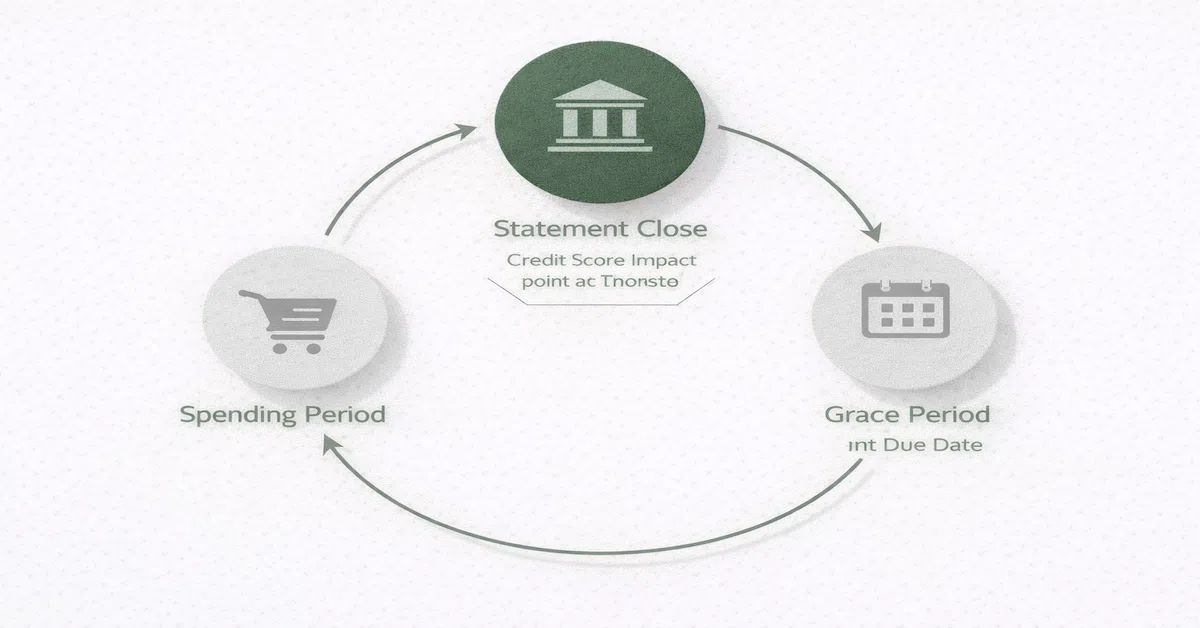
Phase 1: The Spending Period. The spending period opens on the day after the previous statement closed and runs for approximately 30 days until the next statement close date. Purchases made during this period accumulate as the current balance. There is no credit score impact during this phase — the balance will only be reported at the end of the period. The strategic decision point in this phase is the week before it ends: the pre-statement payment window. A payment made in the final five to seven days of the spending period reduces the balance that will be captured at statement close without significantly reducing the spending capacity earlier in the cycle.
Phase 2: The Grace Period. The grace period opens immediately after the statement close date and runs for 21 to 25 days until the due date. During this phase, the balance has already been reported to the credit bureaus. The statement balance is fixed and visible. No payment made during the grace period changes what was reported — that reporting happened at the close of Phase 1. The grace period’s only strategic function is payment timing for interest avoidance: pay the full statement balance before the due date and no interest accrues. Pay less than the full balance and interest accrues on the remaining amount at the card’s APR. The credit score impact of this phase is limited to whether the payment is made on time — protecting payment history.
Phase 3: The Next Spending Period. The new spending period begins on the day after the statement closed — which is the same day the grace period opened. New purchases made after statement close accumulate as next month’s balance and will be reported at next month’s close. During the grace period, both events are happening simultaneously: you are in the grace period for last month’s statement while also in the spending period for the current month. This overlap is the source of much billing cycle confusion — purchases made during the grace period are not part of the statement balance you are currently paying. They are part of the next statement.
The Misunderstanding That Costs the Most
The most costly billing cycle misunderstanding is treating the due date as the only date that matters for credit management. This leads to a consistent pattern: spending freely throughout the month, making no payment until the due date, and repeatedly reporting high utilization at statement close because no pre-statement payment was ever made.
As covered in the article on credit scores dropping despite on-time payments, this pattern produces a structurally suppressed credit score that persists regardless of payment behavior at the due date. The due date payment prevents late payment marks. It does not prevent high utilization from being reported. Only a payment made before the statement close date can do that.
The second common misunderstanding is believing that paying the minimum payment by the due date protects the credit score. It protects payment history from a late payment mark, which is significant — but it does nothing for utilization. A minimum payment on a high-balance card does not meaningfully reduce the balance. The next statement close date will capture the new balance — original balance minus the minimum payment plus any new spending — and report that utilization figure. For high-balance cards, this cycle perpetuates both high utilization and growing interest charges simultaneously.
The Strategic Windows Inside Each Phase
Pre-statement payment window (Phase 1, final 5-7 days). This is the highest-leverage window for credit score management. A payment made here reduces the balance that gets reported. For score optimization, this is where deliberate action produces the most direct result. The payment should ideally be made after most of the month’s spending has occurred — paying on day 10 of a 30-day cycle and then spending heavily for the remaining 20 days partially defeats the purpose. The final week of the spending period, after most charges have accumulated but before the statement closes, is the optimal window.
Grace period full payment window (Phase 2, any time before due date). This window is for interest avoidance and payment history protection. Pay the full statement balance here and no interest accrues. Miss this window and interest charges apply to the carried balance. The due date is the hard deadline. Paying earlier in the grace period rather than on the due date adds a useful margin against timing errors, bank processing delays, and scheduling oversights.
New cycle spending period (Phase 3, opening). The first few days after a statement closes are the lowest-utilization point in the cycle — if a pre-statement payment was made, the card starts the new cycle with a low or zero balance. This is the best time to make any large planned purchases if timing is flexible, because the balance has the most time to be paid down before the next statement close captures it.
The billing cycle is a strategic framework. The automation structure that manages it is what makes it work without monthly manual attention.
The complete cash flow timing and credit utilization cluster covers the automated payment structure that manages all three phases of the billing cycle across every card in your wallet.
Explore Cash Flow Timing & Credit Utilization →Building Automated Management for the Full Cycle
Managing the billing cycle actively across multiple cards requires knowing four dates per card: statement close date, reporting date (typically one to three days after close), due date, and the optimal pre-statement payment date (five to seven days before close). For one card, this is manageable manually. For two or more cards, automation is the only reliable approach.
The automation structure runs from the bills account with two scheduled payments per card per month: a pre-statement payment scheduled five days before each card’s close date, and a remaining balance payment scheduled on or a few days before each card’s due date. The pre-statement payment amount can be fixed (a specific dollar amount intended to bring the card below a target utilization threshold) or variable (the full current balance at the time of the payment). Fixed amounts are simpler to automate. Variable amounts require knowing the current balance at the time the payment runs, which some banks handle through balance-based autopay features.
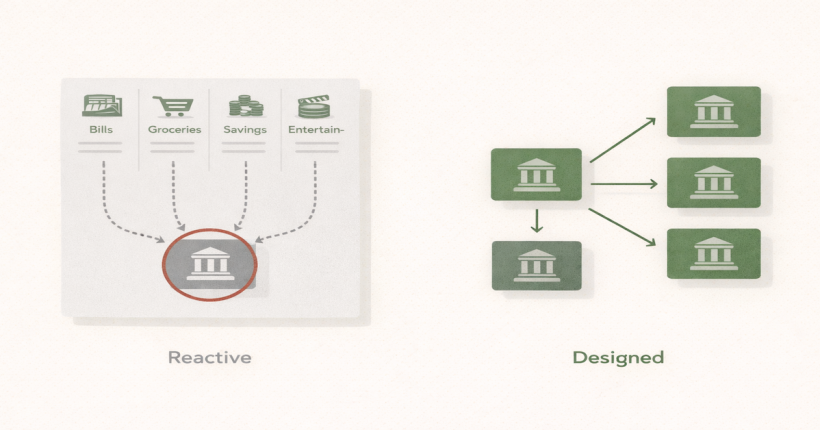
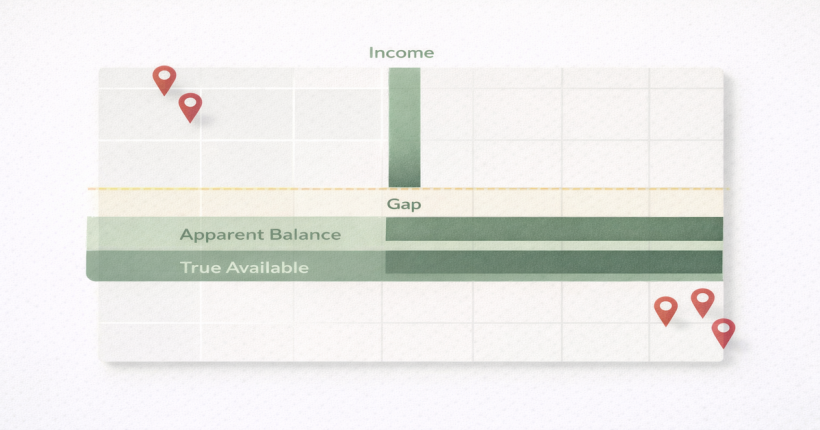
How your paycheck timing interacts with funding these two payments per card is the cash flow layer of this system — covered specifically in the paycheck timing and credit utilization article. And the account separation structure that makes the bills account available for both payments without competing with discretionary spending is the banking layer — covered in the banking structure and cash flow control cluster. Together, these three layers produce the complete integrated credit management system that runs reliably without monthly manual oversight.
Resources
CFPB — What Is a Credit Utilization Rate?
CFPB — Credit Reports and Scores
Federal Reserve — Economic Well-Being of U.S. Households: Banking and Credit
This article is part of the Credit, Banking & Cash Flow integration system on PersonalOne — the complete framework for building a personal finance infrastructure that runs reliably by design.
Frequently Asked Questions
Does making purchases after the statement close affect the current statement balance?
No. Purchases made after the statement close date are part of the next billing cycle’s balance and will appear on the following month’s statement. The current statement balance is fixed at close. During the grace period, you are effectively managing two cycles simultaneously — paying off the closed statement balance while new spending accumulates on the next cycle. Purchases made in the grace period are not deducted from the statement balance you are paying — they are added to the next statement balance you will pay in the following month.
What happens to my interest-free grace period if I carry a balance?
If you do not pay the full statement balance by the due date, you lose the grace period for the following billing cycle. This means new purchases in the next cycle begin accruing interest immediately rather than benefiting from the standard 21-25 day interest-free window. Restoring the grace period requires paying the full statement balance in two consecutive billing cycles. Carrying a balance is expensive not just for the interest on the carried amount — it also eliminates the interest-free period on new spending until the balance is fully cleared.
How far in advance should I make the pre-statement payment?
Three to five business days before your statement close date is the practical recommendation. This provides enough buffer for bank processing time — transfers between different institutions can take one to two business days, so a payment initiated three days before close should reliably reduce the balance before the snapshot is taken. Same-institution transfers are typically same-day or next-day and can be made closer to the close date. Check your specific bank’s transfer timing and schedule accordingly to ensure the payment posts before rather than after the statement close.
Can I use a credit card rewards strategy while also managing utilization?
Yes — in fact, a well-managed utilization strategy enhances rewards optimization. Keeping a high-limit card at low reported utilization while using it for all rewards-eligible spending, then making a pre-statement payment that brings the balance below 10% before close, produces both the credit score benefit and the full rewards accumulation. The pre-statement payment strategy does not require spending less — only paying more strategically timed to the statement cycle. The rewards accumulate on all spending regardless of when the payment is made.
Disclaimer: This content is for educational purposes only and does not constitute financial advice. Individual financial situations vary — consult a qualified financial professional for personalized guidance.