July 2026
Home › Credit, Banking & Cash Flow › Cash Flow Timing & Credit Utilization › Credit Card Statement Dates vs Payment Dates Explained
TL;DR
— Your credit card has two critical dates: the statement close date and the payment due date. They are different dates that serve completely different purposes.
— The statement close date is when your balance gets reported to the credit bureaus — this is the date that affects your credit score.
— The payment due date is the deadline to avoid late fees and interest — this is the date most people focus on.
— Optimizing for the due date alone leaves credit utilization unmanaged. The real cash flow timing and credit utilization strategy requires managing both dates deliberately.
— Understanding the exact sequence of these dates across your billing cycle unlocks meaningful credit score improvements with no change in spending.
Credit card statement dates and payment due dates are two distinct points in the billing cycle that most people treat as a single event — the monthly payment. That conflation is one of the most common sources of preventable credit score suppression, because the two dates control two completely different outcomes. The statement date controls what credit utilization your credit report shows. The due date controls whether a late payment gets recorded. Managing credit well requires managing both, deliberately and on separate timelines.
This article maps the exact sequence of dates in a standard billing cycle, explains what happens at each point, and establishes the strategic framework for using cash flow timing to influence the utilization figure that reaches the credit bureaus each month.
The Statement Close Date: What It Is and Why It Matters
The statement close date — also called the billing cycle end date or statement date — marks the end of your monthly billing period. On this date, your card issuer calculates your current balance, generates your monthly statement, and — critically — reports that balance to the three major credit bureaus. The balance at this moment is the number that appears on your credit report and feeds directly into your credit utilization calculation.
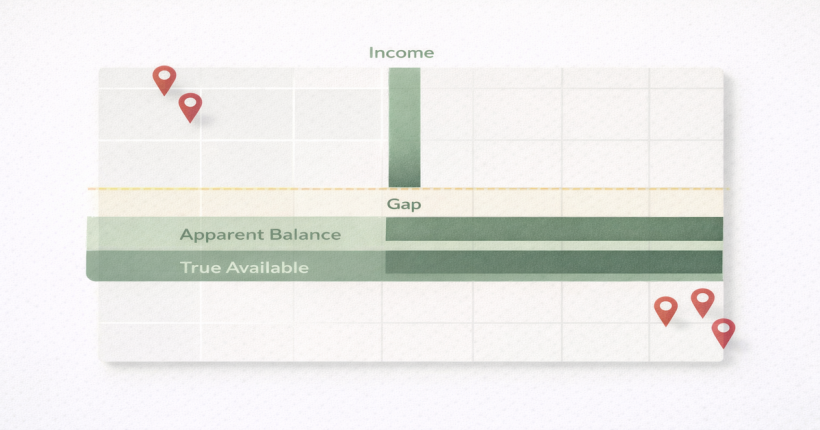
If your balance at statement close is $1,500 on a $2,000 limit card, your reported utilization for that card is 75% — regardless of what you spend before or after that date, and regardless of whether you pay the balance in full three weeks later. The snapshot is fixed at statement close. The subsequent payment changes what you owe to the issuer but does not change what was already reported to the bureaus for that billing cycle.
Most issuers report to the bureaus within a few business days of the statement close. The CFPB confirms that credit card issuers are not required to report on any specific schedule, but in practice nearly all major issuers report monthly at or shortly after the billing cycle end. Your statement close date is visible on any monthly statement or in your online account’s billing summary.
The Payment Due Date: What It Controls
The payment due date is the deadline for making at minimum the minimum payment required to keep your account in good standing. Paying by this date prevents a late payment from being recorded — which protects payment history, the largest single factor in credit scoring. Failing to pay by the due date triggers late fees, potential penalty interest rate increases, and if the payment is more than 30 days late, a derogatory mark on your credit report that damages payment history.
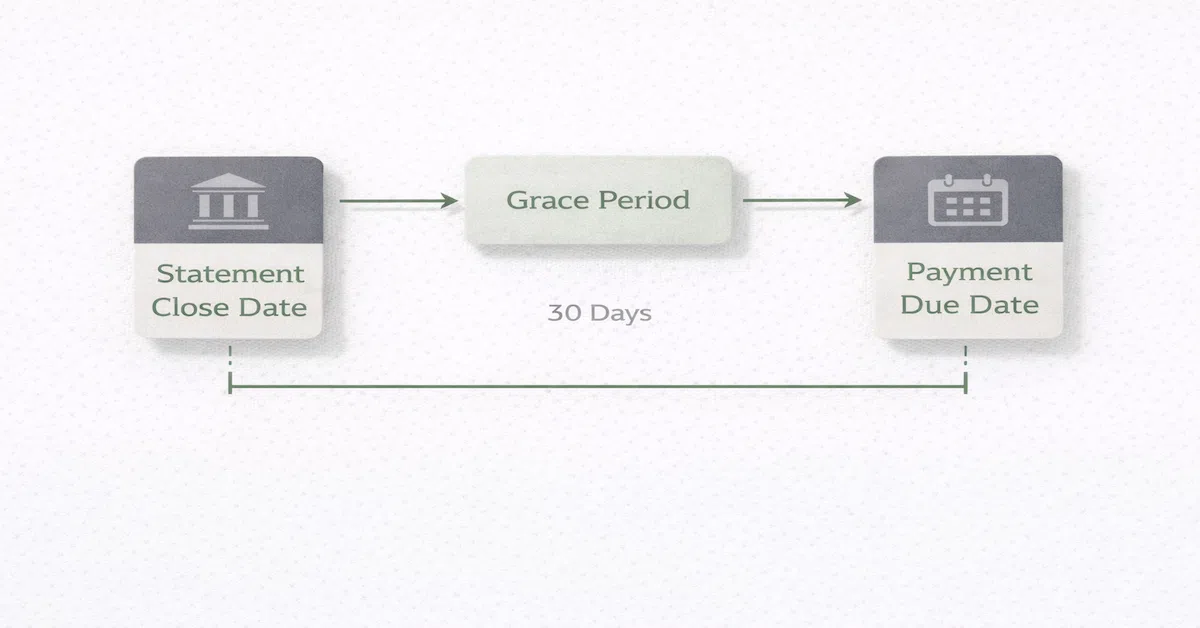
The due date is set by your issuer and is typically 21 to 25 days after the statement close date. This gap — called the grace period — is the window during which you can pay the statement balance without incurring interest charges. Paying the full statement balance during the grace period is the standard advice for avoiding credit card interest, and it is correct advice for that specific goal. But it addresses payment history only. It does not address what utilization was already reported at statement close three weeks earlier.
The Full Billing Cycle Sequence
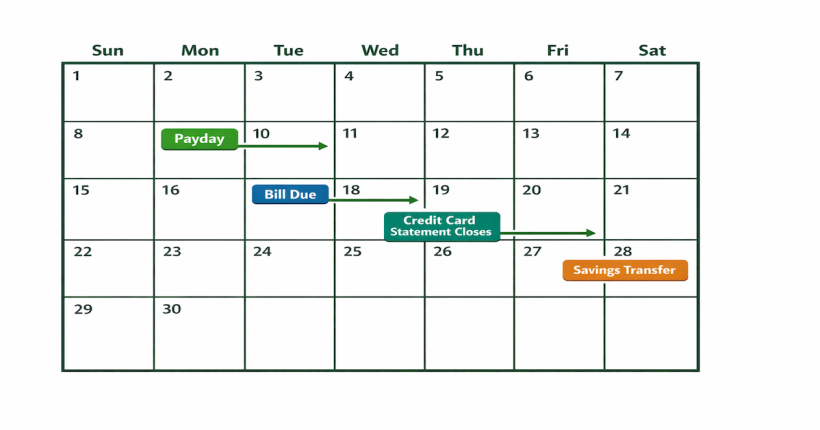
Understanding the complete sequence makes the strategic opportunity clear. A standard 30-day billing cycle operates as follows: the billing period opens on the day after the previous statement closed. Purchases accumulate throughout the cycle. Approximately 30 days after the cycle opened, the statement close date arrives — the balance at this moment is reported to the bureaus. The statement is generated and the grace period begins. Approximately 21 to 25 days later, the due date arrives — payment by this date protects payment history. The next billing cycle begins immediately after the previous statement closed, and the sequence repeats.
The strategic window for utilization management sits between the middle of the billing period and the statement close date. A payment made in this window reduces the balance that will be reported at statement close. The earlier in the cycle this payment is made, the more spending can accumulate afterward while still producing a lower reported balance — because any spending after the pre-statement payment but before the close adds back to the balance. The most reliable approach is a payment made three to five days before the statement close date, after the bulk of the month’s spending has occurred.
How to Find Both Dates on Your Account
Your statement close date is on every monthly statement, typically listed as “billing period end date” or “statement date.” In online banking, it is usually visible in the account details or billing summary section. Your payment due date is prominently displayed on statements and in the minimum payment section of online accounts — it is also the date used for autopay scheduling. Both dates are fixed on a monthly calendar schedule and do not change unless you request a billing cycle adjustment from your issuer.
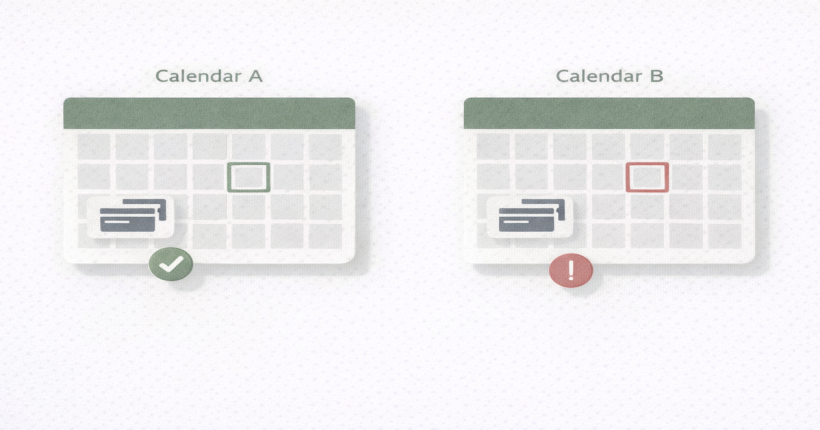
Some issuers allow you to move your statement close date, which is useful if the current date creates a cash flow conflict with your income timing. For example, if your statement closes on the 28th but your paycheck arrives on the 1st, you are consistently making pre-statement payments from a lower cash balance than if the statement closed on the 5th. Requesting a billing date change — which most major issuers accommodate — can align the cycle with your income pattern for easier execution of a pre-statement payment strategy. The mechanics of that alignment are covered in detail in the paycheck timing and credit utilization article.
Two dates. Two different outcomes. Managing both is the complete credit strategy.
The full cash flow timing and credit utilization framework covers how to build the automated payment structure that manages both dates without requiring monthly manual tracking or memory.
Explore Cash Flow Timing & Credit Utilization →Building the Two-Payment Strategy Into Your System
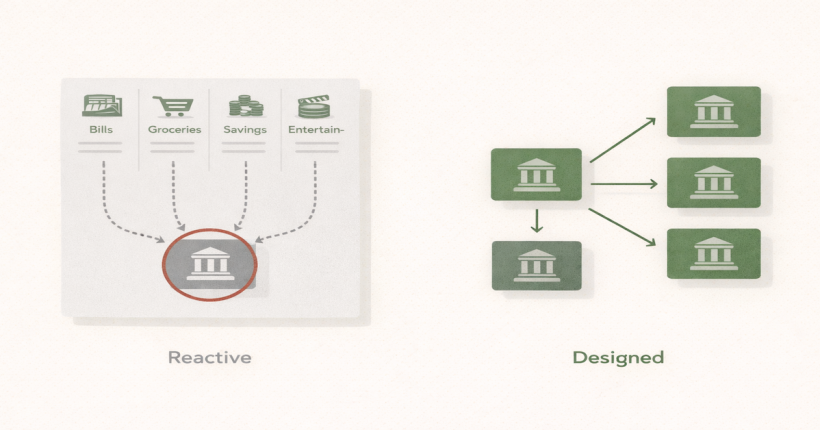
The practical implementation of managing both dates is a two-payment structure: a pre-statement payment timed three to five days before the statement close date to reduce reported utilization, and a remaining balance payment timed before the due date to protect payment history and avoid interest. Both payments can be automated from a bills account with specific scheduling — the pre-statement payment on a fixed date before close each month, and the due date payment as a standing autopay.
This structure requires knowing both dates for each card and setting up the automation accordingly. For households with multiple credit cards, the same logic applies to each card independently — each has its own statement close date and due date, and each benefits from independent pre-statement payment management. The account separation structure covered in the banking structure and cash flow control cluster provides the bills account infrastructure that makes this multi-card automation practical and manageable.
Resources
CFPB — Credit Reports and Scores
CFPB — What Is a Credit Utilization Rate?
Federal Reserve — Economic Well-Being of U.S. Households: Banking and Credit
This article is part of the Credit, Banking & Cash Flow integration system on PersonalOne — the complete framework for building a personal finance infrastructure that runs reliably by design.
Frequently Asked Questions
What is the difference between statement date and closing date?
They are the same thing, referred to by different names. Statement date, statement close date, billing cycle end date, and closing date all refer to the same event: the day your billing period ends, your balance is calculated, and your statement is generated. The issuer reports to credit bureaus at or shortly after this date. Both terms appear in different issuers’ account interfaces and documentation — when you see either phrase, it refers to the date that determines your reported utilization.
Can I change my statement close date?
Most major issuers allow billing cycle date changes, though the process and flexibility vary. Call the number on the back of your card and ask specifically to change your billing cycle close date — explain that you want to align it better with your pay schedule. Some issuers will accommodate this immediately; others have a limited set of available dates. The change typically takes one to two billing cycles to take effect. Aligning your statement close date with a predictable point after your paycheck arrives makes pre-statement payment automation significantly simpler to implement.
Does making a payment before the statement close date affect my due date payment?
Yes — in a useful way. A pre-statement payment reduces the balance that appears on your statement. The minimum payment calculated for the due date is based on the statement balance, which will be lower if you made a pre-statement payment. If you paid the balance down to near zero before statement close, the minimum due may be zero or minimal. You will still need to pay any new charges that accrued after the pre-statement payment and before the next statement close, but the amount owed at due date is reduced by what you paid before the close.
Disclaimer: This content is for educational purposes only and does not constitute financial advice. Individual financial situations vary — consult a qualified financial professional for personalized guidance.