August 20, 2026
Home › Credit Building & Protection › Credit Optimization for Approvals › Why Your Credit Score Drops Before a Mortgage Closes
Part of the Credit Optimization for Approvals cluster — a prevention system for the 90 days between preapproval and closing.
About the Author
Don Briscoe is a financial systems strategist with 12+ years of experience helping Millennials and Gen Z build income and financial stability. He founded PersonalOne to provide the financial education he wished existed — structured, honest, and free.
What You Need to Know
— Lenders re-pull your credit one to three days before closing to confirm nothing has changed since preapproval
— Your score can drop even if you don't buy anything, open any account, or miss any payment
— A statement closing with a higher balance can spike reported utilization even when the balance gets paid in full before the due date
— An authorized user account closing, or a creditor quietly lowering a credit limit, can shrink your available credit without any action on your part
— Most qualifying scores lock for 120 days, so a drop that happens within that window may not affect the loan at all if you close on time
— A 90-day pre-closing plan built around your statement dates prevents most of these drops before they happen
If you're asking why your credit score drops in the middle of a mortgage process, the answer almost every lender page gives you is the same short list: don't open new credit, don't miss a payment, don't change jobs. That advice is correct and worth following, but it treats score drops as something that only happens when you do something wrong. It misses the cases that catch prepared, careful borrowers off guard — drops that happen with no new purchase, no missed payment, and no decision on your part at all. Lenders explain what they check because that's what protects them. This is a prevention system built from the buyer's side instead, designed around the actual mechanics of when and why a score moves during the exact window you need it to hold steady.
Why Lenders Check Your Credit Again Right Before Closing
Most lenders pull your credit a second time one to three days before closing, separate from the pull done at preapproval. This isn't routine paperwork — it's a final confirmation that nothing material has changed since the loan was approved. If something has shifted enough to affect your debt-to-income ratio or your score tier, the lender can adjust the rate, request additional underwriting, or in some cases delay or deny the closing entirely.
This final pull is reviewed with the same professional eye as the original one. How to read your credit report the way an underwriter does covers what that review is actually looking for, beyond the obvious score movement.
This is also why the standard advice — don't finance a car, don't open a new credit card, don't miss a payment — exists. Those are the changes most likely to show up clearly on that final pull. But they're not the only things that move a score in this window, and they're not even the most common ones for borrowers who are already being careful.
The Drop Triggers Nobody Warns You About
The obvious risks get covered everywhere. These don't, and they're the ones most likely to catch a careful borrower by surprise.
A statement closing at the wrong moment. Your reported utilization isn't based on what you currently owe — it's based on the balance your statement shows on its closing date, regardless of whether you pay it off in full before the due date. If a large expense lands right before your statement closes, that higher balance gets reported to the bureaus even if it's gone from your account a week later. The card issuer doesn't know you're mid-mortgage. The timing of your statement close relative to the lender's final pull is what determines whether that spike ever shows up.
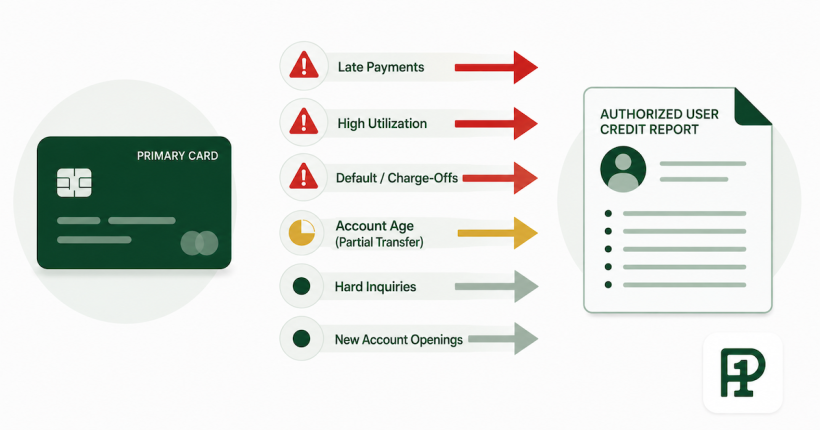
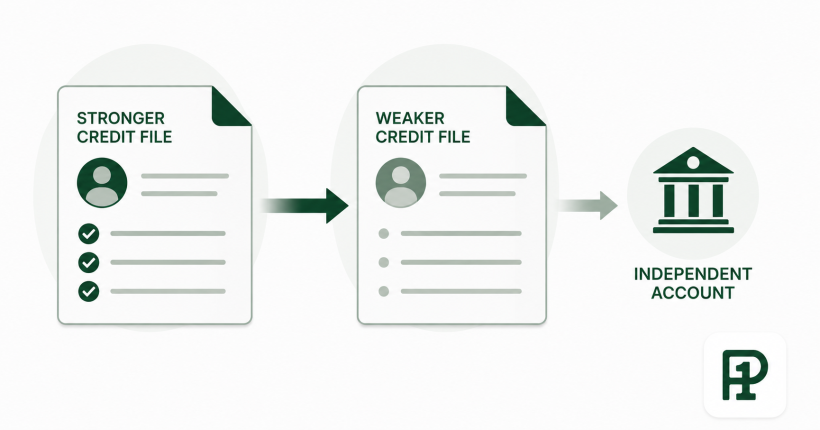
An authorized user account closing. If you're an authorized user on someone else's card and that primary cardholder closes the account, pays it off and stops using it, or it's closed by the issuer, that account's history and available credit can disappear from your file. This has nothing to do with anything you did, and you may not even know it happened until your score moves.
A quiet credit limit reduction. Card issuers periodically adjust limits based on their own risk models, account activity, or broader portfolio decisions — not necessarily anything about your specific behavior. A limit cut on a card you're not even using can shrink your total available credit and spike your overall utilization percentage without a single new charge.
A co-signed or joint account moving independently of you. If you have a joint credit card, auto loan, or any account where someone else's actions also report to your file, their behavior during this window affects your score too. A joint account holder who misses a payment, runs up a balance, or applies for new credit on a shared account creates the exact same risk as if you'd done it yourself, and you may not find out until it's already reflected on your report. If this applies to you, it's worth a direct conversation with the other account holder about staying equally cautious during your closing window, not just assuming your own discipline is enough.
What I've Seen
A client once came to me convinced something was wrong with their credit report two weeks before closing — their score had dropped eleven points and they hadn't done anything differently. It took some digging to find the cause: a card they barely used had its limit cut by the issuer during a routine portfolio review, completely unrelated to the mortgage. Nothing was wrong. Nothing needed fixing. It just needed to be understood, documented, and explained to the loan officer so it didn't become a bigger issue during the final review.
The takeaway: not every score drop in this window means you made a mistake. Some of it is simply outside your control — which is exactly why monitoring matters more than willpower here.
The 120-Day Lock Window
There's a piece of good news buried in most lender pages that rarely gets explained clearly: the credit score used to qualify you is typically locked for 120 days from when it was pulled. If your score drops during the process but you close within that 120-day window, the drop frequently doesn't affect your rate or approval at all, because the lender is working from the original qualifying score, not a constantly updating live number.
That qualifying score itself is worth understanding before this window even starts. What is a middle FICO score covers how lenders actually arrive at the number being locked in the first place — which bureau is setting it, and why it may already differ from the score you've been watching in a consumer app.
Knowing this window changes how much you actually need to worry about day-to-day score movement. If you're 40 days from closing and well inside the 120-day lock, a small fluctuation is unlikely to matter. If your closing date is being pushed out repeatedly and creeping toward or past that 120-day mark, that's the point where score stability becomes genuinely consequential again, since a new pull closer to that boundary carries more real weight. Ask your loan officer directly when your score was locked and how many days remain — it's a simple question that tells you exactly how much runway you're working with.
Closing delays happen more often than most buyers expect — inspection issues, appraisal disputes, seller-side paperwork, title problems. None of that is usually within your control, but the credit side of it is. If your closing keeps slipping and you're approaching the edge of that 120-day window, treat it as a signal to tighten the 90-day plan rather than relax it. A borrower who assumed they had two more months of flexibility because their original closing date was comfortably inside the lock window can find themselves suddenly much closer to a fresh pull than they planned for, simply because the closing itself moved and the lock didn't.
The 90-Day Pre-Closing Protection Plan
A don't-do list is reactive. This is a calendar built around your actual statement dates, designed to prevent the invisible drops above before they happen rather than reacting to them afterward.
90 to 60 days out: Identify the statement closing date for every credit card you carry a balance on. This is the single most useful piece of information in this entire plan, since it tells you exactly which day of the month your reported balance gets locked in. Note all of them on a calendar alongside your expected closing window.
60 to 30 days out: Start paying down balances before each statement closes, not just before the due date. Paying a card down to a low balance a few days before the statement date means a low number gets reported, even if you use the card normally in between. This is the single highest-leverage move in the entire plan and the one almost no lender page explains clearly.
If you're deciding which balances to prioritize with limited cash during this window, whether to pay off debt before a mortgage breaks down the specific math on which card and how far down, rather than spreading payments evenly or guessing.
30 days out: Freeze all discretionary credit activity. No new accounts, no large purchases on existing cards, no balance transfers, no closing old accounts even if you're not using them. An old account in good standing is doing more for your utilization ratio sitting open than it would help you by being closed.
Throughout the 90 days, check weekly: your score and the utilization figure being reported on each card. Checking your own score is a soft pull and doesn't affect anything. This is also when an authorized user change or a quiet limit reduction is most likely to surface early enough to address before the final lender pull.
If anything moves unexpectedly: tell your loan officer immediately rather than waiting to see if it resolves on its own. A documented, explained fluctuation handled proactively is far easier for underwriting to work with than the same fluctuation discovered cold on the final pull right before closing.
Finding Your Actual Statement Closing Date
The statement closing date is different from the payment due date, and confusing the two is the single most common reason this plan fails to work as intended. The due date is when your payment is owed without a late fee. The statement closing date is roughly three weeks earlier — it's the day your card issuer snapshots your balance and reports it to the credit bureaus, regardless of whether you've paid anything yet.
Most issuers show this date clearly on your most recent statement, usually labeled "statement closing date" or "billing cycle end date." It's also visible in most banking apps under the card's statement or billing history section. If you can't find it listed directly, you can back into it: your due date minus roughly 21 to 25 days lands close to the actual closing date for most major issuers, though this varies slightly by card.
Once you know the date for each card, the strategy is straightforward: pay the balance down a few days before that date, not the due date. A card with a $2,000 limit and a $1,800 balance sitting on the day the statement closes reports 90% utilization, even if that balance gets paid to zero a week later when the bill is actually due. The same card with a balance paid down to $200 before the statement closes reports 10% utilization instead — same spending pattern, same card, completely different number showing up on your credit report.
Want to catch a drop before the lender does?
Credit Karma gives you free, ongoing access to your score so you can monitor it weekly through the entire closing window.
Check Your Score Free (affiliate)If You Find an Error During This Window
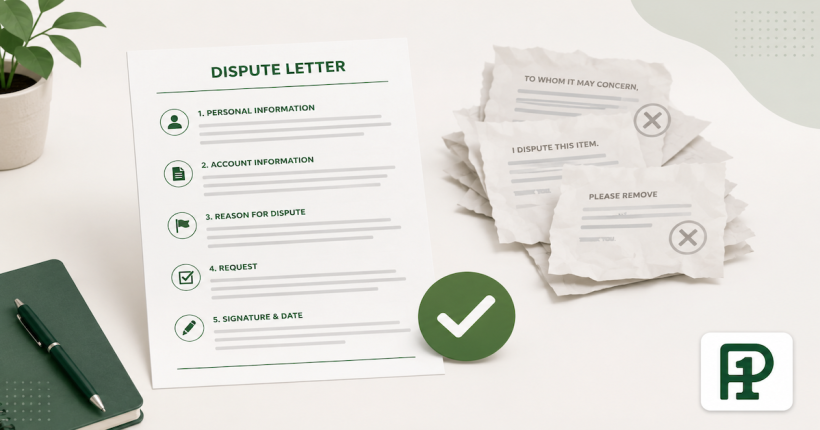
Not every drop is utilization or account changes — sometimes a genuine reporting error surfaces during this period instead. If that happens, resist the instinct to dispute it immediately. The timing of a dispute during an active mortgage process matters as much as the timing of a balance payment, and filing at the wrong moment can do more damage than the error itself.
This is exactly the scenario how to dispute errors on your credit report before applying for a mortgage walks through in detail — when it's safe to dispute, when it's worth flagging for your loan officer instead, and how to avoid stalling your own closing while trying to fix something that's wrong. If you're earlier in the process and haven't applied yet, that same backward-timeline approach is worth reading well before you're inside this 90-day window at all.
Government Resources
CFPB: Closing on a Mortgage — Federal guidance on the final stages of the mortgage process, including the closing disclosure timeline.
CFPB: Credit Reports and Scores — Consumer resources on how credit scoring works and what affects it.
For the complete pre-application optimization framework, visit the Credit Optimization for Approvals cluster hub.
Frequently Asked Questions
Will a small score drop before closing actually stop my mortgage?
Not usually, especially if you're still within your 120-day rate lock window and the drop doesn't push you below the lender's minimum threshold for your loan program. Larger drops, or ones that move you into a lower scoring tier, are more likely to trigger a rate adjustment or additional underwriting review.
Can my score drop even if I pay off my credit card in full every month?
Yes. What gets reported to the bureaus is your statement closing balance, not your final paid balance. If a large purchase lands right before your statement closes, that higher number can get reported and affect your utilization even though you pay it off completely before the due date.
What if an authorized user account I don't control gets closed?
Tell your loan officer as soon as you notice it. This kind of change is outside your control and underwriters generally understand that, but documenting it proactively is far better than having it surface unexplained on the final credit pull.
How often should I check my score during the closing process?
Weekly is reasonable for most borrowers in the 90 days before closing. Checking your own score is a soft pull and has no effect on your credit, so there's no downside to monitoring it closely during this window.
Is it safe to use my credit cards normally while waiting to close?
Generally yes, as long as you're managing balances around your statement closing dates and not opening new accounts or making unusually large purchases. The goal isn't to stop using credit entirely — it's to make sure what gets reported on your statement date stays low.
Should I close old credit cards I'm not using before applying?
No, generally not during this window. An older account in good standing, even unused, contributes positively to your available credit and average account age. Closing it right before or during a mortgage application typically does more harm to your utilization ratio than any benefit it provides. The same logic applies to consolidating balances onto a single card during this period — spreading utilization across multiple open accounts usually reports more favorably than concentrating it on one, even if the total amount owed stays identical either way.
Disclaimer: This content is for educational purposes only and does not constitute financial advice. PersonalOne is not a licensed financial advisor, broker, or investment professional. Individual financial situations vary — consult a qualified financial professional for personalized guidance.