September, 2026
Home › Credit Building & Protection › Credit Optimization for Approvals › How to Dispute Errors on Your Credit Report Before a Mortgage
Part of the Credit Optimization for Approvals cluster — when to dispute, when to wait, and how to time it around an application.
About the Author
Don Briscoe is a financial systems strategist with 12+ years of experience helping Millennials and Gen Z build income and financial stability. He founded PersonalOne to provide the financial education he wished existed — structured, honest, and free.
What You Need to Know
— An account in active dispute can stall or block a mortgage approval until the dispute is resolved
— Most readers discover an error right before applying and file a dispute immediately, which is often the wrong move at that point in the timeline
— Bureaus generally have 30 days to investigate a dispute once it's filed
— Even after a dispute resolves, the score doesn't update instantly — it processes on the next reporting cycle, which can add another two to six weeks
— The right move depends entirely on how far out your application or closing date is, not just whether the error exists
— A simple backward timeline from your target date tells you whether to dispute now, dispute carefully, or hold off until after closing
If you're researching how to dispute errors on your credit report before applying for a mortgage, you've probably already found the standard process: pull your reports, identify what's wrong, send a written dispute to the bureau and the furnisher, wait roughly 30 days. That part is accurate and every major guide covers it the same way. What almost none of them mention is the part that actually matters if you're mid-mortgage-process: filing a dispute at the wrong moment can stall your approval, not fix it. An account sitting in active dispute status is a flag many lenders won't move past until it's resolved, which means the instinct to fix an error the moment you spot it — right before applying — is often exactly backward. The dispute process and the mortgage timeline are two separate clocks running at the same time, and the question that actually matters isn't just "is this error worth disputing," it's "is now the right moment to start that clock."
The Standard Dispute Process
Before getting into timing, the mechanics themselves are worth covering clearly, since they're the foundation everything else builds on:
- Pull your free credit reports from all three bureaus at AnnualCreditReport.com, the only source authorized by federal law for free reports.
- Identify the specific error — wrong account, incorrect balance, a payment marked late that wasn't, an account that isn't yours, or an item that should have already aged off.
- File the dispute in writing with the bureau reporting the error, clearly identifying the account, explaining the inaccuracy, and stating the correction needed. Include supporting documentation where you have it.
- File a parallel dispute directly with the furnisher — the bank, lender, or collector that originally reported the information — since they can correct their own reporting independently of the bureau process.
- The bureau generally has 30 days to investigate once the dispute is filed, sometimes extended to 45 days if you submit additional information during the investigation.
Both certified mail and online dispute portals are accepted by all three bureaus. Certified mail creates a clearer paper trail and delivery confirmation, which matters if a dispute gets rejected and you need to escalate or file a complaint with the CFPB. Online portals are faster to submit and easier to track, but the documentation trail is thinner. For a dispute you expect to be straightforward, online is usually fine. For anything contested or likely to need escalation, certified mail is worth the extra few minutes.
Why Disputing at the Wrong Time Can Cost You a Mortgage Approval
Here's the part almost no guide on this topic actually explains: an account showing as "in dispute" on your credit report is its own flag, separate from whatever the underlying error is. Many mortgage lenders treat a disputed account as unresolved risk, and some loan programs and automated underwriting systems won't move forward with a final approval while a dispute is active, regardless of how minor the disputed item actually is.
This creates a genuinely counterintuitive situation. You pull your report two weeks before applying, spot an error, and your instinct — a reasonable one — is to fix it immediately. But filing that dispute starts a process that can leave the account flagged as disputed for weeks, right in the middle of underwriting. The fix you took to strengthen your application can end up freezing it instead. This is the single most common avoidable mistake in this entire process, and it happens because the dispute process and the mortgage process are explained separately everywhere else, never as two clocks that need to be coordinated.
What I've Seen
The clients who run into trouble here aren't careless — they're trying to do the responsible thing. They find an error, they fix it right away, and three weeks later their loan officer is calling because underwriting flagged the account as disputed and can't move forward. I've seen a closing pushed back nearly a month because of a $40 reporting error that, left alone, would never have affected the approval decision at all. The error was real and worth fixing eventually. It just wasn't worth fixing two weeks before closing.
The takeaway: the size of the error rarely matters as much as the timing. A small error disputed at the wrong moment causes more damage than a meaningful one handled with the right runway.
A dispute is just one way a score can move at the wrong moment. Why your credit score drops before a mortgage closes covers the other triggers — statement timing, authorized user changes, quiet limit cuts — that have nothing to do with disputes but follow the exact same logic: it's not just what happens to your credit, it's when.
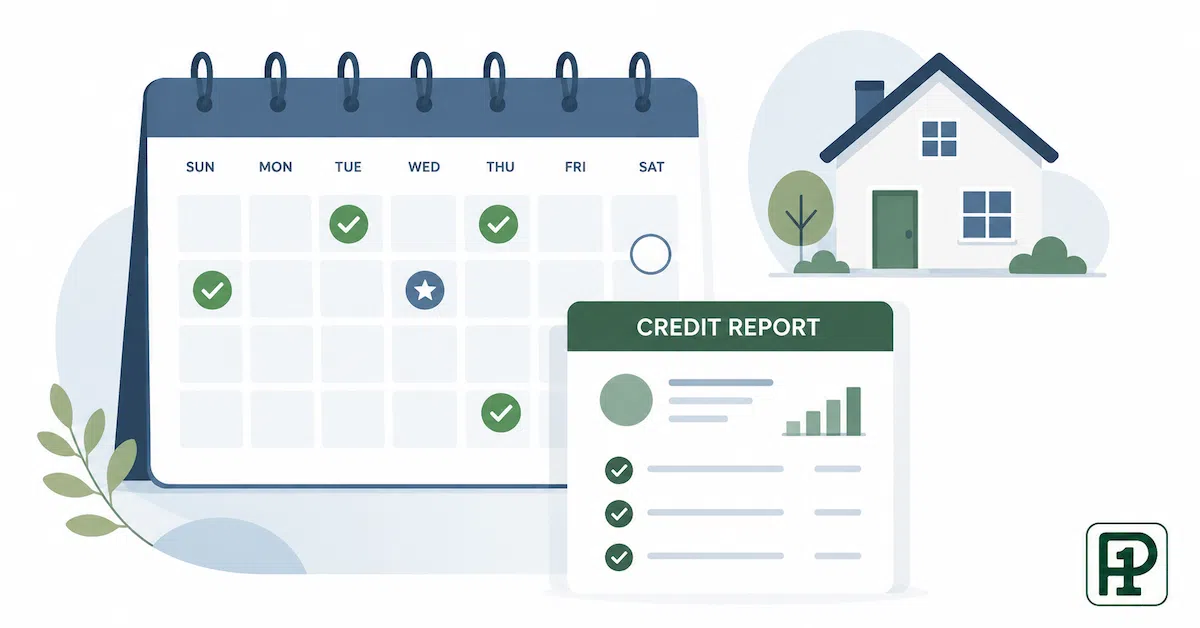
The Credit Dispute Calendar: A Backward Timeline From Your Application Date
Once you know your target application or closing date, work backward from it. The right move changes significantly depending on how much runway you actually have:
- 6+ months out: This is the safe window. Dispute anything that's genuinely wrong, regardless of size. You have enough time to absorb a 30-day investigation, a possible escalation, and the reporting-cycle delay before the corrected information shows up in your score.
- 3 to 6 months out: Still workable, but be more selective. Prioritize disputing high-impact items — anything materially affecting your score or debt-to-income picture — and keep a close eye on resolution dates so nothing is still unresolved as you get closer to applying.
- 90 days out: Narrow further. Only dispute clear-cut errors with a high likelihood of fast resolution — a wrong account number, a payment marked late that has clean documentation showing otherwise. Anything murky or likely to be contested by the furnisher is a bigger risk at this distance.
- 30 to 60 days out: Generally, don't open a new dispute. At this range, the 30-day investigation window plus the reporting-cycle lag can easily run past your closing date, leaving an active dispute flag sitting on your file during underwriting. Flag the error for follow-up after closing instead.
- During an active application: Freeze all new disputes. If an error surfaces now, talk to your loan officer before doing anything. Many lenders can work with a documented, explained discrepancy during underwriting far more easily than they can work around an active bureau dispute. Ask specifically about rapid rescore options, which some lenders can use to get verified corrections reflected faster than the standard dispute timeline.
This timeline isn't about whether the error is worth fixing — it almost always is, eventually. It's about sequencing the fix so it strengthens your application instead of stalling it.
Clear-Cut Errors vs. Errors That Will Likely Be Contested
The backward timeline above gets more useful once you can tell the difference between an error that resolves quickly and one that's likely to drag. This distinction matters most in that 90-day-and-closer window, where the margin for a slow resolution shrinks fast.
Clear-cut errors tend to resolve within the standard window with little friction: an account that simply isn't yours, a payment marked late when your bank statement shows it was paid on time, a balance reported incorrectly when your own statement shows the correct figure, or a duplicate account appearing twice from the same original debt. These have unambiguous documentation behind them, which gives the bureau and the furnisher little room to push back.
Contestable errors are the ones where the furnisher has a reasonable basis to disagree, even if you're right. A dispute over whether a payment was genuinely 30 days late versus 29, a disagreement about whether an account was properly closed versus settled, or a claim that an old debt belongs to someone else entirely when the furnisher's records say otherwise — these often take longer, sometimes stretching past the initial 30-day window into the 45-day extension, and sometimes requiring a second round if the first investigation comes back unfavorable. If you're inside 90 days of an application, save the contestable disputes for after closing unless the impact is significant enough to be worth the risk.
For a mortgage specifically, it's worth knowing which bureau actually matters most before deciding where to focus a dispute. Lenders use the middle of your three bureau scores, so a fixable error at the bureau holding your lowest number can move your qualifying score directly, while the same error at your highest-scoring bureau may not change anything at all. What is a middle FICO score covers how to identify which bureau is actually setting your number before you decide where a dispute is worth the effort.
The Score Recovery Gap After a Dispute Resolves
Even in the best case — a dispute filed with plenty of runway that resolves cleanly in your favor — the score doesn't update the moment the bureau makes the correction. The corrected information has to be reflected in your file and then processed into your score at the next reporting cycle, which typically adds another two to six weeks beyond the resolution date itself.
This is the piece that catches people who did everything else right. They dispute early, the bureau resolves it within the 30-day window, and they assume their score has already reflected the fix by the time they apply. If the application lands inside that two-to-six-week reporting gap, the score a lender pulls may not yet show the correction at all. Building that gap into your backward timeline — treating the dispute's "resolved" date as the start of a second, shorter waiting period rather than the finish line — is what actually closes this out cleanly.
Want to track your score through the dispute process?
Credit Karma gives you free, ongoing access to your score so you can see exactly when a correction actually lands.
Check Your Score Free (affiliate)What to Do If You're Already Mid-Application and Found an Error
If you're already in underwriting and just discovered an error, the instinct to file a dispute immediately is understandable but usually not the right move. Talk to your loan officer first. Underwriters can often work with a documented explanation of a discrepancy — a letter explaining the error, supporting documentation, a note in the file — far more smoothly than they can work around an active dispute flag sitting on your credit report.
If the error is significant enough that it's actually affecting your approval or your rate, ask specifically about a rapid rescore. Some lenders can submit verified corrected information directly to get a faster, targeted update to your score without triggering a full bureau dispute and its associated timeline. This isn't available everywhere and isn't free, but it exists specifically for situations like this one, and most loan officers can tell you quickly whether it's an option for your file. If you're past the point where prequalifying or preapproving makes sense to revisit, it's still worth understanding how prequalification and preapproval actually work so you know what's locked in versus what's still conditional on your final numbers.
If There's No Application on the Calendar Yet
Everything above assumes you have a specific timeline to plan around. If you're not actively applying for anything yet and just doing a routine credit checkup, none of the timing caution applies — dispute errors as you find them. There's no benefit to letting an inaccurate item sit on your report indefinitely, and clearing it well before you need credit for anything means you'll never have to think about this timing question at all.
While you're reviewing your file, it's worth seeing it the way an underwriter actually will, not just scanning for errors. How to read your credit report the way an underwriter does walks through the full professional risk framework, including which patterns get flagged and which get a pass.
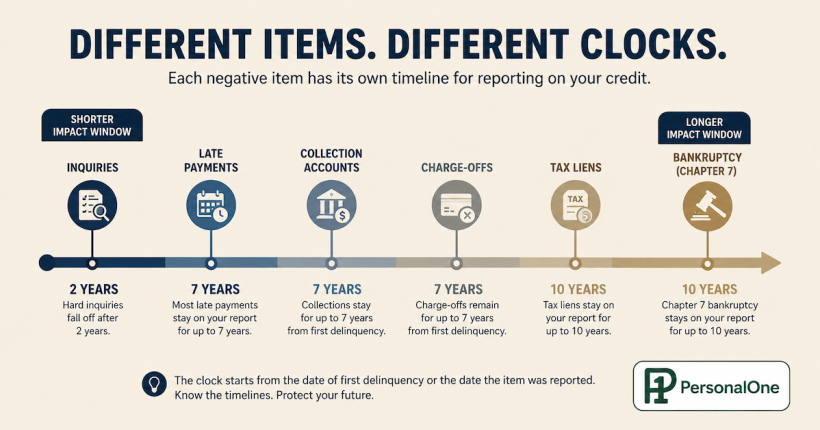
This is also the better moment to address anything related to how long negative items stay on your credit report — verifying that legitimate negative marks are reporting accurately and aging off on schedule, separate from disputing items that are simply wrong. Outdated or inaccurate negative items are exactly the kind of clear-cut dispute that's safest to handle the moment you spot it, long before any application is on the horizon.
Government Resources
CFPB: Disputing Errors on Your Credit Report — Step-by-step federal guidance on the formal dispute process.
FTC: Credit Reports and Scores — Consumer rights and protections related to credit reporting accuracy.
For the complete pre-application optimization framework, visit the Credit Optimization for Approvals cluster hub.
Frequently Asked Questions
Can a credit dispute really stop a mortgage from closing?
It can delay or stall it. An account showing as actively disputed is a flag many lenders and automated underwriting systems won't clear past until the dispute resolves, even if the underlying error is minor. It doesn't guarantee a denial, but it commonly causes delays that can push back a closing date.
How long does a credit dispute actually take from start to finish?
The bureau investigation itself generally takes up to 30 days, sometimes 45 if you submit additional documentation. After that, a successful correction still needs to process into your score at the next reporting cycle, which typically adds another two to six weeks. Plan for six to ten weeks total from filing to a fully updated score.
What's a rapid rescore, and is it the same as a dispute?
No. A rapid rescore is a service some mortgage lenders can use to submit verified, documented corrections directly, which updates your score faster than the standard bureau dispute process. It's not available for every situation and isn't free, but it exists specifically to avoid the dispute timeline when you're mid-application and need a fast, accurate fix.
Should I dispute online or by certified mail?
Both are accepted by all three bureaus. Online is faster to submit and easier to track for straightforward errors. Certified mail creates a stronger paper trail with delivery confirmation, which matters if the dispute gets rejected and you need to escalate or file a CFPB complaint.
What if the bureau rejects my dispute but the information is still wrong?
You can file a follow-up dispute with additional documentation, dispute directly with the furnisher (the bank, lender, or collector that reported it) separately from the bureau, or file a complaint with the CFPB if you believe the investigation wasn't handled properly. Keep records of every submission and response throughout the process.
Is it better to dispute everything at once or one item at a time?
If you're well outside the 90-day window, disputing multiple legitimate errors at once is fine and saves time. If you're closer to an application, it's worth being more selective — bundling several disputes together means the whole group is tied to the slowest one to resolve, and a single contested item in the batch can hold up the rest of your timeline.
Disclaimer: This content is for educational purposes only and does not constitute financial advice. PersonalOne is not a licensed financial advisor, broker, or investment professional. Individual financial situations vary — consult a qualified financial professional for personalized guidance.