Updated June 18, 2026
Credit Building & Protection › Credit Optimization for Approvals › Loan Prequalification vs. Preapproval
What You Need to Know
— Prequalification is a quick, low-commitment estimate based on self-reported information and usually a soft credit pull
— Preapproval is a deeper review with a verified credit check, often a hard pull, and a conditional offer
— Almost every guide online explains this through mortgages only, but the two terms behave very differently across loan types
— Auto loan prequalification exists and is frequently skipped, leaving buyers exposed to dealership financing markups
— Personal loan shoppers who skip prequalification often apply cold to multiple lenders, stacking hard pulls and damaging their score
— Credit card issuers often use the words interchangeably, so always confirm which type of pull is actually happening before applying
If you're researching loan prequalification, the explanation you've probably found already sounds something like this: prequalification is the quick estimate, preapproval is the deeper check, and preapproval carries more weight when you're ready to commit. That's accurate — for mortgages. But almost every article covering this topic, including the ones from major banks and lenders, is written through the mortgage lens and only the mortgage lens, even though prequalification and preapproval exist across auto loans, personal loans, and credit cards too. That gap matters more than it sounds. Mortgage shoppers have had this concept drilled into them for years. The people actually getting hurt by not understanding prequalification are car buyers signing dealership financing without ever checking what they'd qualify for elsewhere, and personal loan shoppers applying cold to five different lenders, taking a hard pull each time, and watching their score drop before they've even chosen one.
The Core Difference, Across Every Loan Type
Before getting into how this varies by loan type, the baseline distinction is consistent everywhere it's used:
- Prequalification: You self-report income, debts, and other financial details. The lender gives you a rough estimate of what you might qualify for, usually within minutes, usually with a soft credit pull that doesn't affect your score.
- Preapproval: The lender verifies your information directly — pulling your credit report, checking income documentation, and reviewing your full financial picture. This often involves a hard credit pull, and the result is a conditional offer with real numbers attached, not just an estimate.
The word "conditional" matters in that second definition. Preapproval is not a guarantee. It's a strong signal, but the lender can still adjust or withdraw the offer if something changes between preapproval and final underwriting — a new debt, a missed payment, a job change. Both prequalification and preapproval estimates are starting points, not finish lines.
Knowing the mechanism is only half the picture. The other half is knowing whether your score actually clears the bar for the loan type you're checking — credit score targets by loan type breaks down the real thresholds lenders use, since prequalifying against a target you're nowhere near just confirms what you already suspected without telling you what to fix.
Soft Pull vs. Hard Inquiry: Why It Matters More Than the 7-Year Rule
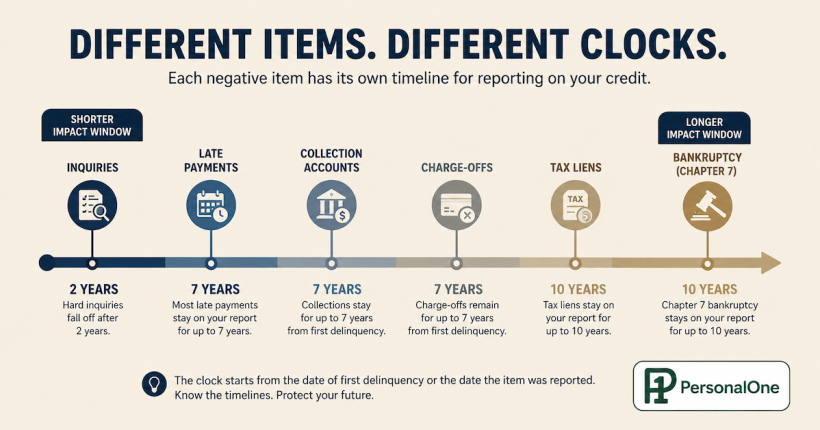
This isn't about how long something stays on your report — it's about whether something lands on your report at all. Soft inquiries, the kind used in most prequalification processes, don't affect your credit score and aren't visible to other lenders. Hard inquiries, common in preapproval and full applications, can cause a small, temporary score dip and stay on your report for about two years, though their impact fades well before that.
This is the detail that gets lost in mortgage-only coverage. A mortgage shopper who shops multiple preapproved lenders within a focused window — typically 14 to 45 days depending on the scoring model — usually has those inquiries treated as a single event for scoring purposes. That rate-shopping protection exists for mortgages, auto loans, and student loans. It does not reliably exist for personal loans or credit cards, where each hard pull is typically counted separately. Applying cold to several personal loan lenders without prequalifying first can mean several separate score dips instead of one.
How Prequalification Actually Works by Loan Type
The biggest gap in most coverage of this topic is treating prequalification as if it works the same way everywhere. It doesn't.
Mortgages. This is the loan type prequalification was built around, and most lenders make the soft-pull estimate easy to get online in minutes. It's a useful first step before house hunting, but sellers and real estate agents generally don't take it as seriously as preapproval, especially in a competitive market.
Auto loans. Prequalification exists here too, through banks, credit unions, and many online lenders — but it's the loan type most frequently skipped entirely. Buyers walk onto a lot, get offered financing on the spot, and sign without ever checking what rate they could have prequalified for elsewhere. Dealership financing isn't automatically bad, but walking in with a prequalified rate in hand gives you something to negotiate against. The dealership's finance department often has room to match or beat an outside rate, but they have little incentive to volunteer that unless you show up already holding a number.
Personal loans. Most personal loan marketplaces and many direct lenders offer prequalification with a soft pull specifically because personal loan shopping tends to involve comparing multiple lenders. Skipping this step and applying directly to several lenders instead is one of the most avoidable ways people damage their score while simply trying to find a good rate.
Credit cards. This is where the terminology gets genuinely confusing. Card issuers frequently use "preapproved" and "prequalified" interchangeably in marketing language, and the actual underlying process — soft pull vs. hard pull — isn't always obvious from the offer itself. The safest move is to check the issuer's specific language about credit checks before assuming either term means a guaranteed soft pull.
What I've Seen
The clients who damage their score shopping for credit are almost never the mortgage shoppers — that group has been trained to prequalify first. It's the personal loan shoppers and car buyers. I've seen clients drop 15 to 20 points in a single week from stacking four or five hard-pull applications at different personal loan lenders, all in the name of "comparing rates," when a 10-minute prequalification round at each lender would have given them the same comparison with no score cost at all. The instinct to apply directly isn't laziness — most people simply don't know prequalification exists outside of mortgages.
When to Use Prequalification and When to Use Preapproval
Once you know which loan type you're dealing with, the sequencing is straightforward:
- Use prequalification when you're still comparing options. It costs you nothing in score terms and gives you a real range to work with before committing to anything.
- Use preapproval when you're ready to act. House hunting, finalizing an auto purchase, or accepting a specific loan offer are all situations where the stronger, verified offer is worth the credit check.
- Confirm the inquiry type before either one. Don't assume — ask the lender directly whether their prequalification or preapproval process uses a soft or hard pull, since the terminology isn't standardized across the industry.
- Cluster your hard-pull shopping into a tight window for mortgage, auto, and student loans, where rate-shopping protections typically apply.
This kind of sequencing fits directly into credit optimization for loan approvals — the goal isn't avoiding hard pulls altogether, it's spending them deliberately instead of accidentally.
Can You Get Preapproved by Multiple Lenders at Once?
For mortgages, auto loans, and student loans, yes, and it's usually the right move. Rate-shopping protections built into most scoring models treat multiple inquiries for the same loan type within a short window as a single inquiry, which is precisely why these loan types tolerate comparison shopping so well. Getting preapproved by three different mortgage lenders within a couple of weeks typically costs you the same score impact as getting preapproved by just one.
The practical complication isn't the score impact — it's the offers themselves. Each lender may quote a different rate based on slightly different underwriting criteria, and juggling multiple conditional offers means tracking different expiration windows, different documentation requests, and different terms. Most preapproval offers are valid for 60 to 90 days, so if you're comparing several, keep a simple record of when each one expires and what conditions each lender attached.
Personal loans and credit cards are where this gets riskier. Without the same rate-shopping protections, getting preapproved or fully approved by several personal loan lenders in the same week can mean several separate hard pulls landing on your report close together, each one counted independently rather than bundled. If you're comparing personal loan offers, lean more heavily on prequalification at multiple lenders first, and reserve the actual preapproval or application step for the one or two offers that look genuinely competitive.
What Happens If Your Situation Changes Before Closing
A preapproval is a snapshot of your finances at the moment the lender reviewed them, not a permanent guarantee. Anything that changes your financial picture between preapproval and final closing can affect the offer, and this is true across every loan type, not just mortgages.
The most common ways a preapproval gets revised or pulled entirely: opening a new credit account or taking on new debt before closing, a job change or gap in employment that affects verified income, a large, unexplained deposit or withdrawal that shows up on bank statements during underwriting, or a missed payment that drops your score below the threshold the lender originally qualified you at.
The practical takeaway is to treat the period between preapproval and closing as a financial quiet period. Don't open a new credit card to take advantage of a promotional offer. Don't finance furniture or a new appliance before you've closed on a mortgage. Don't switch jobs if you can avoid it, even for a better-paying position, since lenders often want to see income stability through closing. None of this is permanent — once the loan closes, you're free to make these moves again — but the window in between is not the time to test how flexible your preapproval really is.
This same caution applies in reverse. If a lender preapproves you and then asks for updated documents weeks later because the original review is aging, that's not necessarily a red flag — it's the lender confirming nothing material has changed since the initial check. Responding promptly with current statements and pay stubs keeps the process moving and avoids the perception that something is being hidden, even when nothing actually is.
What to Have Ready Before You Preapprove
Prequalification asks for almost nothing beyond self-reported numbers, which is part of why it's so quick. Preapproval is a different process, and showing up unprepared is the most common reason it takes longer than people expect.
For most loan types, lenders will ask to verify: recent pay stubs or income documentation, two to three months of bank statements, identification, and in some cases tax returns or proof of additional income if you're self-employed or have variable earnings. For larger loans like mortgages, expect to provide more — asset statements, details on existing debts, and sometimes a letter explaining any unusual deposits or gaps in employment.
Having these documents organized before you apply doesn't just speed up the process. It also reduces the chance that something surfaces mid-review that causes the lender to come back with follow-up questions, delays, or a revised offer. The preapproval is only as fast as the documentation behind it.
It's also worth checking your own credit report before either step, not after. If there's an error or an outdated item that should have already fallen off your credit report, finding it during preapproval review means dealing with a dispute on a deadline. Finding it beforehand means you can resolve it with no time pressure at all.
This timing matters more than it sounds. Filing a dispute at the wrong moment in your application timeline can actually stall an approval rather than help it — how to dispute errors on your credit report before applying for a mortgage walks through exactly when disputing is safe and when it's worth waiting.
Want to know where you stand before you prequalify for anything?
Credit Karma gives you free, ongoing access to your score so you know your real position before a lender does.
Check Your Score Free (affiliate)If You've Already Taken a Hard Pull You Didn't Need
If you've already stacked multiple hard inquiries from applying cold to several lenders, the damage is usually smaller and shorter-lived than it feels in the moment. Inquiries typically account for a small portion of your score and their effect fades within months, even though they remain visible on your report for about two years. If you're not sure whether your file can absorb another application right now, our lender-ready credit profile framework walks through the signals that actually determine readiness.
If you're shopping for a credit card and want to avoid this entirely, several issuers and tools focus specifically on no-hard-pull credit cards and prequalification tools designed to show you offers without a score impact.
Government Resources
Continue Learning About Credit Optimization
Knowing when to prequalify and when to preapprove is one piece of preparing for an approval without wasting your credit. The complete framework for building, protecting, and using your credit strategically is in the credit building and protection guide.
Frequently Asked Questions
Does prequalification guarantee I'll get the loan? No. Prequalification is an estimate based on self-reported, unverified information. It gives you a useful range but is not a commitment from the lender.
Can a preapproval be denied later? Yes. Preapproval is conditional. If your financial situation changes, new debt appears on your report, or the lender's underwriting turns up something different from what was initially reviewed, the offer can be adjusted or withdrawn.
Does checking prequalification hurt my credit score? Most prequalification checks use a soft inquiry, which doesn't affect your score and isn't visible to other lenders. Always confirm with the specific lender, since this isn't universal across every product.
Why does auto loan prequalification get skipped so often? Most buyers aren't aware it exists as a separate step from dealership financing. Many banks, credit unions, and online lenders offer it, and walking into a dealership with a prequalified rate gives you a real number to negotiate against.
Is it safe to apply to multiple personal loan lenders to compare rates? Only if you prequalify with each one first. Applying directly to multiple lenders typically means multiple separate hard pulls, since personal loans generally don't carry the same rate-shopping protections that mortgages and auto loans do.
How long does a preapproval offer stay valid? Most preapproval offers are valid for 60 to 90 days, though this varies by lender and loan type. If you haven't closed or finalized your purchase by the time the offer expires, you'll typically need to go through the verification process again, including a fresh credit check.
Disclaimer: This content is for educational purposes only and does not constitute financial advice. PersonalOne is not a licensed financial advisor, broker, or investment professional. Individual financial situations vary — consult a qualified financial professional for personalized guidance.