June, 2026
Home › Banking Systems › Online Banks vs Traditional Banks › Mobile-Only Banking: What You Gain and What You Lose
What You Need to Know
— Mobile-only banking and online banking are not the same thing. Online banks like Ally and Marcus are primarily digital but designed around a full desktop and app experience. Mobile-only platforms like Chime, Varo, and Current are built exclusively for the phone — with features, limitations, and a fundamentally different FDIC structure.
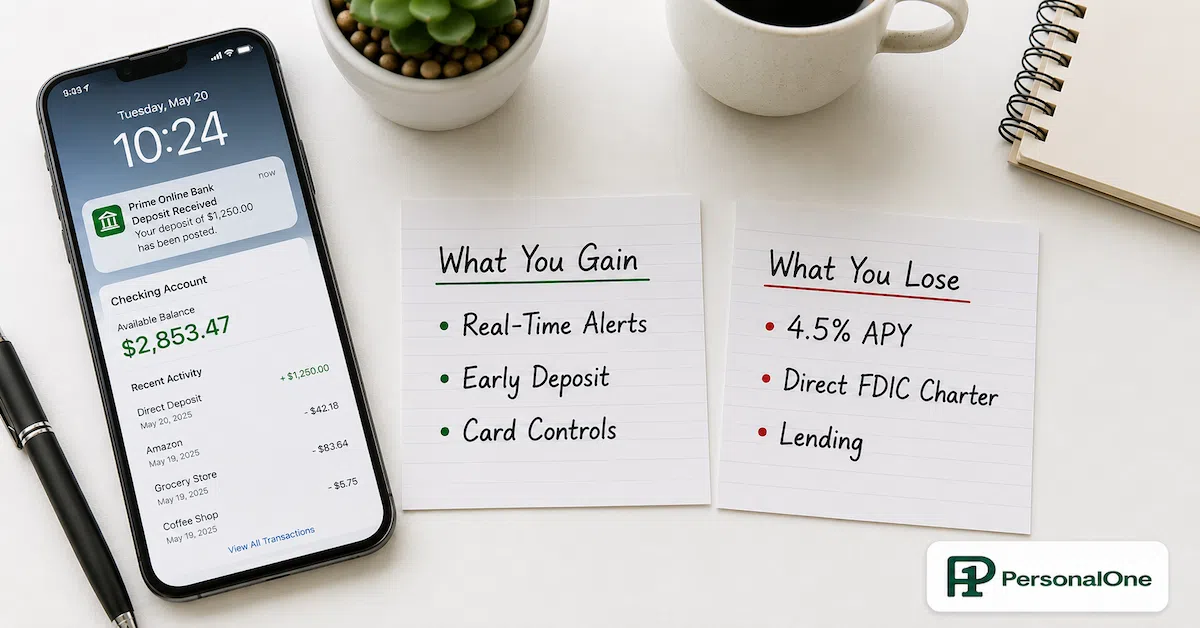
— What you gain with mobile-only: real-time spending notifications, instant push-to-debit transfers, built-in spending controls and limits, early direct deposit by up to two days, and a dramatically simpler interface designed around daily spending behavior.
— What you lose: competitive savings rates (most mobile-only platforms pay little to no interest on deposits), full FDIC charter at the platform level (most are fintechs partnered with insured banks, not banks themselves), lending products, and the desktop-first account management tools that work better for complex multi-account setups.
— The FDIC distinction matters. Chime is not a bank — it is a fintech that partners with Stride Bank and Bancorp Bank. Your deposits are insured through those partners, not through Chime directly. This is safe but structurally different from a direct FDIC charter.
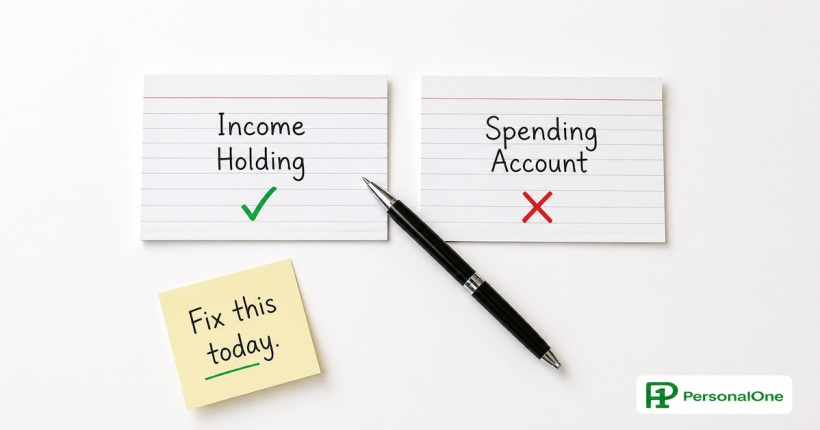
— Mobile-only platforms work best as the spending account layer in a multi-account system — not as a primary savings or income holding account. Their real-time features make them powerful for daily spending visibility. Their rate and lending limitations make them poor choices for savings.
Most comparisons between mobile-only banking and traditional banking miss the most important distinction: mobile-only banking is not simply "online banking on your phone." It is a distinct product category with specific features, specific limitations, and a different legal structure that affects how your money is protected and how the account functions in a broader banking system.
Platforms like Chime, Varo, Current, Dave, and Step are mobile-only banking apps — financial technology companies built exclusively for smartphone use that partner with FDIC-insured banks to hold deposits. They are not banks themselves. Desktop-first online banks like Ally, Marcus by Goldman Sachs, American Express Personal Savings, and Discover are actual banks with FDIC charters, offering both app and browser access, and competing primarily on savings rates and account features rather than spending behavior tools.
Understanding which category belongs in which role in your banking system requires understanding what each one actually does differently — and why those differences matter for how you use money day to day. This article covers the complete comparison within the online banking category, building on the broader online banks vs traditional banks framework.
What Mobile-Only Banking Actually Means
The term "mobile banking" is used in two completely different ways that get conflated constantly. Understanding the distinction is the first step to evaluating whether a mobile-only platform belongs in your banking setup.
Mobile banking (feature): The ability to access your bank account through a smartphone app. Every bank — traditional, online, and credit union — now offers a mobile banking app. Wells Fargo has mobile banking. So does Chase. So does Ally. This is a feature, not a bank type.
Mobile-only banking (platform type): A financial platform that exists exclusively as a smartphone application — no desktop website for account management, no physical branches, often no direct FDIC charter. Chime, Varo, Current, Dave, Step, and similar platforms are mobile-only. They are built around the phone experience and designed specifically for how younger earners manage daily spending.
The second category — mobile-only platforms — is what this article covers. These are not simply online banks with a good app. They are a structurally distinct product with different features, different limitations, and a different relationship to the FDIC insurance system than either traditional banks or desktop-first online banks.
What You Gain With Mobile-Only Banking
Mobile-only platforms were designed from scratch around the behavior of daily spenders — and the features they have built reflect that design priority. These are genuine advantages that desktop-first online banks and traditional banks typically do not match.
Mobile-Only Platform Advantages
Real-time spending notifications: Every transaction triggers an instant push notification with the merchant name and amount. Not end-of-day. Not when you check the app. Immediately when the charge posts. For anyone who wants to maintain active awareness of daily spending without logging in manually, this is a genuinely useful feature that most traditional banks and desktop-first online banks do not match in real time.
Early direct deposit: Most mobile-only platforms offer direct deposit up to two business days early. Your paycheck arrives Wednesday on a Friday pay schedule. This is a structural feature of how these platforms process ACH — they advance the funds before the official settlement date. For anyone living close to their paycheck timing, two days matters.
Instant spending controls: Card freeze and unfreeze in one tap. Spending limits by category, merchant type, or transaction size set directly in the app. Some platforms allow you to set daily spending caps that prevent overspending structurally. Traditional bank card controls are improving but mobile-only platforms lead on real-time card management.
No monthly fees, no minimum balance: Mobile-only platforms universally offer free accounts with no minimum balance requirements. This is true of the best desktop-first online banks as well, but mobile-only platforms are specifically designed around users who may have irregular balances and should never be penalized for low account values.
Interface simplicity: Mobile-only apps are designed for a single task — understanding and managing spending — with no desktop complexity, no investment product upsells, no mortgage application pathways. For a daily spending account, this simplicity is a genuine feature. The app opens to your balance and recent transactions. That is it.
What You Lose With Mobile-Only Banking
The same design priorities that make mobile-only platforms excellent for daily spending management make them poor choices for other banking roles. These are not hypothetical limitations — they are structural gaps that affect how these accounts can be used in a complete banking system.
Mobile-Only Platform Limitations
Near-zero savings rates: Most mobile-only platforms pay little to no interest on deposits. Chime's savings account pays 2.00% APY as of May 2026 — better than traditional bank savings rates but significantly below the 4.00–5.00% APY available at competitive desktop-first online banks. Keeping savings at a mobile-only platform instead of a high-yield savings account costs real money. On a $10,000 emergency fund, the difference between 2.00% and 4.50% APY is $250 per year in foregone earnings.
Fintech structure, not direct FDIC charter: This is the most important structural distinction. Chime is not a bank. Varo became an actual bank in 2020 and holds a direct OCC charter. Most mobile-only platforms are fintechs that partner with FDIC-insured banks. Your deposits are insured — but through the partner bank, not through the platform itself. If the fintech fails, the process of recovering insured deposits through the partner bank is more complex than a direct bank failure. This is not unsafe, but it is different, and it matters for how much money you keep at any single mobile-only platform.
No lending products: Mobile-only platforms do not offer mortgages, auto loans, personal loans, or business credit. Some offer small short-term advances against upcoming paychecks, but no traditional lending products. For anyone building toward a mortgage or needing institutional credit, a mobile-only platform has nothing to offer in the lending relationship that matters for underwriting.
Cash deposits are limited or unavailable: Most mobile-only platforms have no cash deposit solution. Some partner with retail networks for cash loading, but the process is fee-heavy, limit-constrained, and inconvenient compared to branch ATM deposits. For anyone who handles regular cash, this is a disqualifying limitation.
External transfer limitations: Mobile-only platforms typically have lower ACH transfer limits and sometimes slower transfer speeds to external accounts than desktop-first online banks. For a multi-account banking system that relies on regular automated transfers between institutions, these limitations create friction that desktop-first online banks do not.
What I've Seen
The clients who use mobile-only platforms most successfully are using them as the spending layer only — the account their debit card is attached to for daily transactions, receiving a fixed weekly or biweekly transfer from the main checking account. The real-time notifications and spending controls are genuinely useful at that layer. The clients who run into problems are the ones using Chime or Varo as their primary account for everything — income deposits, savings, and spending all in one place. The savings earn 2% instead of 4.5%. The fintech structure creates confusion when they need to verify their account for a loan application. And the transfer limit constraints create friction when they try to move larger amounts to an investment account. The mobile-only platform is a good spending account. It is not a good primary financial institution.
The FDIC Question: What the Fintech Structure Actually Means
The FDIC insurance question around mobile-only platforms deserves a direct answer because the situation is more nuanced than either "it's totally safe" or "it's risky."
Most mobile-only platforms are fintechs — technology companies that provide a banking interface but partner with actual FDIC-member banks to hold deposits. Chime partners with Stride Bank and Bancorp Bank. Dave partners with Evolve Bank and Trust. When you deposit money into Chime, the funds are held at Stride Bank or Bancorp Bank, and FDIC insurance applies through those institutions.
The practical safety implication is real but limited: if Chime the company fails, the deposits are held at the partner bank, not at Chime. Recovery is possible but involves working through the partner bank's processes rather than a direct bank failure resolution. The FDIC has published guidance on this exact scenario noting that depositors should verify their funds are at FDIC-insured institutions and understand the pass-through insurance arrangement.
The practical implication for a banking system: keep mobile-only platforms as the spending account layer with a balance that reflects one to two weeks of spending money — not as the account holding your emergency fund, savings, or significant reserves. The amount at risk if a fintech failure creates recovery complexity should be limited to what you can absorb operationally, not your financial safety net.
Where Mobile-Only Banking Fits in a Complete Banking System
The right role for a mobile-only platform in a banking system is specific: the daily spending account that receives a fixed transfer each payday and provides real-time visibility into spending behavior. Nothing more, nothing less.
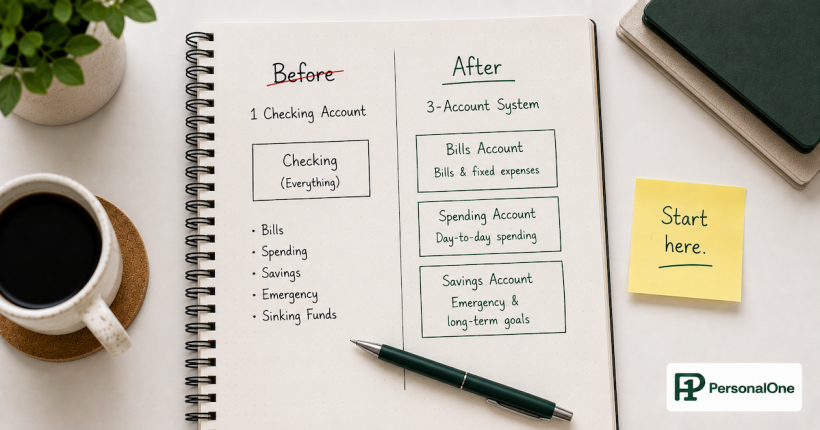
The Complete System With a Mobile-Only Spending Layer
Traditional bank or credit union: Cash deposits, ATM network, lending relationship, bills autopay. The operational infrastructure layer.
Desktop-first online bank (Ally, Marcus, Discover): Emergency fund, high-yield savings, sinking funds. The savings rate layer earning 4–5% APY.
Mobile-only platform (Chime, Varo, Current): Daily spending account. Receives fixed weekly or biweekly transfer. Real-time notifications for spending visibility. Card controls for spending discipline. Balance at any point reflects available spending money only.
This three-layer setup captures what each institution does best. The mobile-only platform gets the daily spending role where its features are strongest. The high-yield online bank gets the savings role where the rate differential produces the most value. The traditional bank or credit union handles everything requiring physical infrastructure. For the complete two-institution version of this that works for most people, the best hybrid banking setup covers the standard architecture.
Comparing the Major Mobile-Only Platforms
Not all mobile-only platforms are identical. The differences between them matter for which one fits the spending account role in a multi-account system.
| Platform | FDIC Structure | Savings APY | Early Deposit | Best For |
|---|---|---|---|---|
| Chime | Fintech — Stride Bank & Bancorp Bank | 2.00% APY | Up to 2 days | Daily spending, overdraft protection |
| Varo | Direct OCC bank charter | Up to 5.00% APY (with conditions) | Up to 2 days | Direct FDIC charter, higher rates with conditions |
| Current | Fintech — Choice Financial Group | 4.00% APY (savings pods) | Up to 2 days | Savings pods for goal separation |
| Dave | Fintech — Evolve Bank & Trust | None on standard account | Up to 2 days | Small cash advances, budgeting tools |
| Step | Fintech — Evolve Bank & Trust | 5.00% APY (under 18) | Up to 2 days | Teen banking, credit building |
Rates and structures current as of May 2026. Verify directly with each platform before opening. Varo's 5.00% APY requires qualifying direct deposit and minimum monthly spending conditions.
Mobile-Only Is One Layer. The System Is What Makes It Work.
A mobile-only platform in the right role — daily spending account with real-time visibility — is a genuinely useful tool. In the wrong role — primary savings account, income holding account, or only financial institution — its limitations cost real money. The complete framework for assigning each institution the role it does best is in Online Banks vs Traditional Banks and the Banking Systems hub.
Frequently Asked Questions
Is Chime a real bank?
Chime is not a bank — it is a financial technology company. It partners with Stride Bank and The Bancorp Bank, both FDIC-insured, to hold deposits. Your money is FDIC-insured through those partner banks, not through Chime directly. Varo is the major exception in the mobile-only category — it received a full national bank charter from the OCC in 2020 and is a direct FDIC-insured bank. When evaluating any mobile-only platform, verify whether it holds a direct bank charter or operates as a fintech with banking partners.
Can I use a mobile-only bank as my only bank account?
For some people in some situations, yes. If your income arrives by direct deposit, you have no regular cash to deposit, and your financial needs are limited to daily spending and basic transfers, a mobile-only platform can handle those functions. The limitations become relevant when you need a savings account earning competitive rates, a lending relationship for a mortgage or auto loan, regular cash deposit capability, or an account with higher external transfer limits for a multi-account system. For most people beyond the simplest financial situations, a mobile-only platform works better as one layer in a system than as the only account.
How does early direct deposit actually work?
When your employer submits payroll via ACH, the payment includes a scheduled settlement date — typically two business days from submission. Mobile-only platforms advance the funds to your account before that settlement date, effectively giving you access to the money two days early. The funds are technically on loan from the platform until official settlement, but in practice the risk of a payroll ACH failing after submission is extremely low. This is why the feature works reliably as a mainstream product rather than as a financial risk. Traditional banks and some desktop-first online banks have begun offering the same feature, though mobile-only platforms were the first to standardize it.
Should I keep my emergency fund at a mobile-only platform?
No. Emergency funds belong at a desktop-first online bank earning 4–5% APY in a high-yield savings account. Mobile-only platforms typically pay 2% or less on savings balances, and the fintech structure means your emergency fund is one layer removed from direct FDIC protection. A $10,000 emergency fund at 2% earns $200 per year. The same balance at a competitive HYSA earns $450. That $250 annual difference, compounded over five years, represents over $1,400 in foregone earnings on money that is simply sitting there. The best savings accounts for 2026 covers the top HYSA options currently available.
What is the difference between a mobile-only bank and an online bank?
Online banks like Ally, Marcus, Discover, and American Express Personal Savings are actual FDIC-chartered banks that deliver services primarily through digital channels — both app and browser. They compete primarily on savings rates, account features, and lack of fees. Mobile-only platforms like Chime, Varo (exception: direct charter), and Current are fintechs or mobile-first institutions that compete primarily on user experience, real-time features, and spending behavior tools. The practical differences are: online banks pay significantly higher savings rates, have direct FDIC charters, and offer better tools for multi-account management. Mobile-only platforms offer better real-time spending visibility, card controls, and interface simplicity. Both have no monthly fees and no minimum balances.
Official Sources
FDIC — Deposit Insurance FAQ Including Fintech and Pass-Through Coverage
FDIC — Guidance on Pass-Through Deposit Insurance for Fintech Partnerships
CFPB — Bank Account Consumer Tools and Rights
More From This Cluster
Return to Online Banks vs Traditional Banks for the complete framework. Related articles: Best Hybrid Banking Setup — how to combine mobile-only, online, and traditional banking into one system. Can Online Banks Replace Traditional Banks Completely? — the all-or-nothing question. Why Online Banks Pay Higher Interest Rates — why the savings rate gap between platforms matters in dollars. Best Savings Accounts for 2026 — where the emergency fund should actually live. For the full banking architecture, see Banking Systems.
PersonalOne Money System
This content is researched, written, and owned by PersonalOne — a free financial education platform built to help Millennials and Gen Z build real financial systems.
Disclaimer: This content is for educational purposes only and does not constitute financial advice. APY rates, FDIC structures, and platform features are current as of May 2026 and change over time. Always verify current rates, FDIC insurance arrangements, and account terms directly with each institution before opening an account. PersonalOne is not a licensed financial advisor.