2026
Home › Credit, Banking & Cash Flow › Cash Flow Timing & Credit Utilization › How Paycheck Timing Affects Your Credit Utilization
What You Need to Know
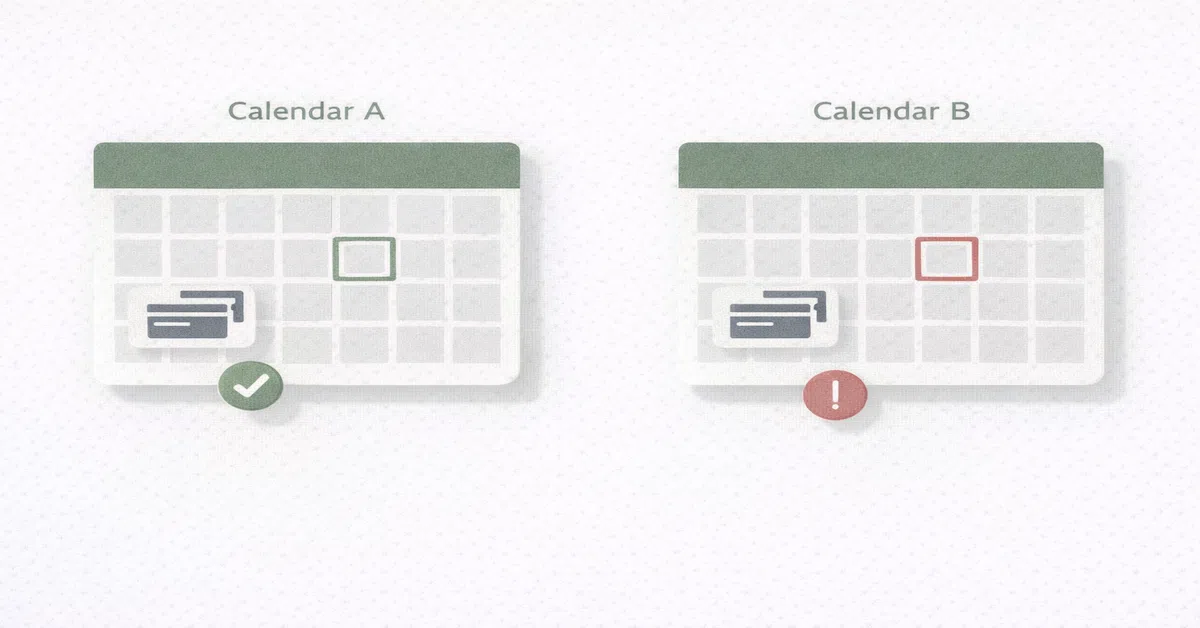
— Your paycheck schedule and your credit card billing cycle are two independent timers. When they fall out of sync, utilization spikes are structural — caused by timing, not spending behavior.
— The most dangerous period in any pay cycle is the window between your statement close date and your next paycheck. If your card reports before your paycheck arrives, your score sees the highest balance of the month.
— Biweekly pay schedules create a predictable two-month problem cycle — two months per year where three paychecks arrive instead of two, creating a timing gap that reliably produces a utilization spike.
— The fix is not spending less. It is redesigning when money moves — aligning your pay schedule, your statement close date, and your payment timing so that your card reports a low balance every single month regardless of pay frequency.
— You can request a statement close date change from most issuers. Moving your close date three to five days after your payday is one of the highest-leverage account adjustments available and costs nothing.
Most credit advice treats paycheck timing as irrelevant to credit scores. Pay on time, keep utilization low, avoid new applications — the standard guidance never mentions when your paycheck arrives relative to when your card reports. That omission matters more than most people realize. Your paycheck schedule and your credit card billing cycle are two independent financial timers running simultaneously in your life. When they align well, your card reports a low balance and your score stays stable. When they fall out of sync, your card reports a high balance every month — not because you spent too much, but because the reporting window always falls before your paycheck arrives.
Paycheck timing affects credit utilization in a way that is structural rather than behavioral. The problem isn't discipline or spending decisions — it's the relationship between two calendar systems that nobody designed to work together. Understanding how that timing gap creates utilization spikes is the first step. Building a system that eliminates the gap entirely is what this article covers — with specific adjustments for biweekly, semi-monthly, and monthly pay schedules.
The Two Timers Running Your Credit Utilization
Your credit card operates on a billing cycle — typically 28 to 31 days — that ends on your statement close date. On that date, your card issuer takes a snapshot of your balance and reports it to the credit bureaus. Whatever balance appears at that moment becomes your reported utilization for that card. This timer runs independently of anything else in your financial life — your income schedule, your expenses, your bank account balance. It just runs, close date to close date, every month.
Your paycheck operates on a completely separate schedule — biweekly (every two weeks), semi-monthly (twice a month on fixed dates), or monthly. Each pay frequency creates a different pattern of when money is available in your checking account. Each pattern creates a different risk window — a period in the billing cycle when your card balance is highest and most likely to be captured by the statement close date snapshot.
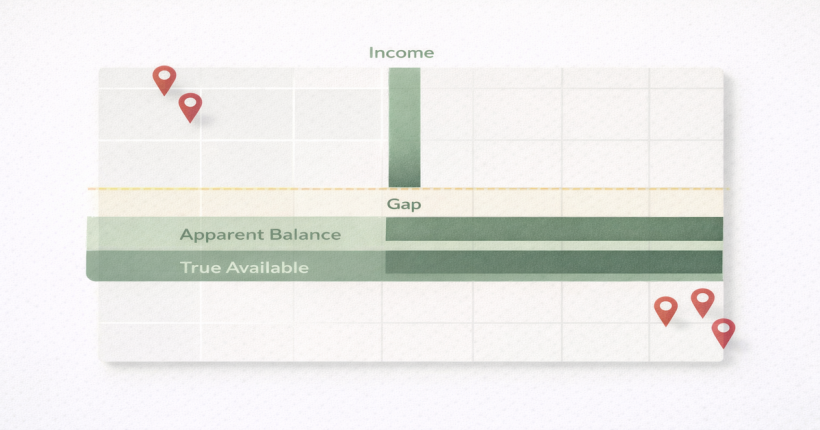
The risk window is the gap between your last paycheck and your next one — specifically the days when your card balance is climbing because you've been spending since your last payment, and your next paycheck hasn't arrived yet to fund a pre-close payment. If your statement close date falls inside that gap, your card reports the highest balance of the month. Your utilization spikes. Your score drops. And the entire sequence repeats next month because the two timers are still out of sync.
The complete mechanics of what happens between the statement close date and the bureau report — and why the timing of that snapshot determines your score rather than your actual balance — is covered in detail in the article on credit card statement dates vs. payment dates explained. That article provides the foundational reporting pipeline context that makes the paycheck timing problem fully visible.
What I've Seen
The most consistent pattern I see is someone paid biweekly who has months where their score is fine and months where it drops 20 to 30 points with no explanation — they didn't change their spending, they didn't miss any payments, nothing obviously changed. What changed is that certain months their statement close date falls in the second week after their last paycheck — when their balance is at its highest and their next check hasn't landed yet. Then the following month the close date falls one week after their paycheck — when they've already made a payment — and the score recovers. The same person, same card, same spending pattern, with a score that oscillates because two independent timers happen to align or misalign depending on the calendar that month. Once they move their close date to three days after payday, the oscillation stops entirely.
How Each Pay Schedule Creates a Different Risk Pattern
The timing gap looks different depending on how often you're paid. Each pay frequency creates a specific pattern of balance accumulation and payment opportunity — and each one has a different optimal alignment strategy.
Biweekly Pay — Every Two Weeks
Biweekly pay is the most common schedule for salaried employees in the United States — 26 paychecks per year, arriving every 14 days. Most months have two pay periods. But two months per year — which two depends on when your pay cycle starts — have three pay periods. The three-paycheck months are not the problem. The problem is the months that precede them: months where the gap between your second paycheck and the end of the month is longer than usual, creating a 17 to 21-day stretch where no new paycheck arrives. If your statement close date falls in that extended gap, your card has been accumulating spending for nearly three weeks without a new paycheck landing to fund a pre-close payment. That is the biweekly risk window — predictable, calendar-driven, and completely independent of spending behavior.
Semi-Monthly Pay — Twice a Month on Fixed Dates
Semi-monthly pay arrives on two fixed dates — typically the 1st and 15th, or the 15th and last day of the month. Unlike biweekly pay, semi-monthly pay produces exactly 24 paychecks per year with no variation in the number of pay periods per month. The risk window is predictable: the 14-day stretch between the two fixed pay dates. If your statement close date falls in the second half of that stretch — say, the 12th when your next paycheck arrives on the 15th — your balance has been building for nearly two weeks without a new payment. The fix for semi-monthly pay is the most straightforward: move your statement close date to the 2nd or 3rd of the month (three days after the 1st paycheck) and make your pre-close payment immediately upon receiving that paycheck.
Monthly Pay — Once a Month
Monthly pay creates the longest risk window — a 28 to 31-day stretch between paychecks where your balance accumulates continuously. The entire month is a potential risk window because there is no mid-month paycheck to fund a pre-close payment. The alignment solution for monthly pay requires a different approach: rather than relying on a paycheck to fund the pre-close payment, you need a dedicated payment reserve — a portion of the previous month's paycheck set aside specifically for the pre-close payment on the next statement. This is exactly the purpose of a properly structured bills account. The monthly pay schedule makes the connection between banking structure and credit utilization most visible — without a dedicated payment reserve, managing utilization on a monthly pay schedule is genuinely difficult regardless of spending discipline.
Irregular and Freelance Income
For freelancers, contractors, and anyone with variable income timing, the risk window is unpredictable by definition — income arrives when clients pay, not on a fixed schedule. Managing utilization with irregular income requires the most deliberate structural approach: a dedicated buffer balance in a bills account that funds credit card payments on a fixed schedule regardless of when client income arrives. The card's statement close date becomes the anchor — the pre-close payment goes out on schedule from the buffer, and client income replenishes the buffer as it arrives. The timing gap is eliminated not by aligning the paycheck (which can't be controlled) but by creating a financial structure that operates independently of income timing.
The Statement Close Date Adjustment — The Highest-Leverage Fix
For most pay schedules, the most effective single adjustment is moving your credit card's statement close date to fall three to five days after your primary paycheck arrives. This creates a predictable alignment: paycheck arrives, pre-close payment is funded and sent, statement closes three to five days later with the lower balance. The cycle repeats every month without requiring active management because the two timers are now synchronized rather than running independently.
Most major card issuers allow statement close date changes through the account portal or by phone. The process is straightforward: log into your account, navigate to account settings or billing preferences, and look for a "change billing cycle" or "change statement date" option. If the option isn't in the portal, call the number on the back of your card and request a date change. Most issuers process the change within one to two billing cycles. Ask the representative to confirm when the new close date will take effect so you know which month to begin the aligned payment schedule.
The target date for your new close date depends on your pay schedule. For biweekly pay, choose a date three to five days after your primary pay date — recognizing that biweekly pay dates shift slightly each month. The most reliable approach is to choose a date in the week following your typical first-of-month paycheck. For semi-monthly pay on the 1st and 15th, the 3rd or 4th is the ideal close date. For monthly pay on the 1st, the 4th or 5th. The goal in every case is a close date that lands immediately after a paycheck, giving you the funds to make a pre-close payment while the balance is at its lowest point in the billing cycle.
Understanding the full mechanics of how the billing cycle works — what happens between the close date, the grace period, and the due date, and how each part of the cycle affects what gets reported — is covered in the article on the credit card billing cycle most people misunderstand. That context makes the close date adjustment decision precise rather than approximate.
The Pre-Close Payment — Executing the Fix Each Month
Adjusting your close date creates the structural alignment. The pre-close payment is the monthly execution that keeps utilization low within that aligned structure. The two work together — close date alignment creates the opportunity, and the pre-close payment takes it.
The mechanics are simple: within three to five days of your paycheck arriving — and before your statement closes — make a payment on your credit card that brings the balance below your target utilization threshold. Below 10% of your limit is the optimal target. Below 30% is the minimum effective threshold. Whatever balance remains after the pre-close payment becomes your reported utilization for that month. The remaining balance is paid by the due date to protect your payment history.
For biweekly earners with multiple cards, the pre-close payment system works across all cards simultaneously only if close dates are aligned. If one card closes on the 3rd, another on the 12th, and a third on the 22nd, you need either three separate paycheck-aligned close dates or a cash flow structure that funds pre-close payments from a dedicated source rather than from a single paycheck. The full tactical framework for managing utilization timing across multiple cards — including how to sequence close dates when you can't get them all aligned to the same paycheck — is covered in the article on credit utilization and payment strategy.
When the Score Drop Is Coming — and How to Predict It
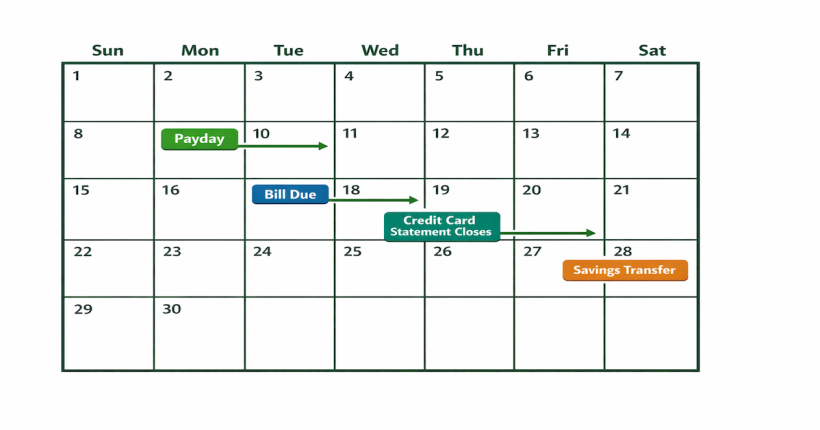
Once you understand the two-timer structure, you can predict when a utilization spike is coming rather than discovering it after the fact. For any pay schedule, the months where your statement close date falls furthest from your paycheck are your high-risk months. You can identify these by mapping your pay dates and your close dates on a calendar for the next three months — any month where the gap between the last paycheck before close and the close date is longer than ten days is a month where proactive management is needed.
For biweekly earners, this mapping reveals the specific months where the three-paycheck alignment creates an extended gap — and those are the months to prioritize an extra payment or a higher pre-close payment amount. For semi-monthly and monthly earners, the pattern is more consistent and easier to plan around once the close date is correctly positioned.
The relationship between score fluctuations and timing rather than behavior is one of the most clarifying concepts in credit management. If you've ever noticed your score dropping in some months and recovering in others with no obvious explanation, the two-timer dynamic is almost always the cause. The article on why your credit score drops even when you pay on time covers the full range of timing-driven score fluctuations — the paycheck timing pattern being the most common structural cause among responsible borrowers.
The Banking Structure That Makes This Automatic
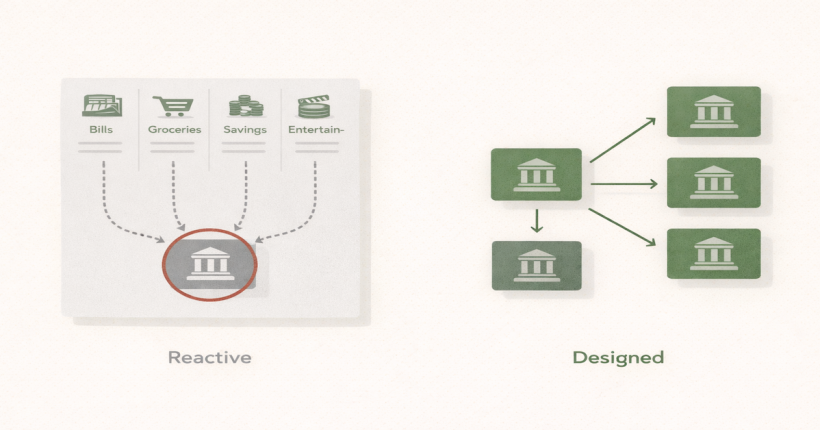
The most durable solution to paycheck timing and utilization management is a banking structure that removes the dependence on any single paycheck for credit card payments. When credit card payments originate from a dedicated bills account — funded by a consistent transfer from each paycheck — the pre-close payment goes out on a fixed schedule regardless of when the paycheck arrives or what else is happening with spending that month.
This is the integration point between banking structure and credit behavior that Hub #9 is built around. Your banking architecture — specifically how accounts are organized and how money moves between them — determines whether credit card payment timing is something you manage actively every month or something your system handles automatically. A properly structured bills account eliminates the paycheck timing risk entirely because the payment is never competing with variable spending for the same dollars. The credit, banking, and cash flow integration system covers how the three engines — banking structure, cash flow timing, and credit behavior — work together as a coordinated system rather than three independent financial decisions.
Align Your Cash Flow and Your Credit System
Paycheck timing is one piece of the cash flow and credit integration puzzle. The Cash Flow Timing & Credit Utilization cluster covers every timing mechanic — statement dates, billing cycles, payment windows, and how to build a system where your credit score reflects your financial behavior accurately every month.
Explore the Full ClusterGovernment Resources
CFPB — What Is a Credit Utilization Rate? — Official guidance on how utilization is calculated and how it affects your credit score.
CFPB — Credit Reports and Scores — Consumer rights regarding credit reporting and how to access your full credit reports.
FTC — Understanding Your Credit — How credit scores are calculated and what factors lenders consider when evaluating applications.
Return to the full credit, banking, and cash flow integration guide for the complete system overview.
Frequently Asked Questions
Why does my credit score fluctuate even though my spending and payments stay consistent?
The most likely cause is that your statement close date falls at different points in your pay cycle each month — sometimes close to your paycheck arrival, sometimes far from it. When the close date falls just before your paycheck arrives, your card captures the highest balance of the month. When it falls just after your paycheck, you've already made a payment and the reported balance is lower. The same spending pattern produces different reported balances depending on where in the pay cycle the close date happens to land. Aligning your close date to fall consistently after your paycheck eliminates this variability.
Can I actually change my credit card's statement close date?
Yes — most major card issuers allow it. You can typically request a close date change through your online account portal under billing preferences or account settings. If the option isn't available online, call the number on the back of your card. Most issuers process the change within one to two billing cycles. The date options available vary by issuer — some allow any date of the month, others offer a selection from a limited set. Ask the representative what dates are available and choose the one closest to three to five days after your primary pay date.
How does biweekly pay specifically affect credit utilization?
Biweekly pay creates 26 paychecks per year — two per month in most months, three per month in two months per year. The high-risk months are the ones just before the three-paycheck months, where the gap between the second paycheck and the end of the month is longer than usual. During that extended gap, your card balance accumulates for up to 21 days without a new paycheck landing to fund a pre-close payment. If your statement close date falls in that extended window, your score sees the highest balance of the cycle. Mapping your biweekly pay dates against your close dates for the next three months identifies exactly which months are high-risk.
What if I can't change my statement close date?
If your issuer doesn't allow close date changes or if the available dates don't align well with your pay schedule, the alternative is a dedicated payment reserve — a balance maintained in your bills account specifically for pre-close payments. This buffer funds the payment on a fixed schedule regardless of paycheck timing. The payment goes out three to five days before the close date every month from the buffer, and your paycheck replenishes the buffer as it arrives. This approach works for any pay schedule and is particularly valuable for monthly earners and freelancers who can't align a close date to a predictable paycheck.
Does this problem affect all credit cards or just the ones I use most?
The timing gap affects every card you carry, but its impact on your score is proportional to how much of your spending flows through each card. A card you use for 80% of your monthly spending creates the most significant timing risk because its balance is highest relative to its limit before the close date. Cards you use minimally — or not at all — report near-zero balances regardless of timing and don't require the same level of active management. Prioritize the alignment fix on your highest-utilization cards first and work through lower-utilization cards as the system matures.
This article is for educational purposes only and does not constitute financial or credit advice. Credit score outcomes vary based on individual profiles, scoring models, and financial circumstances. Statement close date change availability varies by card issuer — verify directly with your issuer. PersonalOne is a free financial education platform.