July 2026
Home › Credit Building & Protection › Credit Score Building Strategies › How Long Does It Take to Build Credit From Scratch?
What You Need to Know
— It takes a minimum of six months to generate a first FICO score from scratch. VantageScore can generate a score in as little as one month. Neither number is a "good" score yet — it is just a score.
— Reaching a 670 score — the threshold FICO defines as "good" — typically takes 12 to 18 months of consistent on-time payments and low utilization from a zero starting point. Reaching 740 — the practical premium threshold where lenders offer their best rates — typically takes 2 to 4 years.
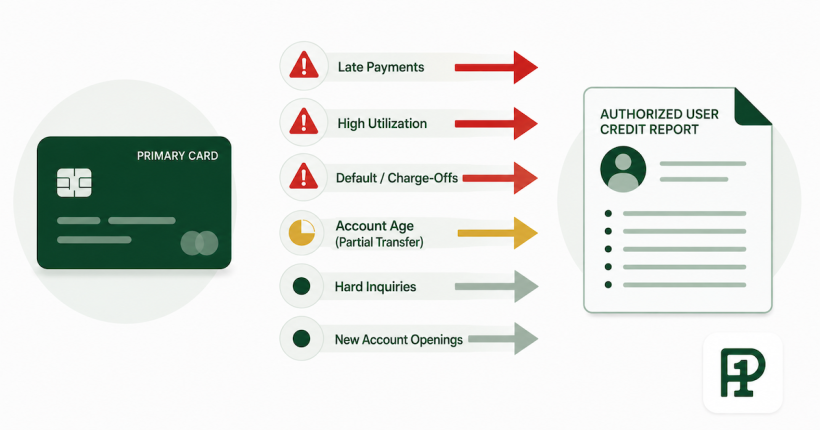
— The fastest legitimate path to a first score is the authorized user strategy: being added to an established account with a long positive history can generate a score and immediately reflect that account's age and payment record.
— The tools available for building from scratch are limited but effective: secured credit cards, credit-builder loans, authorized user status, and in 2026, select rent and utility reporting services for newer scoring models.
— The timeline is compressible. The right starting moves made in the first 90 days can place someone 6–12 months ahead of the typical track. The wrong moves — maxing a secured card, carrying a high balance, missing an early payment — add 12–24 months to the journey.
How long does it take to build credit from scratch is one of the most searched credit questions — and the answers most people find give the same unsatisfying range: six months to a year for a first score, one to two years for good credit. Those ranges are technically accurate and practically unhelpful. They do not tell you what determines whether you are at the short end of the range or the long end, which starting moves compress the timeline, or what specific score milestones to aim for at each stage.
The honest answer is that the timeline is partly fixed and partly within your control. The fixed part: FICO requires at least one account open for six months before generating a first score, and there is no shortcut around that requirement. The controllable part: the score you arrive at after those six months, and how quickly it climbs from there, is almost entirely determined by the account you open, how you use it, and whether you avoid the specific early mistakes that set the timeline back by months or years.
This article covers the stage-by-stage credit building timeline, organized by where you are in the process — not by where you started. If your starting situation is the more pressing question (no history vs. a damaged score vs. recovering from bankruptcy, for instance), how long it takes to build a 700 credit score breaks the timeline down that way instead. For the complete framework of what goes into the score at every stage, see Credit Score Building Strategies. If you are building credit as part of a broader early financial foundation, the full money system for young adults is in the young adult money system.
The Stage-by-Stage Credit Building Timeline
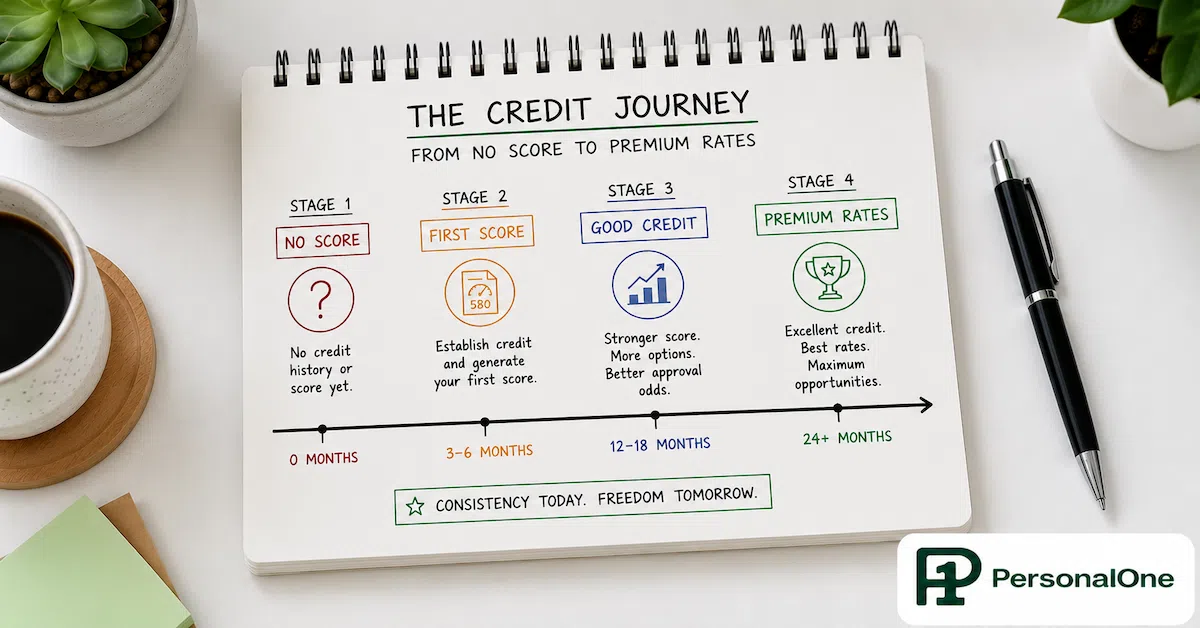
Credit building from scratch moves through four distinct stages. Each has a different primary focus, realistic score range, and set of actions that drive progress. Understanding which stage you are in eliminates the frustration of applying the wrong actions at the wrong time.
Stage 1 — No Score to First Score (Months 0–6)
The goal: Get an account open, reported to the bureaus, and generate a first FICO score. Nothing else matters in this stage.
Realistic score range by end of stage: 580–650. The average first credit score is approximately 645 per Federal Reserve data. Starting score depends entirely on which account was opened and how it was used.
Primary actions: Open one secured credit card or credit-builder loan. Use the card for one small purchase per month. Pay the full balance before the due date every month. Do nothing else — no additional applications, no balance carrying.
The shortcut: The authorized user strategy — being added to an established account held by a parent, partner, or trusted person with a long positive history — can generate a first score in as little as 30–45 days and immediately reflect years of positive account history. This is the single fastest legitimate path from no score to a first score.
Stage 2 — First Score to Good Credit (Months 6–18)
The goal: Build the score from the initial 580–650 range to 670+ through consistent payment history and low utilization. This is the longest stage for most people.
Realistic score range by end of stage: 670–710 with consistent behavior. Reaching 670 within 12–18 months is achievable with no negative events and active utilization management.
Primary actions: Continue the Stage 1 habits. After 6–12 months of positive history with the first account, consider adding a second card to increase the positive payment stream count and total available credit. Keep utilization below 10% on each card at statement close. The mechanics of what "good" means and what it unlocks are worth understanding at this stage to set a meaningful target.
Common mistake at this stage: Applying for multiple cards at once to accelerate progress. Each application triggers a hard inquiry and temporarily lowers the score. Space applications at least six months apart.
Stage 3 — Good to Very Good (Months 18–48)
The goal: Build from 670 to 740+ — the practical premium threshold where most lenders offer their best rates. This stage requires time more than action.
Realistic score range by end of stage: 740–780 for people who have maintained clean payment history and low utilization throughout. Account age is the dominant driver in this stage.
Primary actions: Maintain every habit from Stages 1 and 2. Do not close any accounts. Do not miss any payments. Keep utilization below 10% at statement close. The score improvement at this stage is largely passive — it reflects the accumulating weight of a growing positive payment history and aging accounts.
What accelerates this stage: A pre-statement payment that brings utilization near zero before the reporting date. Adding a second or third account to diversify the payment history. The specific tactics for compressing this stage are in how to increase your credit score quickly.
Stage 4 — Very Good to Exceptional (Years 4+)
The goal: 800+ territory. This stage is almost entirely about time and the absence of negative events. Only about 20% of people with scores above 800 are under 45 years old — exceptional credit is largely a function of account age.
Primary driver: Account age. The oldest accounts need to be several years old, the average account age needs to be substantial, and the payment history needs to be nearly perfect across multiple account types.
Practical note: The financial benefit of moving from 740 to 800 is minimal. Most lenders price at the same best-rate tier for scores of 740 and above. Exceptional credit provides a buffer — the score can absorb a temporary negative event without dropping out of the premium tier. Chasing 800+ as a goal is less valuable than maintaining 740+ consistently.
The Best Starting Tools for Building From Zero
Not all starting points are equal. The tool chosen in Stage 1 significantly affects the starting score and the trajectory through Stage 2. These are the options available in 2026, ranked by effectiveness for a true zero-history starting point.
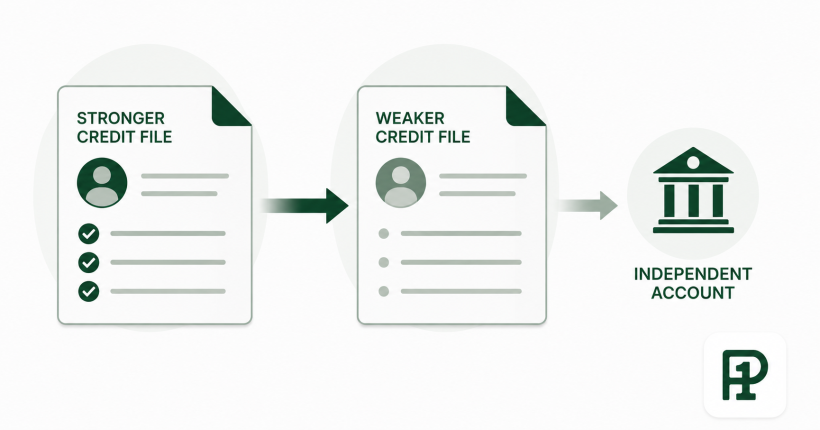
1. Authorized user status (fastest path). Being added to a long-standing account held by someone with excellent credit is the fastest path to a first score. The authorized user's credit report immediately reflects the account's full history — age, payment record, and available credit. A primary account holder with a 10-year-old card and perfect payment history who adds someone as an authorized user can generate a first score for that person within 30–45 days of the next reporting cycle. The authorized user does not need to use the card or even have access to it. The full mechanics and selection criteria are in the authorized user credit strategy guide.
2. Secured credit card. A secured card requires a cash deposit (typically $200–$500) that becomes the credit limit. It functions identically to a regular credit card from a reporting perspective — on-time payments build payment history, balance management controls utilization, and the account ages. After 6–12 months of positive history, most secured card issuers will graduate the account to an unsecured card and return the deposit. Look for a secured card with no annual fee and a direct path to unsecured graduation.
3. Credit-builder loan. A credit-builder loan works in reverse from a traditional loan: the lender holds the loan amount in a savings account while the borrower makes monthly payments, and releases the funds at the end of the term. Every payment is reported to the bureaus as a payment toward an installment loan, building payment history and adding credit mix. Credit unions and community banks typically offer these. The benefit of a credit-builder loan alongside a secured card is that it adds an installment loan to the credit mix — which can improve the mix factor and produce a slightly higher score than either tool alone.
4. Rent and utility reporting (2026 update, model-dependent). Services like Experian Boost, RentTrack, and similar platforms report on-time rent and utility payments to the bureaus. VantageScore 4.0 and FICO 10T incorporate this data. Traditional FICO 8 does not. This tool is supplementary — it may help under newer scoring models but will not generate a FICO 8 score on its own and cannot replace a reported credit account.
What I've Seen
The single biggest timeline variable I see is whether someone uses the authorized user strategy in Stage 1. Two people starting from zero on the same day: one opens a secured card and waits six months for a first score. The other gets added as an authorized user on a parent's 12-year-old card and has a 680 score within 45 days of the reporting cycle. The second person is effectively starting Stage 2 before the first person has a score at all. For anyone who has access to a family member or trusted person with excellent credit, the authorized user strategy is not a shortcut — it is the correct starting move. The only reason not to use it is the absence of a willing account holder with a strong credit profile.
The Mistakes That Extend the Timeline
The right starting moves compress the timeline. The wrong ones add months or years. These are the specific mistakes most likely to set back a credit-building journey at the beginning.
Missing an early payment. A single missed payment in the first 12 months of credit history has a disproportionate impact compared to a missed payment on a mature credit file. There is less positive history to offset it. A 30-day late payment in Stage 1 or Stage 2 can add 12–18 months to the timeline for reaching 670. Automating the minimum payment eliminates this risk entirely.
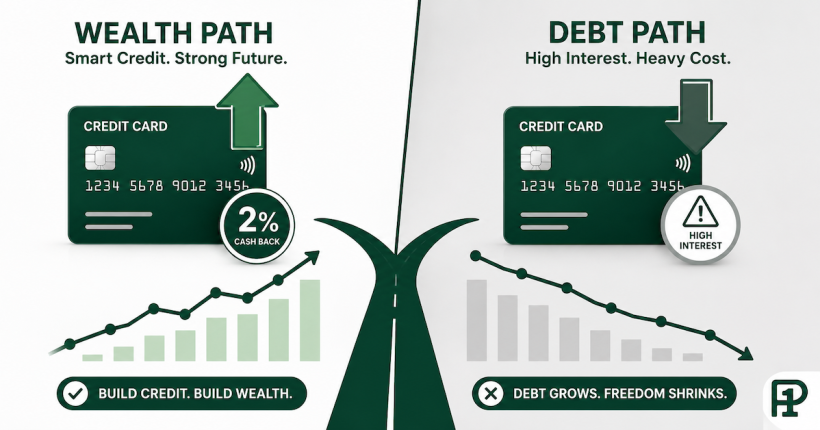
Maxing out the secured card. A secured card with a $300 limit and a $270 balance is reporting 90% utilization. That single number can hold a score in the 580–620 range regardless of perfect payment history. Keep the balance below $30 on a $300 card — that is 10% utilization, the target range for maximum score benefit. Many beginners fall for the myth that carrying a balance helps build credit faster, which is addressed directly in the credit score myths article.
Applying for multiple accounts at once. Multiple hard inquiries in a short window compound the score reduction and suggest credit-seeking behavior to the scoring model. One account at a time, with at least six months between applications in Stage 1 and Stage 2.
Closing the first account too early. The first account opened is the oldest account on file. Closing it eliminates the age contribution and reduces total available credit. Keep the first account open indefinitely — even after upgrading to better cards later. The ongoing contribution to account age is worth more than the annual fee avoidance on most entry-level secured cards.
Expecting the score to move every month. Credit building produces small, inconsistent monthly movements during Stage 2 that can feel like no progress is being made. Understanding why your score changes every month — and why a flat or slightly declining month does not mean the strategy is failing — prevents the discouragement that leads people to abandon a working approach.
Realistic Score Milestones by Timeline
| Timeline | Starting Tool | Realistic Score Range | What It Unlocks |
|---|---|---|---|
| 1–2 months | Authorized user | 650–720 (inherited) | First score. Some credit card approvals. Basic apartment applications. |
| 6 months | Secured card | 600–650 | First FICO score. Secured card graduation possible. Some entry-level unsecured cards. |
| 12 months | Secured card + consistent behavior | 640–680 | Most apartment approvals. Entry-level unsecured credit cards. Some auto loan approvals. |
| 18–24 months | Secured card + second card | 670–720 | Good tier. Conventional mortgage eligibility. Competitive auto loan rates. Rewards cards. |
| 3–4 years | Multiple accounts, clean history | 740–780 | Premium tier. Best available rates on mortgages, auto loans, and credit cards. |
| 5+ years | Multiple accounts, minimal negatives | 780–820+ | Exceptional tier. Maximum rate advantage. Score resilience against temporary events. |
Score ranges are realistic averages for people following consistent positive credit habits with no negative events. Individual results vary based on starting account type, utilization management, and the presence of any derogatory items. Authorized user timeline assumes addition to a 10+ year account with clean history.
The Timeline Is Fixed in Part. The Outcome at Each Stage Is Not.
The complete system for building credit strategically at every stage — from first account through 740 and beyond — is in Credit Score Building Strategies. For the highest-leverage actions available at each score range, see how to increase your credit score quickly. If your specific target is 700, this is the timeline broken down by starting situation.
Frequently Asked Questions
Can I build credit without a credit card?
Yes. A credit-builder loan from a credit union or community bank builds payment history and credit mix without a credit card. Becoming an authorized user on someone else's account builds credit without opening any account yourself. In 2026, select rent and utility reporting services contribute to VantageScore 4.0 and FICO 10T. However, a secured credit card remains the most accessible, fastest, and most widely effective starting tool for most people because it reports to all three bureaus, it builds both payment history and utilization management simultaneously, and it graduates to an unsecured card after consistent use.
Does having a bank account help build credit?
No. Bank account activity — checking and savings accounts — is not reported to any credit bureau and has no effect on a credit score. A person can have a 20-year banking relationship with flawless history and still have no credit score if they have never used a credit product. Building credit requires products that are specifically reported to the bureaus: credit cards, loans, mortgages, and in some cases rent and utilities through opt-in reporting services.
Is it better to start with one card or multiple?
One card to start. Stage 1 is about generating a first score and establishing the payment habit — not maximizing account count. Adding a second card before the first has at least six months of positive history adds application risk (hard inquiry), reduces average account age, and introduces a second utilization variable before the first is well-established. After 6–12 months of clean history on the first card, adding a second becomes a genuine positive: more available credit, lower utilization, and a second positive payment stream. After that, a third card or a credit-builder loan adds credit mix diversity.
What credit score do I need to rent an apartment?
Most landlords and property management companies look for a minimum of 620–650. Scores below 580 frequently result in denial or a requirement for an additional security deposit or co-signer. In competitive rental markets, some landlords set higher informal minimums. A score above 670 clears most rental applications without conditions. If building credit specifically to qualify for an apartment, the 12-month timeline to 640–680 from the secured card starting point is the realistic target. The authorized user shortcut — generating a score of 650+ within 45 days — can accelerate rental qualification significantly if access to a strong account holder is available.
How is this different from the "how long to build a 700 credit score" guide?
This guide organizes the credit-building timeline by stage of progress — first score, good credit, very good, exceptional — and is the better starting point if you're not yet sure where you'll land or want the full roadmap from zero to 800+. How long it takes to build a 700 credit score organizes the same general territory by starting situation instead — no history, a damaged score, a thin file, or recovery from a major credit event — which is more useful if 700 specifically is your target and you already know which of those situations describes you.
Official Sources
myFICO — How to Build Credit (official FICO guidance)
CFPB — Credit Reports and Scores Consumer Tools
AnnualCreditReport.com — Free Weekly Credit Reports
Federal Reserve — Economic Well-Being Report (average first credit score data)
PersonalOne Money System
This content is researched, written, and owned by PersonalOne — a free financial education platform built to help Millennials and Gen Z build real financial systems.
Disclaimer: This content is for educational purposes only and does not constitute financial advice. Credit building timelines and score outcomes vary significantly by individual situation, scoring model, and credit behavior. Data referenced is sourced from FICO, Federal Reserve, and Experian publications as of mid-2026. PersonalOne is not a licensed financial advisor.