Home › Financial Automation › Debt & Payment Automation
Financial Automation › Cluster Hub
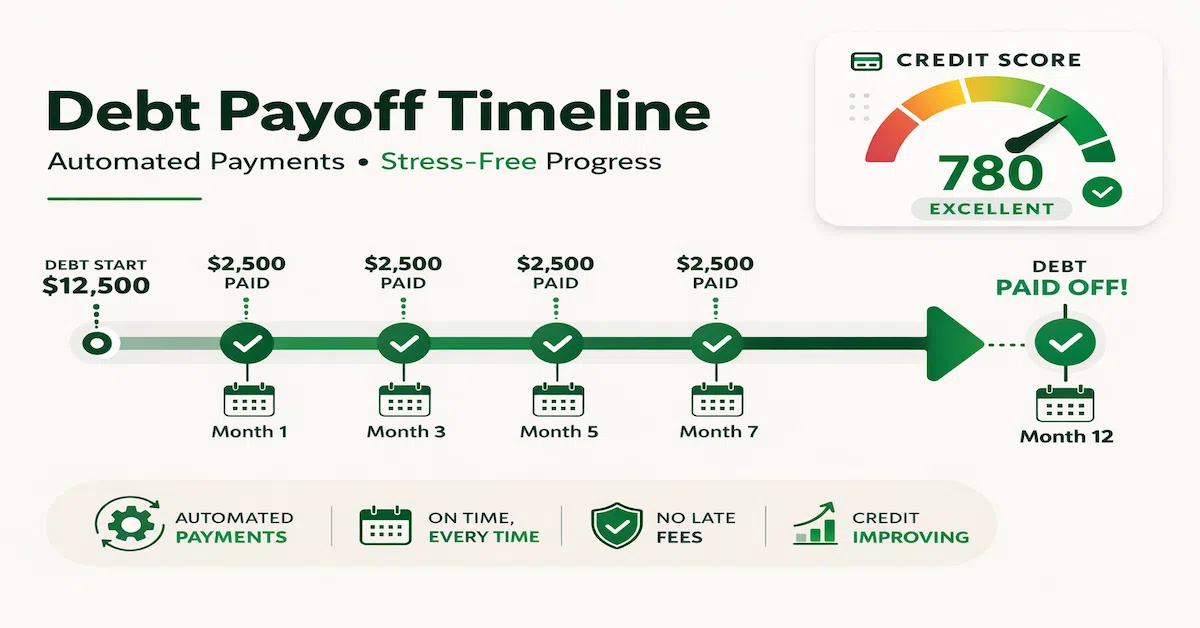
Automate Debt Payments Without Hurting Your Credit Score
Eliminate late payments, protect your credit score, and pay down debt faster — all through systems that run without your involvement.
Autopay anxiety is real. People resist automating debt payments because they fear overdrafts, double charges, or losing control of their accounts. But the alternative — managing payment timing manually every month — creates a different and more costly risk: missed payments that damage credit scores and trigger late fees. This cluster covers automated debt payments done correctly: the right accounts on autopay, the right amounts, sequenced in the right order, with guardrails that prevent the problems people worry about.
This is Cluster Hub 4 under the Financial Automation authority hub. It covers autopay strategy for credit cards, student loans, and installment debt — including the timing mechanics that protect your credit score while reducing what you pay in interest.
What This Cluster Covers
This Cluster Covers
- Credit card autopay strategy
- Student loan autopay setup
- Debt snowball and avalanche automation
- Payment timing to reduce interest
- Autopay mistakes and how to avoid them
Covered Elsewhere
- Debt settlement strategy (Debt Relief hub)
- Credit repair after damage (Debt Relief hub)
- Income routing setup (Cluster 1)
- Credit utilization and payment timing (Credit-Banking-Cash Flow hub)
The Debt Payment Automation Framework
Debt payment automation has two distinct goals that require different approaches: protecting your credit score through on-time payment history, and reducing your total debt cost through strategic extra payment automation. These are not the same system, and conflating them creates the mistakes people worry about.
Autopay for Credit Protection
Every debt account should have autopay enabled for at least the minimum payment. Payment history is 35% of your credit score — a single missed payment can drop a good score by 60–110 points and stays on your report for seven years. Autopay at the minimum eliminates this risk entirely. The autopay amount is a floor, not a ceiling: you can always pay more manually above it. The floor is what protects your credit.
Autopay for Debt Reduction
Accelerating debt payoff requires a second layer of automation: fixed extra principal payments directed at your target debt. The debt snowball and avalanche methods both work well when they’re automated — a fixed extra-to-principal transfer set up alongside the regular autopay creates a systematic payoff machine that runs every pay period. The key distinction: always label extra payments as “apply to principal” in your servicer or lender portal, or the extra amount may be applied to future payments instead.
Payment Timing Strategy
When autopay fires matters as much as whether it fires. For credit cards, your balance is reported to the bureaus on your statement closing date — not your payment due date. Setting up a mid-cycle payment before the statement closes reduces reported utilization, which improves your credit score. For interest reduction, paying before the due date reduces the daily accrual period. Both effects compound over a 12-month period of consistent execution.
Articles in This Cluster
Coming Soon
Should All Credit Cards Be on Autopay?
Which cards to automate, at what amounts (minimum vs full balance), and the cases where keeping a card manual makes more sense than automating it.
Coming Soon
How to Automate the Debt Snowball Method
Setting up automated minimum payments across all debts plus a fixed extra-principal payment on your target debt — so the snowball rolls without requiring monthly decisions.
Coming Soon
The Right Way to Set Up Student Loan Autopay
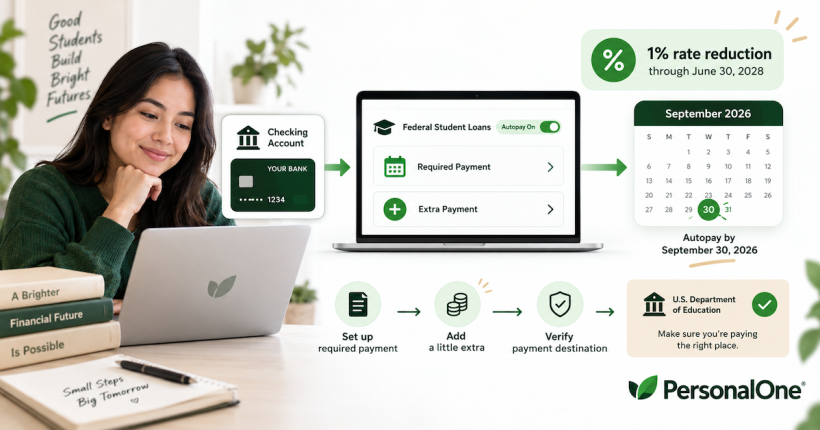
Federal loan autopay setup for the 0.25% rate discount, biweekly payment configuration, and how to add a principal-only extra payment correctly through your servicer portal.
Coming Soon
Payment Timing Strategy to Avoid Interest
How statement closing dates, daily interest accrual, and mid-cycle payments interact — and the specific timing that reduces what you pay in interest while improving your credit score simultaneously.
Coming Soon
Autopay Mistakes That Can Hurt Your Credit Score
The most common autopay errors — wrong amount type, insufficient buffer balance, misapplied extra payments, servicer transfer gaps — and how to set up your system to avoid each one.
Explore the Full Financial Automation System
Debt payment automation is one layer. The PersonalOne Financial Automation hub covers the complete system — banking infrastructure, budget automation, savings automation, and investment automation.
Return to Financial Automation Hub →Other Financial Automation Clusters
Banking Infrastructure Automation
Build the foundation that all other automations depend on.
Explore Banking Infrastructure →Budget Automation
Make your budget run without tracking every dollar manually.
Explore Budget Automation →Savings Automation
Save consistently without relying on willpower or memory.
Explore Savings Automation →Investment Automation
Build wealth consistently through automated investing.
Explore Investment Automation →