September, 2026
Home › Credit Building & Protection › Credit Optimization for Approvals › How Late Payments Affect Your Credit Score Before a Loan Application
Part of the Credit Optimization for Approvals cluster. Already past the late payment and ready to fix the rest? See how to improve your credit score before applying.
About the Author
Don Briscoe is a financial systems strategist with 12+ years of experience helping Millennials and Gen Z build income and financial stability. He founded PersonalOne to provide the financial education he wished existed — structured, honest, and free. Follow
Quick Answer: Late Payments and Loan Applications
— The damage is front-loaded: A first-ever late payment on an otherwise clean file can drop a score 60 to 110 points. The same late payment on a file with prior negative marks does far less damage — there's less clean history to lose.
— Severity matters more than people expect: A 30-day late payment, a 60-day late payment, and a 90-day late payment are reported and scored as different events, not the same mark at different sizes.
— Lenders look at recency, not just presence: Most mortgage and auto underwriting manually flags late payments within the past 12 to 24 months, even if the score itself has partially recovered.
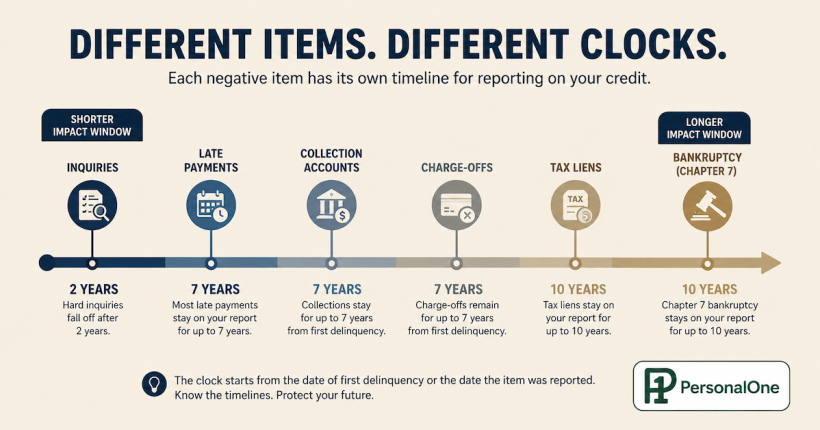
— It fades, but slowly: The scoring impact shrinks meaningfully after 12 months and substantially after 24, even though the mark itself stays on the report for seven years.
— Timing the application matters: If a late payment is recent, the better move in most cases is to wait, rebuild a stretch of on-time history, and then apply — not to apply immediately and hope the explanation letter does the work.
A late payment doesn't just cost points on a score — it changes how a lender reads the rest of the application. The same 30-day late mark means something different to an underwriter depending on how recently it happened, how severe it was, and what the rest of the credit file looks like around it. Two people with the exact same FICO score can face very different outcomes on the exact same loan application if one of them has a late payment from four months ago and the other has one from three years ago.
This guide breaks down exactly how late payments affect a credit score and a loan application separately — because those are two different questions with two different answers. For the broader pre-application optimization picture, how to improve your credit score before applying covers the full playbook. If you haven't checked whether your overall profile is ready yet, the credit readiness framework covers the factors lenders weigh beyond the score itself.
Late Payment Severity: Comparison
| Severity | Typical Score Impact (Clean File) | Typical Score Impact (Existing Marks) | Lender Sensitivity |
|---|---|---|---|
| 30 days late | 60–110 points | 10–30 points | High if within 12 months |
| 60 days late | Larger than 30-day, same file | Moderate addition to existing damage | Treated as a more serious flag |
| 90+ days late | Largest single-event impact | Significant even on a damaged file | Often a manual underwriting flag |
| Charge-off / collection | Severe, compounding | Severe, compounding | Frequently a hard decline trigger |
Why the Same Late Payment Hits Different Files Differently
FICO scoring models weigh new negative information against the existing pattern in the file. A borrower with years of perfect payment history has the most to lose from a single new late mark — the model has no other negative data to average against, so the drop is steep. A borrower who already has prior late payments or collections on file sees a smaller incremental drop from one more late mark, not because the behavior is viewed as acceptable, but because the file has already absorbed most of the damage that kind of event causes.
This is counterintuitive for a lot of people preparing for a loan application: the person who has been the most careful for the longest time is, in a narrow technical sense, the most exposed to a single mistake. It also means the standard advice — "don't worry, one late payment isn't the end of the world" — is true for some files and seriously understated for others. The right read depends on what the rest of the file looks like, not a fixed number that applies to everyone.
What Lenders See That the Score Doesn't Capture
The credit score is a single number, but mortgage and auto underwriting frequently goes beyond the score to manually review the credit report itself, especially for borderline applications. A late payment from 14 months ago might have only a modest remaining effect on the score, but it can still appear as a flagged item in manual underwriting if it falls within the lookback window the lender's guidelines specify — commonly 12 to 24 months depending on the loan program and loan type.
This is the gap that catches people off guard: they check their score, see it's recovered enough to clear the program minimum, and assume the late payment is no longer relevant to the application. The score recovering and the late payment falling outside a manual underwriting lookback window are two different things on two different timelines, and the second one matters just as much for approval as the first.
What I've Seen
One pattern comes up constantly with readers preparing for a mortgage application: a single late payment from eight or nine months earlier, usually from a moment of genuine life disruption — a job change, a medical bill, an autopay that silently failed. The score has often partially recovered by the time they're ready to apply, and they read that recovery as the issue being resolved.
In one case, a reader's score had climbed back to within the conventional mortgage's preferred range, but the late payment was nine months old — well inside most lenders' 12-month sensitivity window. Rather than apply immediately, we mapped out what three more months of perfect payment history would do: not a dramatic score jump, but it pushed the late payment outside the most sensitive part of the lookback window before the application went in. The approval came through without the late payment becoming a manual underwriting issue.
The takeaway: the question isn't just "has my score recovered." It's "has enough time passed that this specific lender, for this specific loan type, is unlikely to flag it." Those are different questions with different timelines, and conflating them is the most common mistake people make right before applying.
Get the Pre-Application Credit Checklist
A free checklist covering exactly what to check before applying for a loan — including how to read your own report the way a lender will.
Should You Apply Now or Wait?
There's no universal answer, but there's a useful way to think about the decision. If the late payment is recent — within the last six to nine months — and the loan isn't urgent, waiting is usually the better move. A few more months of on-time payments does two things simultaneously: it pushes the late payment further from the lender's lookback window, and it adds positive history that offsets the negative mark in the score calculation itself.
If the late payment happened a year or more ago and the score has recovered into the target range for the loan type being sought, applying is usually reasonable — the risk of further delay (rates changing, a property falling through, a deal expiring) often outweighs the marginal benefit of waiting even longer for a mark that's already substantially faded. Credit score targets by loan type covers what that target range actually is depending on whether the application is for a mortgage, auto loan, or something else. If the loan is time-sensitive and the late payment is recent and unavoidable to disclose, preparing a clear, brief written explanation for the underwriter — what happened, why it was a one-time event, and what's changed — is worth doing, though it's a supplement to good standing, not a substitute for it.
Build the Full Pre-Application Picture
A late payment is one factor among several lenders weigh. The PersonalOne how to improve your credit score before applying guide covers the complete pre-application checklist, and the credit readiness framework covers what lenders evaluate beyond the score itself.
Framework-first. Less willpower. More infrastructure.
Resources
CFPB: Credit Reports and Scores — Consumer Financial Protection Bureau guidance on how late payments are reported and how long they remain on a credit report.
MyFICO: How a Late Payment Affects Your Score — Official FICO guidance on how recency, severity, and existing file condition affect score impact.
For the complete pre-application optimization framework, visit the Credit Optimization for Approvals cluster hub.
Frequently Asked Questions
How many points does a late payment take off your credit score?
It depends heavily on the rest of the file. A first-ever late payment on an otherwise clean credit history can drop a score 60 to 110 points, while the same late payment on a file that already has negative marks typically causes a smaller additional drop, often in the 10 to 30 point range. The severity of the late payment — 30, 60, or 90+ days — also changes the size of the impact.
How long does a late payment affect your ability to get a loan?
The mark stays on the credit report for seven years from the date of the missed payment, but its practical effect on loan approval fades much faster than that. Most lenders pay closest attention to late payments within the past 12 to 24 months, with sensitivity decreasing the further back the event occurred. A late payment from five years ago rarely affects a current application even though it may technically still be visible on the report.
Will one late payment stop me from getting a mortgage?
Not automatically, but it depends on recency and the loan program. A single late payment from over a year ago with an otherwise strong file is unlikely to be a dealbreaker for most conventional or FHA applications. A recent late payment, especially within the past 12 months, is more likely to trigger manual underwriting review and may affect approval or terms, particularly for conventional loans with stricter guidelines than FHA or VA programs.
Does paying off the late account remove it from my credit report?
No. Paying the account brings the balance current and stops further damage, but it does not erase the late payment notation itself. The late payment remains as a historical record on the credit report for seven years from the original delinquency date, regardless of when the balance was eventually paid. Paying it off is still important — it prevents further escalation to collections or charge-off status, which carry more severe and longer-lasting consequences.
Should I write an explanation letter to the lender about a late payment?
It can help in borderline cases, particularly when the late payment was a clear one-time event tied to a specific circumstance rather than a pattern. A brief, factual letter explaining what happened and what's changed since can provide useful context for manual underwriting review. It is not a substitute for time and a clean payment history afterward — lenders weigh the demonstrated behavior more heavily than the explanation, but the two together are stronger than either alone.
This content is for educational purposes only and does not constitute financial advice. PersonalOne is not a licensed financial advisor, broker, or investment professional. Individual financial situations vary — consult a qualified financial professional for personalized guidance. Lender underwriting guidelines, lookback windows, and scoring model treatment of late payments vary by lender and loan program and are subject to change.