Updated: August 17, 2026
Home › Credit, Banking & Cash Flow › The Financial Infrastructure System
What You Need to Know
— Financial problems are almost always infrastructure problems — not income problems, not discipline problems. The architecture of how accounts are designed, how money moves, and how systems connect determines outcomes more than any individual behavior.
— Banking, cash flow, and credit are one system, not three separate topics. A breakdown in any layer creates cascading failures in the others — banking chaos leads to cash flow gaps, which leads to credit damage.
— Infrastructure makes the right outcome the default outcome — without requiring constant attention or willpower. The system does the work when the architecture is correct.
— The five articles in this cluster build the complete infrastructure model — the conceptual foundation that makes every other PersonalOne strategy legible.
— This cluster sits within the Credit, Banking & Cash Flow integration hub — the full three-engine model that connects all four system clusters.
There is a specific moment most people experience in personal finance — a moment where they have read the advice, tried the budgets, understood the concepts, and still feel like their finances do not work the way they are supposed to. The budget collapses. The credit score moves unexpectedly. The savings do not accumulate. Something always goes wrong.
The reason is almost never what people think it is. It is not income. It is not knowledge. It is not effort. It is infrastructure — the underlying architecture of how accounts are designed, how money moves, and how each system connects to the others. When the infrastructure is broken or absent, individual tactics fail regardless of how correctly they are applied.
This cluster builds the complete picture. It is the explanation layer of the PersonalOne integration system — the place where the individual engines connect into a model that makes the entire system legible. The authority hub that connects all four system clusters is the Credit, Banking & Cash Flow hub.
The PersonalOne Infrastructure Model: How the Three Systems Connect
Layer 1 — Banking Infrastructure: Where Money Lives
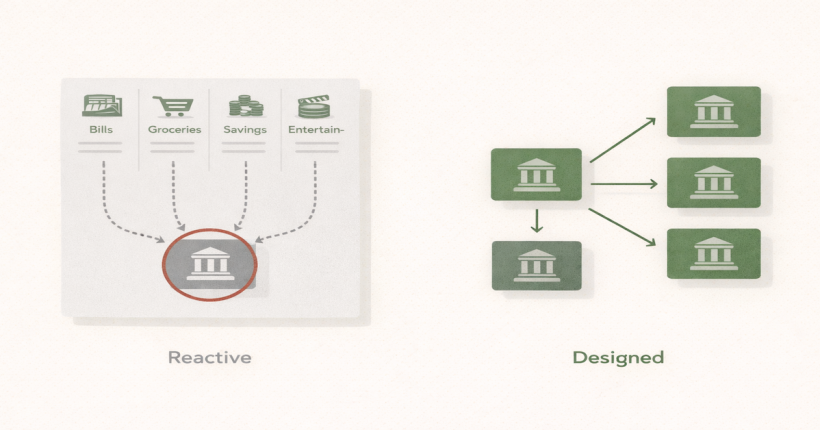
Account architecture determines whether money reaches its destination or gets consumed before it gets there. Checking account design, separation strategy, and payday routing form the foundation. Nothing else in the financial system works reliably without this layer functioning correctly.
Layer 2 — Cash Flow Management: How Money Moves
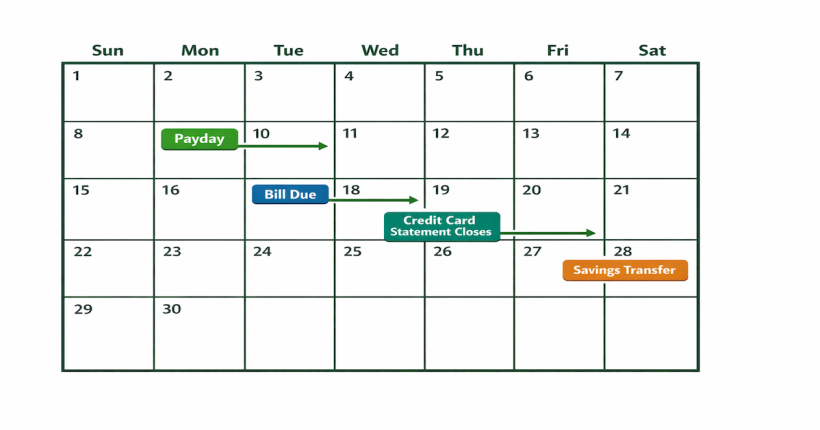
The timing and sequencing of every transaction in the system. Paycheck routing, bill cycles, credit card payment windows, and automated transfer schedules all interact to create either predictable financial flow or recurring chaos. Cash flow management is the operating layer that runs on top of the banking infrastructure.
Layer 3 — Credit System: Financial Reputation and Leverage
Credit performance is largely a downstream output of the two layers above it. Payment history, utilization, and account management are all shaped by whether banking structure routes bill payments correctly and whether cash flow timing aligns with reporting cycles. Fix the infrastructure and credit often improves without any direct intervention.
The Integration Rule
A breakdown in Layer 1 creates cascading problems in Layers 2 and 3. A bills account with insufficient separation causes missed payments. Missed payments damage payment history. Poor payment history drops the credit score that determines borrowing costs for years. The failure starts upstream and shows up downstream — which is why fixing the symptom never works as well as fixing the source.
Why Infrastructure Thinking Changes Everything
The shift from tips-based financial thinking to infrastructure-based financial thinking is the single most important reframe PersonalOne offers. Tips tell you what to do. Infrastructure tells you how to design your financial environment so the right thing happens automatically — without requiring a decision every time.
Once finances are understood as an interconnected system rather than a collection of independent decisions, the troubleshooting process changes completely. Instead of asking "why do I lack discipline?" the question becomes "which part of the infrastructure is producing this failure?" The second question has a real answer and a buildable fix. The first question does not.
Go Deeper: Financial Infrastructure System Guides
These five articles build the complete infrastructure model — the conceptual foundation that makes every other PersonalOne strategy make sense.
How Credit, Banking & Cash Flow Actually Work Together
"I do everything right. Why don't my finances work?"
The master article for this cluster and the control center explanation for the entire PersonalOne integration system. Presents the three-engine model — banking structure, cash flow management, and credit system — and shows how each engine depends on the others to perform. Identifies the specific failure modes that emerge when systems are disconnected and explains why integrated infrastructure produces results that isolated tactics never can.
The Financial Infrastructure Most People Never Build
"What is the thing I'm missing that everyone else seems to have figured out?"
Documents the specific infrastructure gap that separates people who build financial stability from those who follow all the advice without getting the results. Covers what the infrastructure actually consists of — account separation, automated routing, timing alignment, and credit structure — and why it is almost never discussed in mainstream financial advice.
Why Budgeting Fails Without Banking Structure
"I've tried every budgeting method. None of them stick."
Explains the structural reason budgets collapse — not behavioral, not mathematical, structural. When account architecture does not enforce budget categories, even a perfect budget plan fails under the pressure of daily spending decisions. Covers how multi-account separation mechanically enforces budget allocations and what the minimum viable infrastructure looks like for a budget to actually hold.
The 3 Systems That Control Your Financial Life
"What are the actual levers that determine financial outcomes?"
A direct breakdown of the three systems that determine financial outcomes: banking (where money lives), cash flow (how money moves), and credit (how money is leveraged). Shows how each system has a specific job, how failure in one affects the others, and how alignment across all three creates financial stability that compounds over time. The most accessible entry point into the infrastructure model.
The Personal Finance Infrastructure Model Explained
"I want to understand how the whole system is supposed to work."
The complete conceptual model for the PersonalOne financial infrastructure approach. Covers the full architecture from income entry through banking structure, cash flow routing, credit management, and savings accumulation. Explains the operating principles behind the system — why each layer is sequenced the way it is, how the layers interact, and what the finished system looks like when it is running correctly.
Understanding the Model Is the First Step. Building It Is the Next.
The full integration hub shows how to navigate all four system clusters and build the complete financial architecture from the ground up. Start at the Credit, Banking & Cash Flow hub.
Frequently Asked Questions
What is financial infrastructure and why does it matter?
Financial infrastructure is the underlying architecture of how accounts are structured, how money moves between them, and how each component connects to the others. It is the difference between a financial system that runs automatically and produces consistent results, and a collection of individual tactics that require constant effort and still fail unpredictably. Most financial advice focuses on what to do. Infrastructure focuses on how to design the environment so the right thing happens by default — without requiring a decision every time.
How does banking structure affect credit?
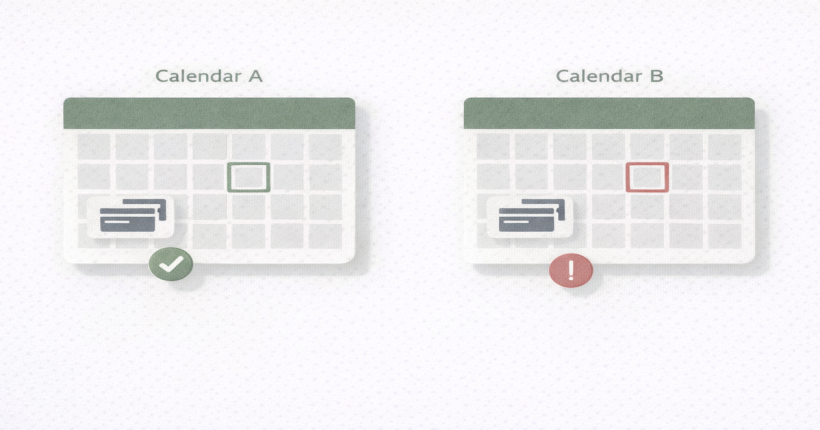
Banking structure affects credit through two primary mechanisms. First, a bills account with correct separation ensures every fixed obligation is funded and paid on time — which directly builds payment history, the largest single factor in a credit score. Second, cash flow timing aligned with the credit card billing cycle determines what balance is reported to the bureaus at statement close — which controls utilization, the second largest factor. Fix the banking structure and the credit improvement is often a downstream consequence rather than a separate project.
Where should I start if my financial system is broken?
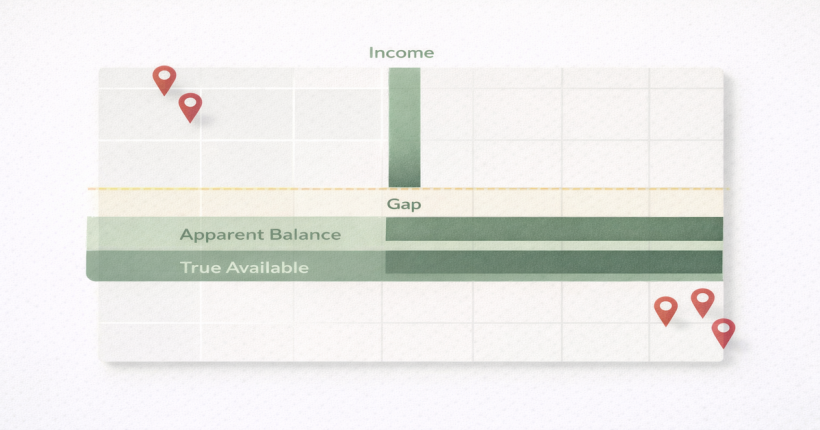
Start at Layer 1 — the banking infrastructure. Specifically, determine whether bills money is separated from spending money in a dedicated Bills Account, and whether the Bills Account transfer amount is calculated correctly from a 12-month inventory. Most downstream cash flow and credit problems trace back to a Layer 1 failure. The most common Layer 1 failure is a single checking account where bills and spending money are mixed — which produces the false balance problem that leads to overdrafts, missed payments, and credit damage.
Is this approach different from budgeting?
Yes — fundamentally. Budgeting is a tracking and allocation method that requires active management, ongoing decisions, and behavioral consistency. Infrastructure is a design approach that builds the constraints and automations into the account structure itself. The budget is enforced by the system rather than by willpower. Most people who have tried budgeting and found it unsustainable are not lacking discipline — they are lacking the infrastructure that makes the budget hold mechanically without requiring constant effort.
Official Sources
CFPB — Bank Account Consumer Tools and Rights
FDIC — Consumer Financial Education Resources
myFICO — What's in Your Credit Score
Connected Hubs
This cluster is part of the Credit, Banking & Cash Flow integration hub. Related authority hubs: Financial Stability — the stability layer that makes the infrastructure system resilient to financial shocks. Cash Flow Optimization & Financial Control — the optimization layer that aligns all three systems into a single coordinated flow.
PersonalOne Money System
This content is researched, written, and owned by PersonalOne — a free financial education platform built to help Millennials and Gen Z build real financial systems.
Disclaimer: This content is for educational purposes only and does not constitute financial, investment, or tax advice. Individual financial situations vary significantly. The strategies and systems linked here may not be appropriate for all circumstances. Before making financial decisions, consider consulting with qualified financial professionals. PersonalOne provides educational content and does not provide personalized financial planning services.